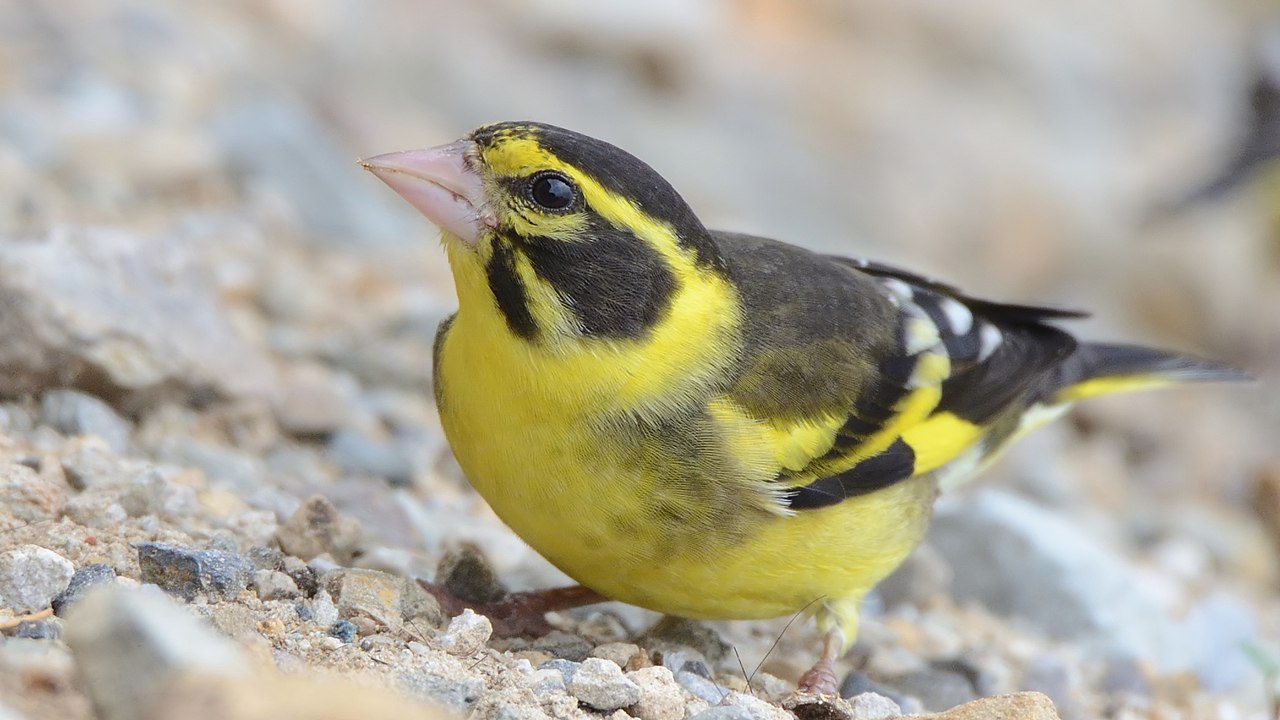
The yellow-breasted bunting is a passerine bird in the bunting family Emberizidae that is found across the Boreal and East Palearctic. The genus name Emberiza is from Old German Embritz, a bunting. The specific aureola is Latin for "golden". The bird's call is a distinctive zick, and the song is a clear tru-tru, tri-tri.
Region
Boreal Eurasia and East Asia
Typical Environment
Breeds across the boreal and temperate zones of northern Eurasia, historically from Scandinavia and Russia through Siberia to the Russian Far East. During migration it passes through Northeast and East China, Korea, and Japan, and winters mainly in southern China and Southeast Asia, with smaller numbers in South Asia. It favors wet meadows, marshy edges, river floodplains, and shrubby grasslands in the breeding season. In winter it uses rice paddies, reedbeds, wet fields, and weedy farmland, often forming flocks. Roosting commonly occurs in dense reeds or tall grasses near water.
Altitude Range
0–1500 m
Climate Zone
Temperate
Ease of Keeping
Beginner friendly: 1/5
Once abundant across northern Eurasia, the yellow-breasted bunting has suffered catastrophic declines due largely to trapping for food during migration and wintering, earning it the nickname 'rice bird' in parts of East Asia. It is now listed as Critically Endangered and protected in many countries. Males in breeding plumage show a striking dark hood contrasting with vivid yellow underparts, while females and nonbreeding birds are more subdued and streaky. Its call is a sharp 'zick' and the song a clear, simple series of tru-tru, tri-tri notes.


Eggs of Emberiza aureola MHNT

Yellow-breasted bunting (breeding male)

Yellow-breasted bunting (female)

Yellow-breasted bunting in flight
Temperament
skulking and wary; gregarious in winter
Flight Pattern
short rapid wingbeats with bounding, undulating flight
Social Behavior
Outside the breeding season it often forms sizable flocks that feed in open fields and roost communally in reedbeds. During breeding it is typically found in loose pairs or small groups, nesting low in dense vegetation or on the ground. The nest is a grass-lined cup, and the species is thought to be socially monogamous. Both parents feed the young.
Migratory Pattern
Seasonal migrant
Song Description
The call is a sharp metallic 'zick' often given in flight. The song is a clear, simple series of notes rendered as tru-tru, tri-tri, repeated from exposed perches. Delivery is unhurried and easily carries over open wetlands.
Plumage
Streaked brown upperparts with warm chestnut tones and two crisp white wingbars; bright yellow underparts. Breeding males show a dark brown to blackish hood and throat contrasting with the yellow breast and belly. Females and nonbreeding birds are duller, buffy-yellow below with heavier streaking above.
Diet
Feeds mainly on small seeds of grasses and weeds outside the breeding season, including rice where available. In spring and summer it takes a higher proportion of insects such as beetles, caterpillars, and other invertebrates to feed nestlings. It also picks small buds and occasionally grain spillage. Foraging is mostly on or near the ground, gleaning from seedheads and low stems.
Preferred Environment
Uses wet meadows, marsh edges, and shrubby grasslands for breeding-season foraging. In migration and winter it frequents rice paddies, weedy stubble, and reed-fringed wetlands, often along field margins and ditches. Dense cover nearby is preferred for quick retreat and communal roosting.