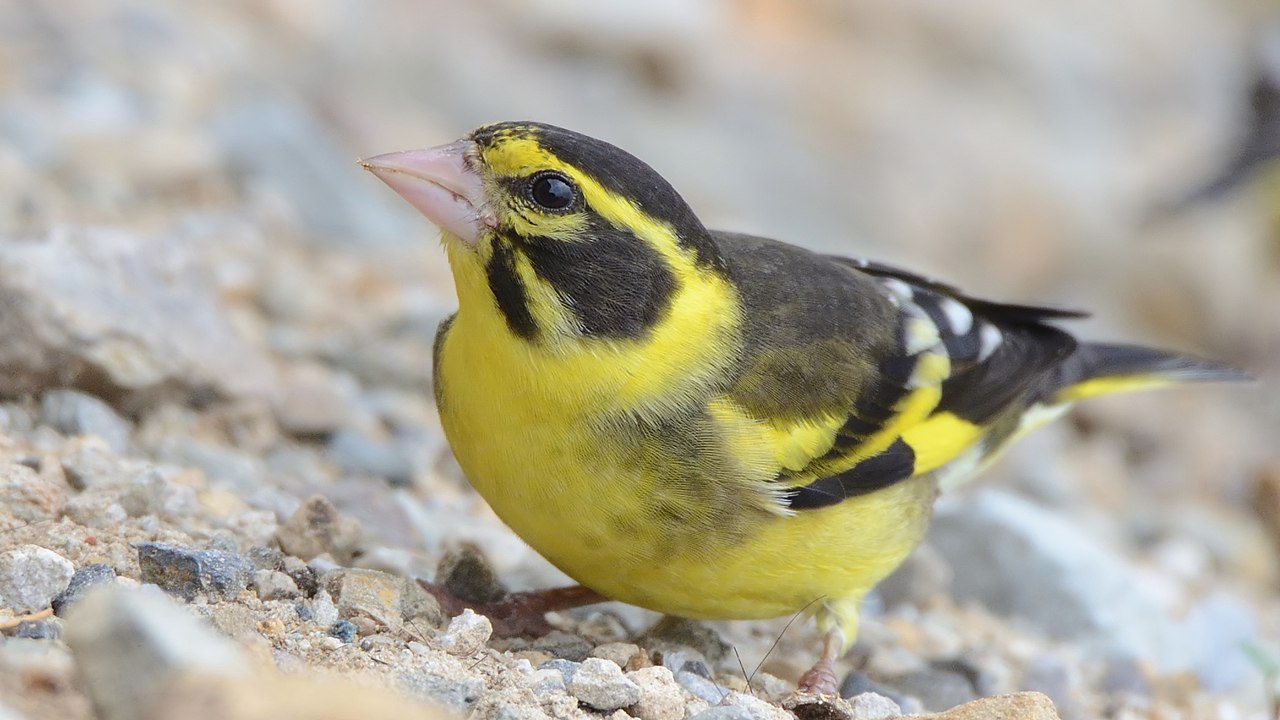
The yellow-breasted fruit dove, known locally as balorinay, is a species of bird in the family Columbidae. It is endemic to the Philippines. Its natural habitat is tropical moist lowland forest. While it is listed as least concern in IUCN, it is declining due to habitat loss, hunting, and trapping for the illegal wildlife trade. This species was formerly placed in the genus Ptilinopus.
Region
Philippine Archipelago
Typical Environment
Occurs in tropical moist lowland and foothill forests, favoring fruiting trees within primary and mature secondary forest. It also uses forest edges, riverine forest, and overgrown clearings where large fig trees persist. The species is most often found in the mid- to upper canopy and may visit orchards and wooded farmlands when fruit is abundant. It generally avoids heavily degraded open landscapes lacking tall fruiting trees.
Altitude Range
Sea level to 1200 m
Climate Zone
Tropical
Ease of Keeping
Beginner friendly: 1/5
Locally called balorinay, this canopy-dwelling fruit-dove is a key seed disperser for many native trees, especially figs. It is shy and often detected by its mellow coos rather than seen. Some taxonomies place it in the genus Ramphiculus. Although listed as Least Concern, it is declining due to forest loss and hunting/trapping.


A wild ssp. occipitalis
Temperament
shy and inconspicuous
Flight Pattern
short, fast, direct flights between fruiting trees
Social Behavior
Usually seen singly, in pairs, or small loose groups at fruiting trees. Nests are simple twig platforms placed in dense foliage, with a typical clutch of a single egg. Courtship involves soft cooing and short display flights through the canopy.
Migratory Pattern
Resident
Song Description
Song is a series of soft, mellow coos and hoots delivered from concealed perches high in the canopy. Notes are low-pitched, spaced, and can carry surprisingly far in still forest conditions.
Plumage
Compact fruit-dove with bright yellow breast contrasting with green upperparts and paler belly; plumage appears silky and well-groomed. Males show a pale gray head with a small maroon patch on the hindcrown; females are greener overall with a duller yellow wash on the breast. Both sexes have rufous to chestnut undertail coverts and a clean, pale throat.
Diet
Feeds primarily on small fruits and berries, especially figs (Ficus), which it swallows whole and later disperses as seeds. Also takes drupes from laurels and other native trees, and occasionally cultivated fruits when available. It selects ripe fruit, often moving among multiple trees within a small area. Foraging is mostly in the mid- to upper canopy, rarely descending to the ground.
Preferred Environment
Frequents fruiting trees in primary and mature secondary forests, forest edges, and along rivers. Will visit village trees, orchards, and wooded gardens when fruit is abundant but remains close to cover.