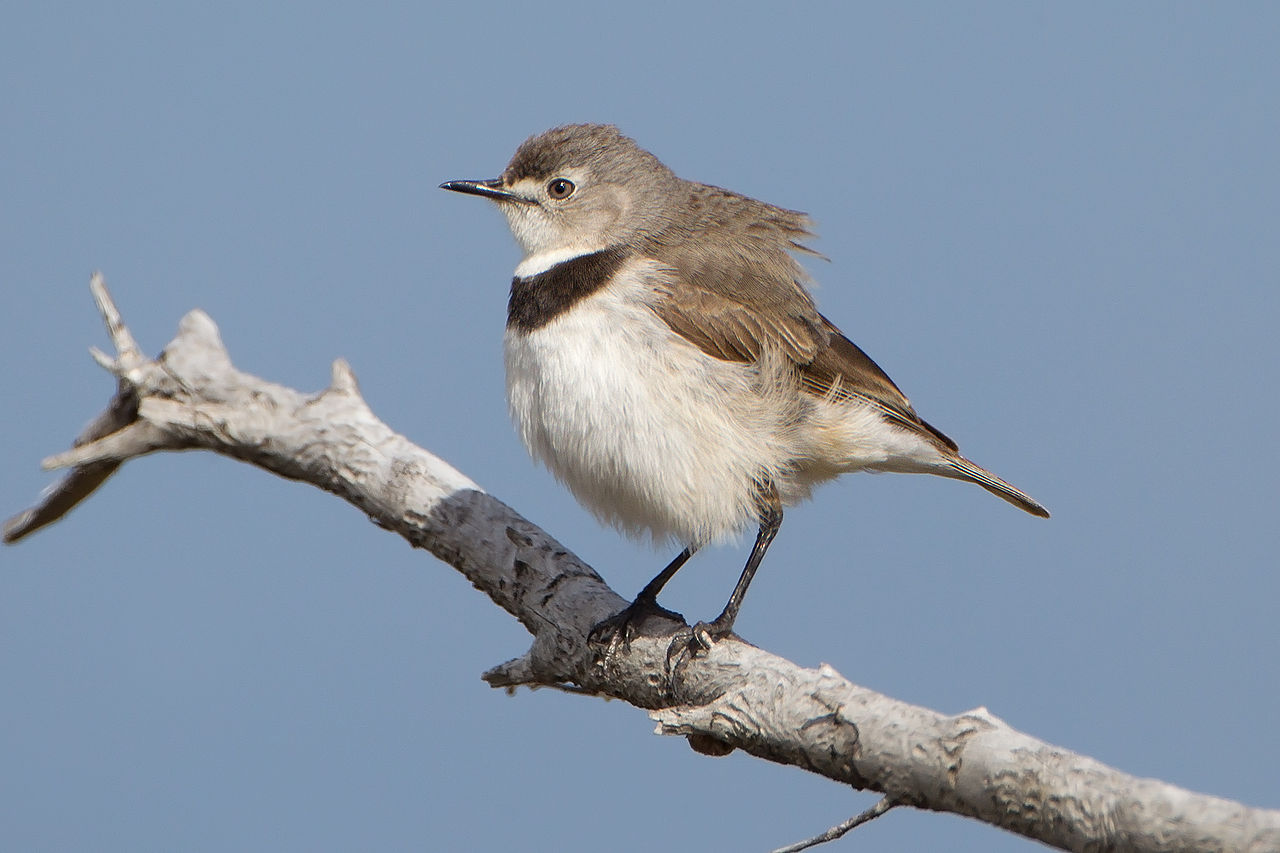
The white-fronted chat is a species of bird in the honeyeater family Meliphagidae native to southern Australia. The male has a white face bordered by a black breast band. It is insectivorous.
Region
Southern Australia
Typical Environment
Occurs along the southern coastline of Australia, including Western Australia, South Australia, Victoria, Tasmania, and southern New South Wales, with some inland populations around saline lakes and samphire plains. It frequents open saltmarsh, coastal shrublands, estuarine margins, and the fringes of mangroves. Birds use low, open vegetation and bare ground for foraging and often perch on exposed shrubs. Local movements track seasonal conditions and resources.
Altitude Range
Sea level to 500 m
Climate Zone
Temperate
Ease of Keeping
Beginner friendly: 1/5
The white-fronted chat is a small Australian honeyeater that favors coastal saltmarsh and samphire flats. Males are striking with a crisp white face bordered by a black breast band, while females are much duller and brownish-grey. It is a good indicator of healthy saltmarsh ecosystems and often forages in small, loose flocks. Local declines have been linked to loss and degradation of coastal saltmarsh habitat.

Temperament
social and active
Flight Pattern
short rapid wingbeats, low undulating flights over vegetation
Social Behavior
Often seen in pairs or small flocks, especially outside the breeding season. Nests are shallow cups placed low in shrubs or samphire, with both sexes participating in nesting duties. Breeding typically occurs in spring–summer, with 2–3 eggs per clutch.
Migratory Pattern
Partial migrant
Song Description
Song is a series of soft, tinkling and piping notes delivered from exposed perches. Calls include sharp tiks and thin contact notes used to keep flocks coordinated.
Plumage
Male with white face and underparts sharply bordered by a black breast band, grey mantle and back, and darker wings; female dull grey-brown above with paler, less contrasting face and underparts and an indistinct breast band.
Diet
Primarily takes small insects such as flies, beetles, ants, and caterpillars, along with other arthropods gleaned from low shrubs and the ground. It occasionally snatches flying insects during short sallies. Opportunistic foraging follows peaks in insect abundance after rain or tidal events.
Preferred Environment
Feeds in open saltmarsh, samphire flats, estuarine margins, and around saline or brackish wetlands. Often forages on bare ground between low shrubs and along edges of mangroves.