
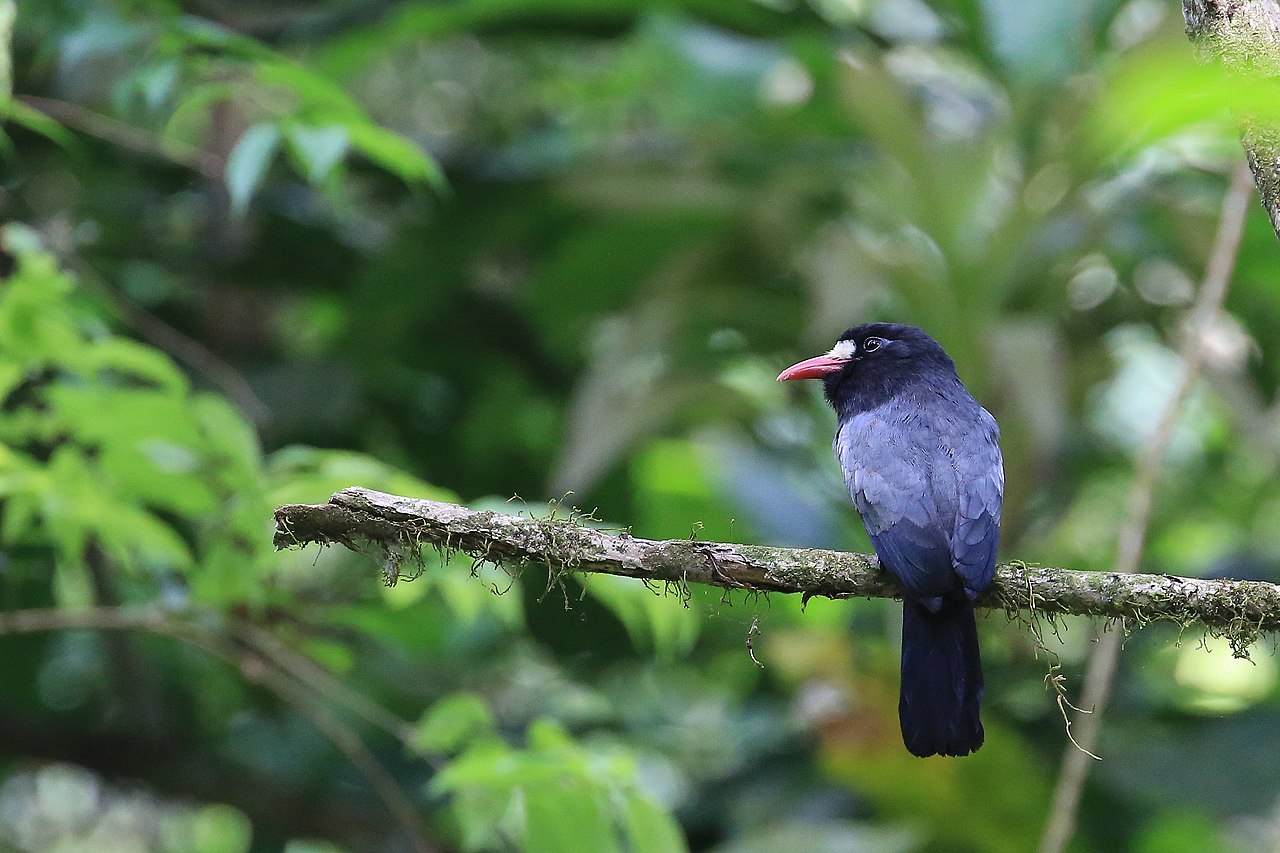
The white-fronted nunbird is a species of near-passerine bird in the family Bucconidae, the puffbirds, nunlets, and nunbirds. It is found Bolivia, Brazil, Colombia, Costa Rica, Ecuador, Honduras, Nicaragua, Panama, Peru, and Venezuela.
Region
Central America and the Amazon Basin
Typical Environment
Occurs from southern Central America through northwestern South America and broadly across the Amazon Basin. Favors humid lowland evergreen forests, terra firme and seasonally flooded várzea, as well as forest edges and second growth near mature forest. Most frequently seen in the lower to midstory along streams, light gaps, and forest edges. Generally avoids open, heavily deforested areas but tolerates semi-disturbed habitats if large trees remain.
Altitude Range
Sea level to 1500 m
Climate Zone
Tropical
Ease of Keeping
Beginner friendly: 1/5
A near-passerine of the puffbird family (Bucconidae), the white-fronted nunbird is named for its contrasting white forehead set against sooty-black plumage. It often follows army ant swarms or mixed-species flocks to snatch flushed insects, using sit-and-wait sallies from low to midstory perches. It nests in burrows excavated in earthen banks or level ground, with both parents attending the young.


Eating a cicada in eastern Ecuador


Temperament
quiet, watchful, and often confiding
Flight Pattern
short rapid wingbeats in direct, low flights between perches
Social Behavior
Usually encountered in pairs or small family groups, often maintaining territories year-round. Nests are burrows excavated in earth banks or flat ground, where both parents incubate and feed the young. Often associates with mixed-species flocks and follows army ant swarms to capture prey.
Migratory Pattern
Resident
Song Description
Gives clear, fluty whistles, often a repeated peee-uh or wheeuu series that carries through the forest. Calls include sharp notes and mellow whistles used in contact between mates or group members.
Plumage
Mostly sooty-black with a contrasting white forehead and lores; plumage appears smooth with a slight gloss.
Diet
Primarily hunts large insects such as grasshoppers, beetles, katydids, and mantids, as well as spiders. Will also take small vertebrates like lizards or frogs on occasion. Often sallies from a perch to seize prey from foliage, trunks, or the ground, and readily exploits prey flushed by army ants.
Preferred Environment
Feeds from low to midstory perches along forest edges, streams, gaps, and within semi-open understory. Uses shaded perches to scan for prey and makes short sorties to capture items on leaves, branches, or the forest floor.


