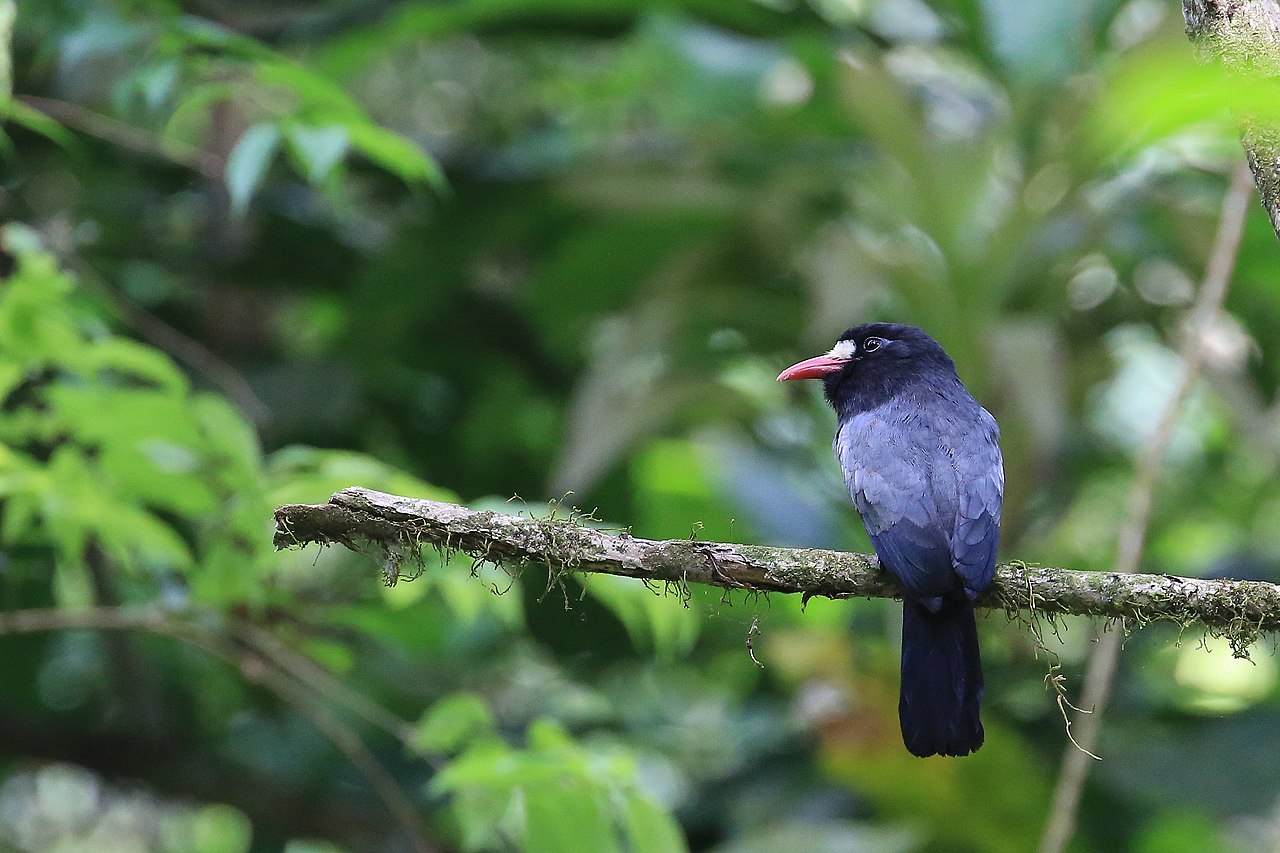
The white-fronted manakin is a species of bird in the family Pipridae, the manakins. It is native to French Guiana, Guyana, Suriname and northeastern Brazil where it inhabits subtropical and tropical moist lowland forest. The male is mainly black, with a blue rump, yellow belly patches and a conspicuous patch of white feathers extending forwards from its forehead. The female is gray and black with a pale yellow belly and white eye ring. This is a fairly common species with a wide range, and the International Union for Conservation of Nature has rated its conservation status as being of "least concern".
Region
The Guianas and northeastern Amazonia
Typical Environment
Occurs in French Guiana, Guyana, Suriname, and adjacent northeastern Brazil, primarily in terra firme tropical moist lowland forests. It favors the shaded understory, forest edges, and natural light gaps, and can use mature secondary forest. Birds typically remain low to mid-levels but may move higher when foraging at fruiting trees. Leks are usually situated in quiet, sheltered patches of understory.
Altitude Range
Sea level to 800 m
Climate Zone
Tropical
Ease of Keeping
Beginner friendly: 1/5
Males gather at small leks to perform display routines that include rapid hops, short flights, and audible wing snaps to attract females. This species lives in the shaded understory of humid lowland forest and is often detected by its mechanical display sounds rather than by song. It is generally common within the Guianas and northeastern Brazil and is currently assessed as Least Concern.


From Planches enluminées d'histoire naturelle (1765)
Temperament
secretive and active
Flight Pattern
short rapid wingbeats through the understory
Social Behavior
Males display at small leks, each defending a tiny court on the forest floor or low understory. Courtship involves rapid hops, short darting flights, wing snaps, and posturing. Outside the breeding season individuals are typically solitary or in loose proximity while foraging, sometimes joining mixed-species flocks at fruiting trees.
Migratory Pattern
Resident
Song Description
Vocalizations are soft and minimal; the species is better known for its mechanical wing snaps and buzzing display sounds. Calls are thin and understated, often overlooked amid forest background noise.
Plumage
Male is mainly black with a conspicuous white patch extending forward from the forehead, a blue rump, and bright yellow belly patches; glossy and cleanly contrasting. Female is gray to olive-gray above with darker wings, a pale yellow belly, and a distinct white eye ring. Both sexes are compact, short-tailed, with a neat, tidy appearance typical of manakins.
Diet
Primarily small fruits and berries from understory and midstory plants. It supplements with small arthropods, gleaned from foliage or taken in brief sallies. Foraging is deliberate, with short hops between perches and quick sorties to fruit clusters.
Preferred Environment
Feeds in shaded understory and midstory, especially at fruiting shrubs and trees along trails, light gaps, and forest edges. Will visit mixed-species fruiting aggregations when resources are abundant.