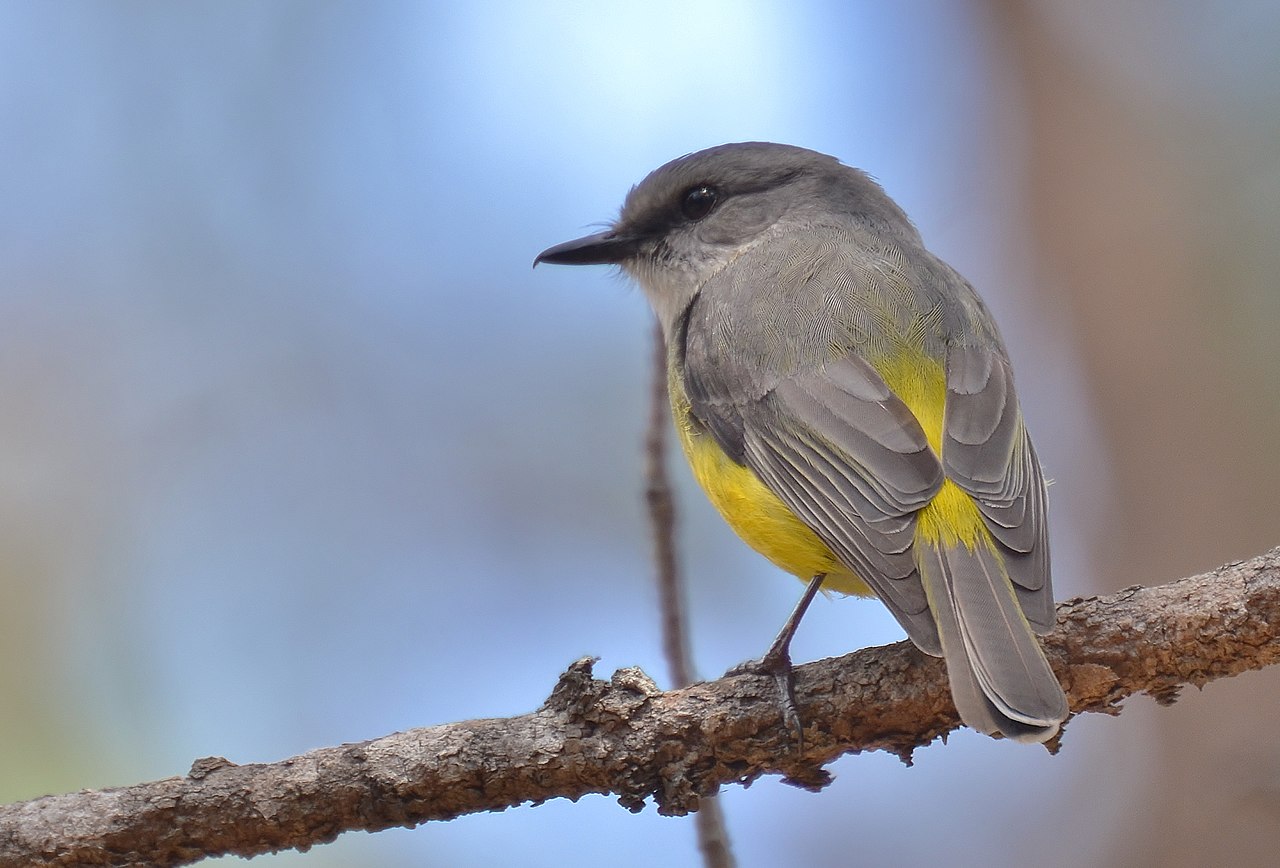
The western wattlebird is a passerine bird in the honeyeater family, Meliphagidae. It is restricted to south-western Australia.
Region
Southwest Australia
Typical Environment
Occurs from the coastal plain and heaths around Perth south through the Jarrah–Karri forests and coastal shrublands to the Great Southern region. Most common in banksia woodlands, dry sclerophyll forest, and dense coastal heath where flowering shrubs are abundant. Frequently visits urban parks and native gardens with nectar-rich plantings. Uses edges, clearings, and roadside vegetation as long as blossoms are available. Outside peak flowering it disperses locally to track nectar.
Altitude Range
Sea level to 600 m
Climate Zone
Temperate
Ease of Keeping
Beginner friendly: 2/5
The western wattlebird is a honeyeater endemic to south‑western Australia and an important pollinator of Banksia, Grevillea, and eucalypts. Despite the name, it lacks the fleshy facial wattles seen in some relatives. It is bold and often defends flowering trees aggressively, including in suburban gardens. Its loud, grating calls carry far and are a familiar sound in coastal heath and woodlands.


Temperament
assertive and territorial
Flight Pattern
strong and direct with short rapid wingbeats and brief glides
Social Behavior
Usually seen singly, in pairs, or small family groups. Strongly defends flowering trees and shrubs from other honeyeaters. Builds a neat cup nest in dense foliage; typically lays 1–2 eggs with both parents involved in care. Courtship includes chases and display flights around nectar sources.
Migratory Pattern
Resident
Song Description
Vocal repertoire is loud and harsh, with grating churrs, rattles, and cackling notes delivered from exposed perches. Calls intensify at dawn and around rich nectar sources and may include short mimicry-like phrases.
Plumage
Dark brown to grey-brown overall with bold white streaking and scalloped (lunulate) markings on the underparts; long, slightly rounded tail with pale tips; rufous tones in the wings and undertail.
Diet
Primarily feeds on nectar from banksias, grevilleas, and flowering eucalypts, probing blossoms with its brush-tipped tongue. Supplements diet with insects and spiders gleaned from foliage and bark, especially when feeding young. Also takes lerp, honeydew, and occasional soft fruits.
Preferred Environment
Forages in mid to upper canopy and flowering shrubs, often moving methodically between blossoms. Common around coastal heathlands, banksia woodlands, and native gardens with continuous bloom.