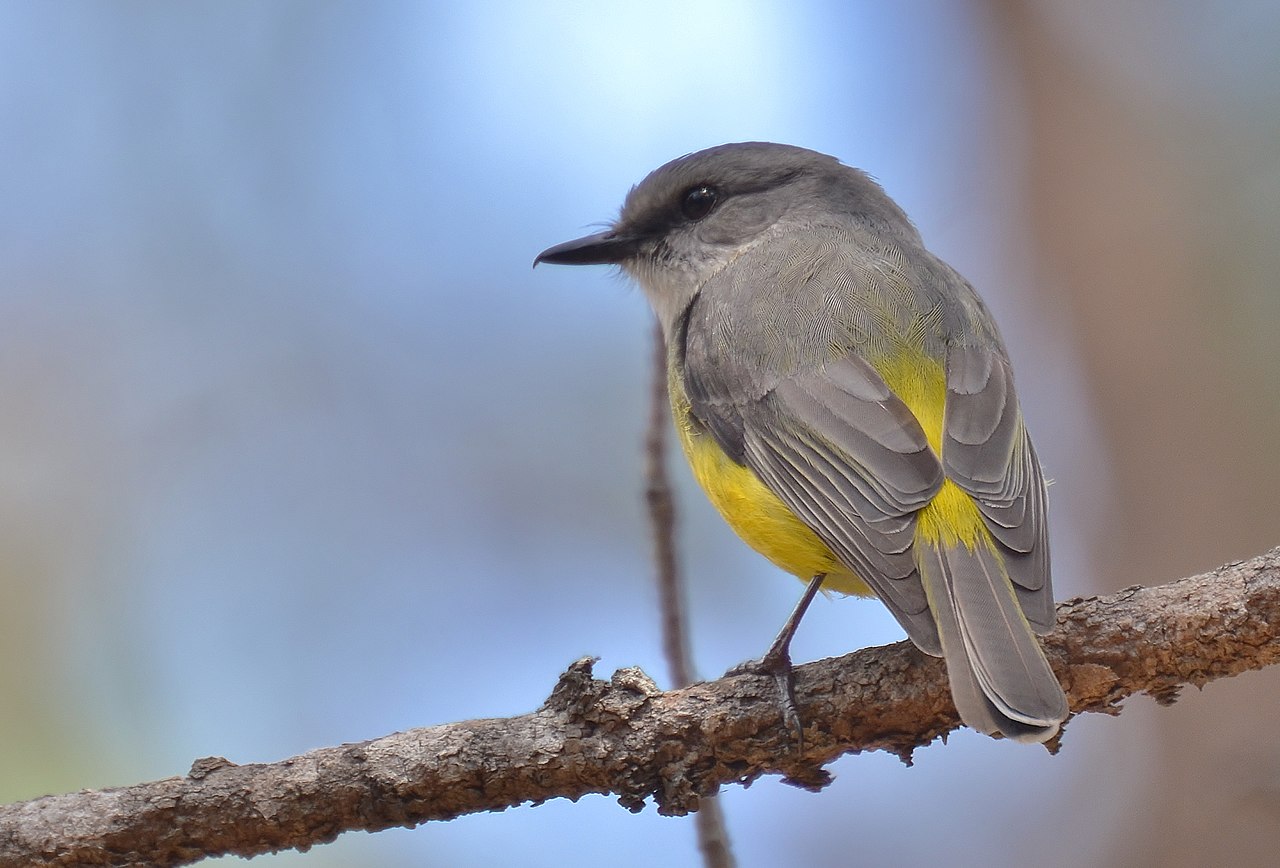
The western wood pewee is a small tyrant flycatcher. Adults are gray-olive on the upperparts with light underparts, washed with olive on the breast. They have two wing bars and a dark bill with yellow at the base of the lower mandible. This bird is very similar in appearance to the eastern wood pewee; the two birds were formerly considered to be one species. The call of C. sordidulus is a loud buzzy peeer; the song consists of three rapid descending tsees ending with a descending peeer.
Region
Western North America
Typical Environment
Breeds from Alaska and western Canada south through the Rocky Mountains, Cascades, and Sierra Nevada into the western United States and locally into northern Mexico. Prefers open coniferous and mixed woods, riparian corridors, forest edges, burns with standing snags, and lightly wooded parks. Winters from Mexico through Central America to the Andean foothills of northwestern South America (e.g., Colombia, Ecuador, Peru, Bolivia). During migration it uses a variety of wooded habitats and edges. It favors perches with clear flycatching lanes beneath or beside the canopy.
Altitude Range
Sea level to 3000 m
Climate Zone
Temperate
Ease of Keeping
Beginner friendly: 1/5
The western wood-pewee is a perch-and-sally flycatcher that snaps up insects in midair from exposed branches. It is notoriously difficult to distinguish visually from the eastern wood-pewee; voice and range are the best clues. Nests are saddled on horizontal branches and camouflaged with lichens. It often sings persistently at dawn and dusk during the breeding season.


Temperament
solitary and territorial
Flight Pattern
short rapid wingbeats with agile sallies from a perch
Social Behavior
Breeding birds defend small territories centered on productive perches. The female builds a shallow cup nest saddled on a horizontal limb and camouflaged with lichens; she incubates while the male often helps feed the young. Pairs are generally monogamous within a season, and family groups may remain loosely associated after fledging.
Migratory Pattern
Seasonal migrant
Song Description
The song is a series of clear, descending phrases often rendered as a buzzy peeer preceded by quick tsees. Calls are sharp, emphatic peeer notes given repeatedly, especially at dawn and dusk.
Plumage
Gray-olive upperparts with pale underparts and a faint dusky wash across the breast; neat, smooth feathering with two pale wing bars.
Diet
Primarily flying insects such as flies, beetles, wasps, winged ants, moths, and true bugs captured in midair. It launches short sallies from an exposed perch and often returns to the same spot. Occasionally gleans from foliage or snatches insects off surfaces. In the nonbreeding season it may take small berries opportunistically.
Preferred Environment
Feeds along forest edges, riparian corridors, open canopies, and clearings with scattered trees or snags that provide hunting perches. Burned forests and semi-open woodlands are especially favored for foraging.