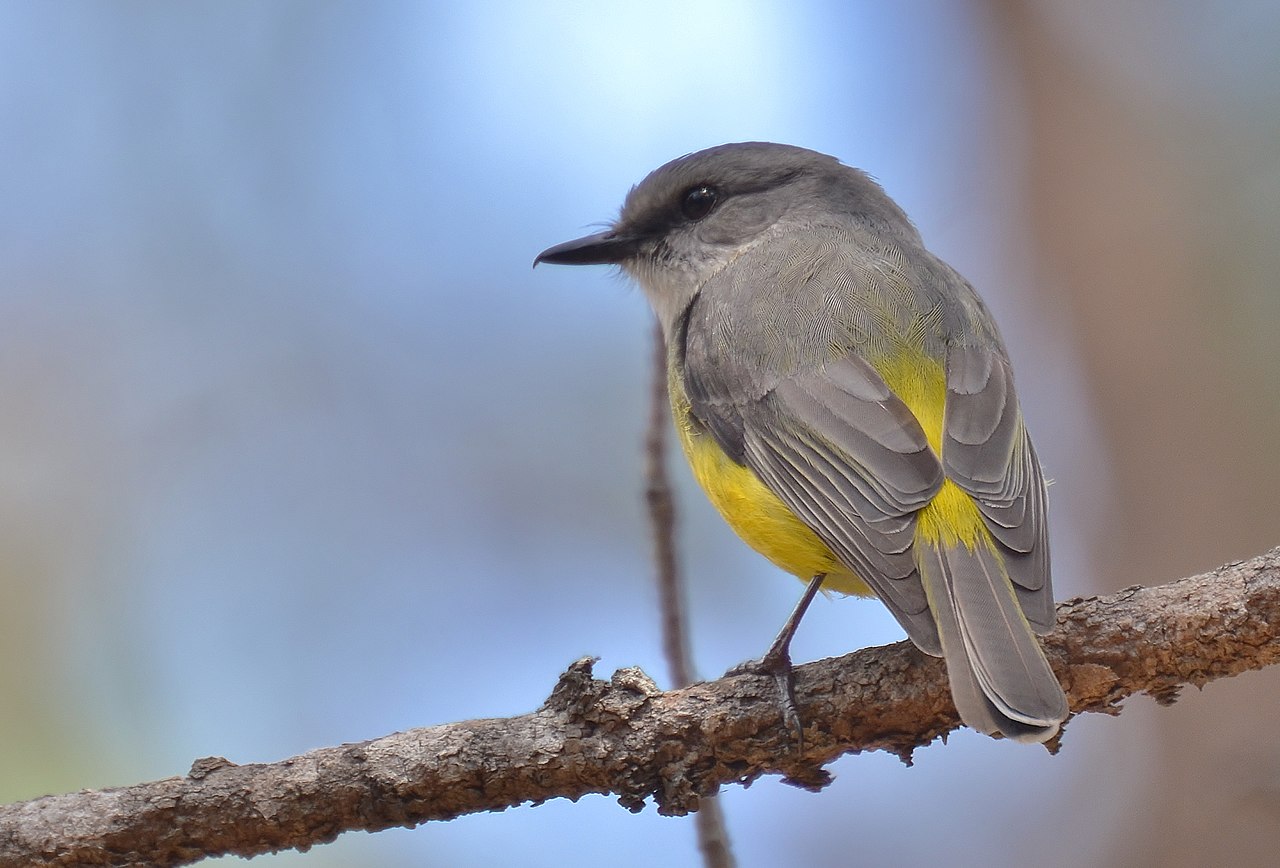
The western whistler is a species of bird in the family Pachycephalidae found in southwest Australia. Prior to 2015, the western whistler was considered as a subspecies of the Australian golden whistler until recognized as a separate species following molecular studies that suggested a closer relationship to the mangrove golden whistler species complex.
Region
Southwest Australia
Typical Environment
Occurs in the Mediterranean-climate corner of Western Australia, especially in jarrah, marri, and karri forests, open woodlands, and dense coastal heath. It frequents forest edges, riparian thickets, and well-vegetated parks and gardens. Birds typically forage from the understory to the mid-canopy, moving methodically through foliage. It is generally sedentary within this limited range, with only local movements after breeding.
Altitude Range
Sea level to 800 m
Climate Zone
Temperate
Ease of Keeping
Beginner friendly: 1/5
The western whistler was split from the Australian golden whistler in 2015 after molecular studies showed it is distinct and closer to the mangrove golden whistler complex. Males have a bold black hood and a crisp white nape collar, making them easy to spot in good light. They defend territories year-round and readily use native gardens and forest edges. Their ringing, melodious whistles are a hallmark of southwest Australian woodlands.

Temperament
solitary and territorial
Flight Pattern
short rapid wingbeats
Social Behavior
Usually seen singly or in pairs, holding well-defined territories throughout the year. Pairs are monogamous in the breeding season, with a cup nest placed in a fork of a shrub or small tree. Both sexes contribute to parental care, though males spend more time singing and territory defense.
Migratory Pattern
Resident
Song Description
A clear, ringing series of whistled notes that carry through forest, often repeated and varied in pitch. Calls include sharp chips and scolds when alarmed, with males delivering extended, melodious bouts from prominent perches.
Plumage
Male with a glossy black hood and throat, clean white nape collar, olive-green back, and bright yellow underparts; females are grey-brown above with pale buff to grey underparts and faint streaking.
Diet
Feeds mainly on insects and other arthropods such as beetles, caterpillars, spiders, and ants. It also takes small amounts of fruit and occasionally seeds, especially outside the breeding season. Prey is gleaned from leaves, twigs, and bark, and sometimes snatched in short sallies.
Preferred Environment
Forages in the understory and mid-storey of eucalypt forests and woodlands, along edges, and in dense coastal scrub. In towns, it works through natives in well-vegetated gardens and reserves.