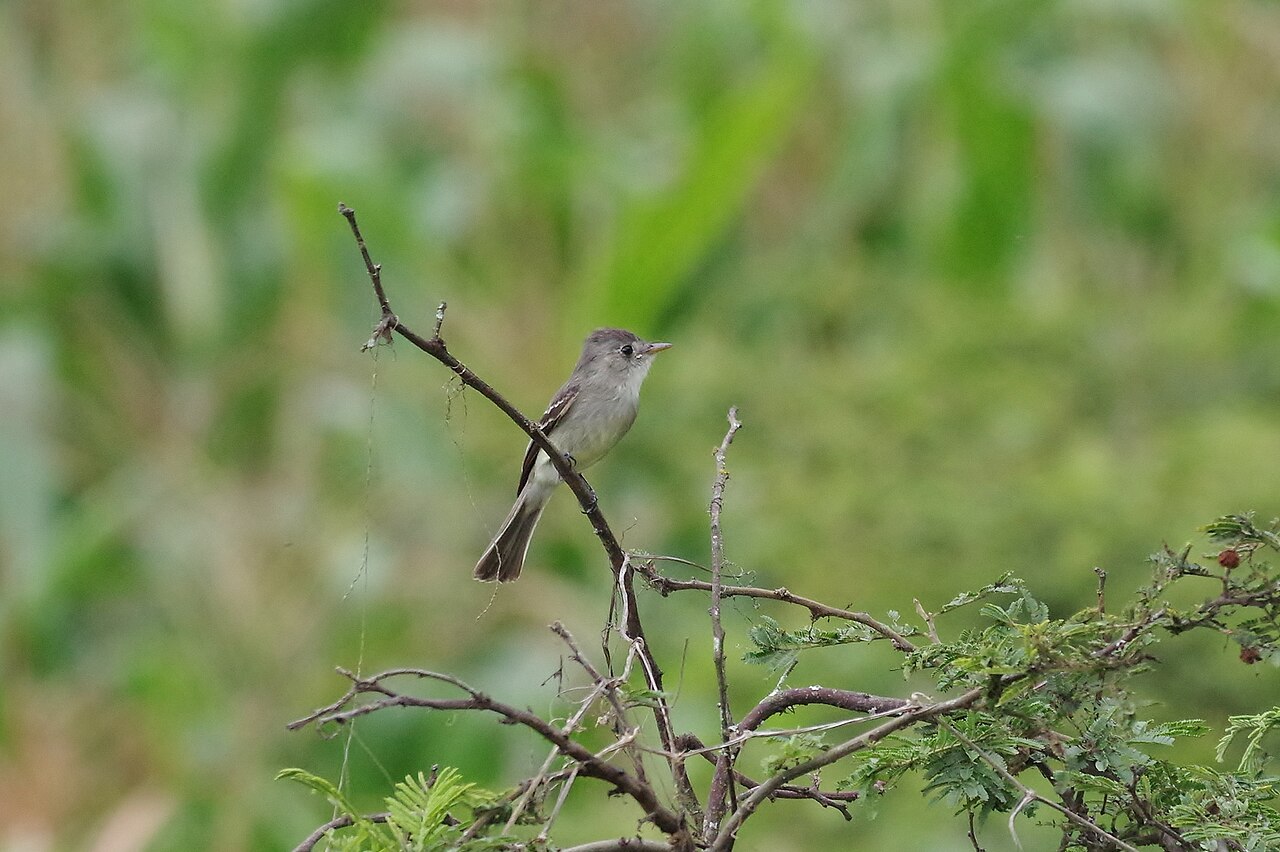
The Tumbes hummingbird is a species of hummingbird in the "emeralds", tribe Trochilini of subfamily Trochilinae. It is found in Ecuador and Peru.
Region
Pacific slope of southwestern Ecuador and northwestern Peru
Typical Environment
This species inhabits tropical dry forests, arid scrub, thorny thickets, and riparian edges within the Tumbes–Piura region. It frequents flowering shrubs and trees along forest edges, clearings, and semi-open country, and will visit gardens with suitable nectar sources. It is typically associated with lowland and foothill zones and persists in fragmented habitat where flowers are abundant. Local movements track blooming plants across the landscape.
Altitude Range
0–1500 m
Climate Zone
Tropical
Ease of Keeping
Beginner friendly: 1/5
The Tumbes hummingbird is a small emerald hummingbird confined to the dry forests of southwestern Ecuador and northwestern Peru. It often defends flower patches aggressively despite its tiny size. Like many hummingbirds, it supplements nectar with small insects for protein. Habitat loss in the Tumbes–Piura dry forest ecoregion is a concern for its long-term outlook.


Temperament
territorial and active
Flight Pattern
short rapid wingbeats with agile hovering and darting
Social Behavior
Generally solitary away from flowering aggregations. Males defend nectar resources and display at favored perches; they do not assist with nesting. Females build a small cup nest of plant fibers and spider silk on low horizontal branches or in shrubs.
Migratory Pattern
Resident
Song Description
Vocalizations are thin, high-pitched chips and tseet notes, often given from a low exposed perch. Wing trills may be audible at close range during aggressive chases.
Plumage
Bronzy-green upperparts with a pale whitish to buff underside; overall appearance is of a small, plain emerald hummingbird with modest iridescence. Tail is slightly forked and dusky to bronzy. The throat and breast are pale and contrast with the greener head and back.
Diet
Feeds primarily on nectar from flowering shrubs and trees of dry forests, including blossoms along riparian corridors and forest edges. It practices traplining between bloom patches and will also defend rich flower clumps. Small insects and spiders are taken by hawking or gleaning to provide essential protein, especially during breeding.
Preferred Environment
Typically forages at forest edge, semi-open scrub, and riparian thickets where flowering plants are abundant. It also visits rural gardens and hedgerows with suitable nectar plants.