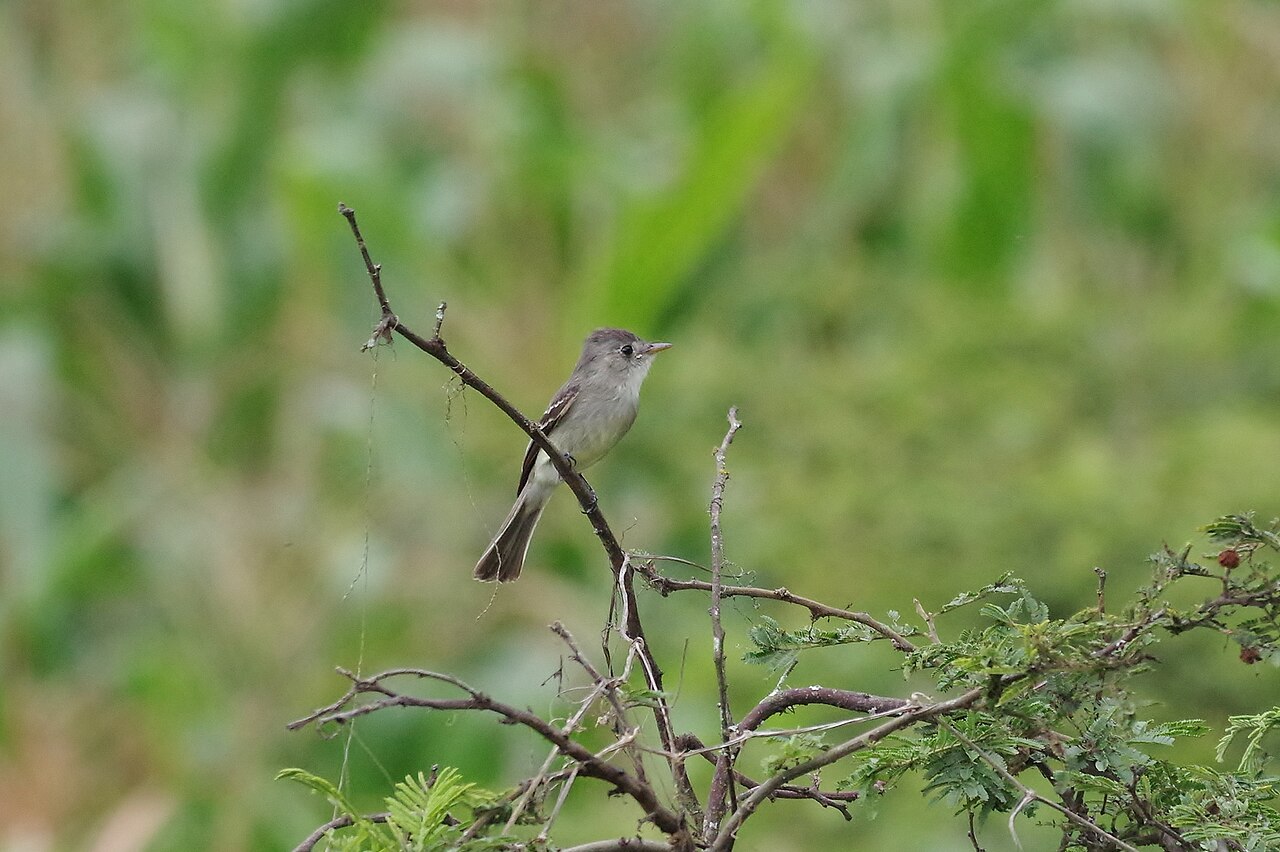
The Tukangbesi sunbird is a species of passerine bird in the sunbird family Nectariniidae that is found on the Tukangbesi Islands that lie to the southeast of Sulawesi in Indonesia. It was formerly considered to be a subspecies of the olive-backed sunbird, now renamed the garden sunbird.
Region
Southeast Asia
Typical Environment
Occurs only on the Wakatobi (Tukangbesi) archipelago off the southeast coast of Sulawesi. It frequents coastal scrub, mangroves, village gardens, and forest edges, often following flowering trees and shrubs. It adapts well to lightly disturbed habitats and is commonly seen around coconut plantations and ornamental plantings. Denser interior woodland is used for nesting where suitable understorey and mid-storey cover are present.
Altitude Range
Sea level to 400 m
Climate Zone
Tropical
Ease of Keeping
Beginner friendly: 1/5
The Tukangbesi sunbird is a small nectar-feeding passerine in the family Nectariniidae restricted to the Tukangbesi (Wakatobi) Islands southeast of Sulawesi, Indonesia. It was long treated as a subspecies within the olive-backed sunbird complex (often called the garden sunbird in some lists) but is now frequently regarded as a distinct island endemic based on morphology and vocal differences. Like other sunbirds, it plays a role in pollinating native and cultivated plants. Males typically show iridescent throat patches that flash in sunlight during display.
Temperament
active and territorial
Flight Pattern
short rapid wingbeats with direct, darting flights
Social Behavior
Often seen singly or in pairs, with males defending flowering shrubs and trees from rivals. Pairs build small cup nests suspended from foliage or attached to thin branches, using plant fibers and spider silk. Breeding behavior includes display flights and singing from prominent perches near nectar sources.
Migratory Pattern
Resident
Song Description
A high-pitched, tinkling series of twitters and rapid chirps, delivered in short bursts. Calls include thin see-see and sharp tsik notes, frequently given while foraging.
Plumage
Compact sunbird with an olive to olive-brown back and bright yellow underparts; feathers are sleek and close-fitting. Males show a glossy, iridescent blue to blue-black throat and upper breast that can appear blackish in dull light. Females are duller, with olive-brown upperparts and paler yellow underparts, lacking the iridescent throat.
Diet
Feeds primarily on nectar from a variety of native blooms and cultivated plants such as coconut and ornamental flowers. Also takes small insects and spiders, especially during breeding to feed nestlings. Probes tubular flowers with its decurved bill and occasionally gleans arthropods from leaves and bark.
Preferred Environment
Forages along forest edges, in mangroves, village gardens, and flowering hedgerows. Often visits flowering trees in open areas and plantation edges where nectar is abundant.