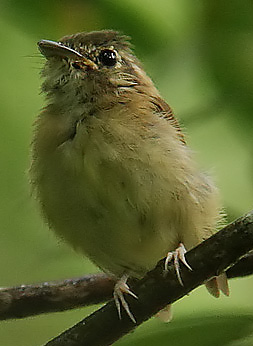
The striped woodcreeper is a species of bird in the subfamily Dendrocolaptinae of the ovenbird family Furnariidae. It is found in Bolivia, Brazil, Colombia, Ecuador, French Guiana, Guyana, Peru, Suriname, and Venezuela.
Region
Amazon Basin and the Guianas
Typical Environment
Occurs in humid lowland evergreen forests across northern South America, including terra firme, seasonally flooded várzea and igapó, and river-edge gallery forests. It favors mature forest but also uses tall secondary growth and forest edges near waterways. Frequently forages along large trunks and limbs from the understory to the mid-canopy. It is generally absent from open habitats and heavily degraded areas, persisting best in extensive forest tracts.
Altitude Range
Sea level to 1000 m
Climate Zone
Tropical
Ease of Keeping
Beginner friendly: 1/5
A specialized trunk-climber, the striped woodcreeper uses its long decurved bill to probe bark crevices for hidden arthropods. It often joins mixed-species flocks and will occasionally attend army-ant swarms to snatch flushed prey. Its fine buff striping and rufous wings and tail help distinguish it from similar woodcreepers. The species is widespread across the Amazon and Guianan region and is generally considered common where suitable forest remains.


Temperament
solitary and territorial
Flight Pattern
short rapid wingbeats between trunks; generally weak, direct flights within forest
Social Behavior
Usually seen alone or in pairs, often accompanying mixed-species flocks in the understory and mid-story. Nests in tree cavities or natural holes, with both members of the pair likely participating in nesting duties. Forages by hitching up trunks and large branches, bracing with stiff tail feathers.
Migratory Pattern
Resident
Song Description
Delivers a series of clear, whistled notes given in a slow, slightly descending sequence. Calls include sharp chips and soft whistles used to keep contact with a mate or within mixed flocks.
Plumage
Warm brown to olive-brown overall with fine, crisp buff to whitish streaks on the crown, nape, back, and underparts; wings and tail are rich rufous.
Diet
Primarily arthropods such as beetles, ants, roaches, spiders, and other insects taken from bark crevices and epiphytes. Occasionally captures small vertebrates or gleaned prey flushed by army ants. Uses its curved bill to probe under loose bark, vine tangles, and moss.
Preferred Environment
Feeds on trunks and large branches in dense lowland rainforest, especially along river edges and in flooded forests. Often forages in shaded interior forest but will use tall secondary growth and riparian corridors.