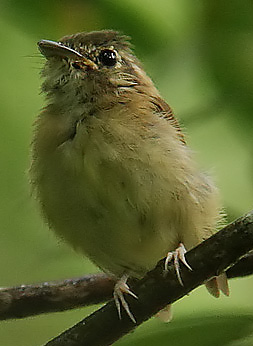
The strong-billed woodcreeper is a species of bird in the subfamily Dendrocolaptinae of the ovenbird family Furnariidae. It is found in Belize, Bolivia, Brazil, Colombia, Costa Rica, Ecuador, El Salvador, Guatemala, Guyana, Honduras, Mexico, Nicaragua, Panama, Peru, and Venezuela.
Region
Central and northern South America
Typical Environment
Occurs from southern Mexico through Central America into the Andes and the Guiana Shield, reaching Bolivia, Peru, Brazil, and Venezuela. It inhabits mature humid forests, cloud forests, and tall foothill forests, and locally occupies lowland evergreen forest in parts of its range. Prefers interior and edges of primary forest but can persist in selectively logged tracts with large trees. Often forages on large trunks and major limbs from understory to mid-canopy.
Altitude Range
Sea level to 3000 m
Climate Zone
Tropical
Ease of Keeping
Beginner friendly: 1/5
A large and powerful woodcreeper, it uses its heavy, slightly decurved bill to pry into bark, dead wood, and epiphytes for hidden prey. It often ascends trunks in a hitching manner and may join mixed-species flocks or attend army-ant swarms. Its far-carrying series of clear, whistled notes helps reveal its presence in dense forest. Subspecies vary subtly in size and coloration across its wide range.


Temperament
solitary and territorial
Flight Pattern
short rapid wingbeats with brief undulating hops between trees
Social Behavior
Typically seen alone or in pairs, moving methodically up trunks and large branches. Joins mixed-species flocks and sometimes follows army-ant swarms to capture flushed arthropods. Nests in tree cavities, with both members of a pair involved in nest defense and care.
Migratory Pattern
Resident
Song Description
A series of clear, ringing whistles given in accelerating or descending sequences, carrying well through forest. Calls include sharp notes and short trills used in contact and alarm.
Plumage
Mostly dark brown with warmer rufous tones in wings and tail; subtle buffy streaking on the head and throat; plain brown underparts becoming slightly paler toward the belly.
Diet
Feeds mainly on large insects and other arthropods such as beetles, ants, orthopterans, and spiders. Uses its powerful bill to pry and chisel into bark, dead wood, and epiphyte mats for concealed prey. Occasionally takes small vertebrates like lizards or frogs when available.
Preferred Environment
Forages on the trunks and major limbs of mature trees, from near the ground to mid-levels, less often in the canopy. Frequently focuses on areas with abundant mosses, bromeliads, and decaying wood.