

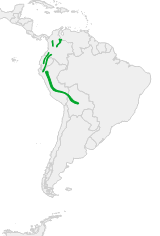
The striped treehunter is a species of bird in the Furnariinae subfamily of the ovenbird family Furnariidae. It is found in Bolivia, Colombia, Ecuador, Peru, and Venezuela.
Region
Andes Mountains
Typical Environment
Occurs from the Venezuelan and Colombian Andes south through Ecuador and Peru into northern Bolivia. It inhabits humid montane and cloud forests with dense understory, favoring ravines, forest edges, and thickets. Stands of native bamboo (especially Chusquea) are frequently used for foraging. It is largely absent from heavily degraded lowlands but may persist in mature secondary forests where structure is suitable.
Altitude Range
1000–3200 m
Climate Zone
Highland
Ease of Keeping
Beginner friendly: 1/5
A skulking ovenbird of humid Andean cloud forests, the striped treehunter is most often detected by its harsh, grating calls rather than by sight. It forages methodically in dense understory, especially in stands of Chusquea bamboo, probing moss and decaying wood for prey. Like many furnariids, it excavates a burrow nest in an earthen bank with a chamber at the end. Pairs maintain territories year‑round and may join mixed-species flocks while feeding.


Captured striped treehunter at Bellavista

Temperament
secretive and territorial
Flight Pattern
short rapid wingbeats through dense understory
Social Behavior
Usually found singly or in pairs that defend territories throughout the year. Joins mixed-species flocks irregularly while foraging. Nests are tunnels excavated into earthen banks, ending in a chamber where a small clutch is laid; both sexes participate in excavation and care.
Migratory Pattern
Resident
Song Description
Vocalizations are harsh, grating series and rattling trills that carry through the forest understory. Calls include sharp chack notes and scolding sequences, often delivered from concealed perches.
Plumage
Rich brown to rufescent upperparts with heavy, crisp buff streaking on the head, throat, and breast; underparts finely streaked giving a distinctly striped look.
Diet
Primarily consumes arthropods such as beetles, larvae, spiders, and other insects gleaned from moss, bark, and leaf litter. Probes bamboo culms, rotting wood, and vine tangles to extract hidden prey. Occasionally takes small invertebrates from bromeliads and epiphytes.
Preferred Environment
Feeds in dense understory and bamboo thickets within humid montane forests. Often forages along steep ravines, trails, and edges where debris and mossy substrates are abundant.


