
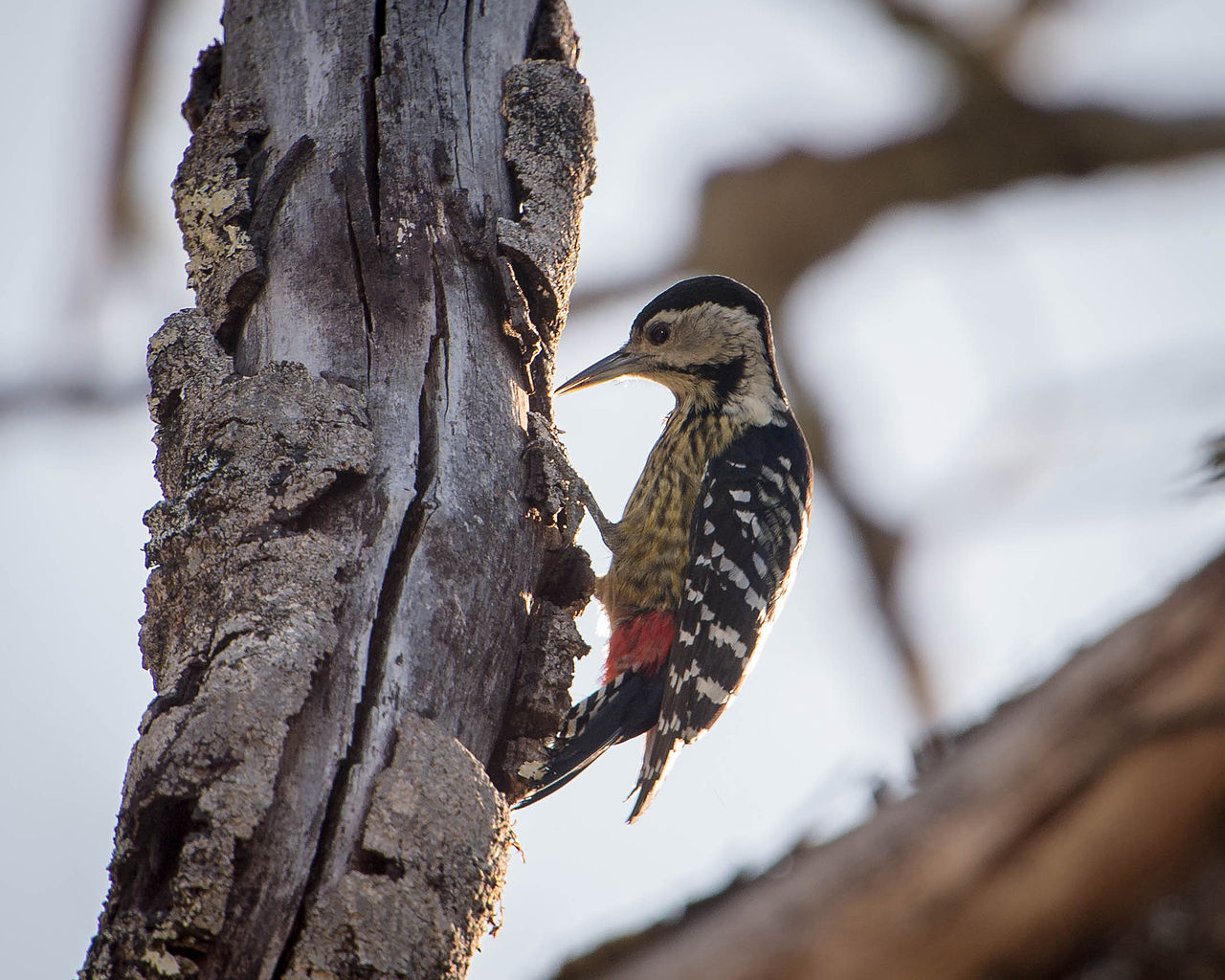
The stripe-breasted woodpecker is a species of bird in the woodpecker family, Picidae. It is found in Southeast Asia within subtropical or tropical moist lowland forest and subtropical or tropical moist montane forest.
Region
Mainland Southeast Asia and southwest China
Typical Environment
Occurs from southwest China (Yunnan) through Myanmar into northern and western Thailand, Laos, and Vietnam. It favors subtropical and tropical moist evergreen and montane broadleaf forests, often in hill evergreen and mossy forests. Birds also use mature secondary growth, forest edges, and bamboo patches, provided large trees or snags are present for foraging and nesting. Typically forages on trunks and large branches from mid-levels to the canopy.
Altitude Range
400–2600 m
Climate Zone
Highland
Ease of Keeping
Beginner friendly: 1/5
This mid-sized woodpecker is named for its boldly streaked underparts and is a year-round resident of hill and montane forests in mainland Southeast Asia and adjacent southwest China. Males typically show a red crown or nape, while females lack the red, making sexing in the field straightforward. It communicates with sharp calls and rapid drumming on resonant trunks to advertise territory. As a specialist on wood-boring insects, it helps control forest pests and often indicates healthy, mature forest structure.

Temperament
shy and forest-dwelling
Flight Pattern
undulating flight with short, direct bursts between trees
Social Behavior
Usually encountered singly or in pairs, sometimes with dependent juveniles post-breeding. Nests are excavated in dead or decaying trees or large branches, with both sexes participating in excavation and care. Territorial drumming and chase displays are common during the breeding season.
Migratory Pattern
Resident
Song Description
Vocalizations include sharp pik and kik notes, often repeated in series. Drumming is a rapid, short roll delivered on resonant trunks or limbs, used for spacing and mate communication.
Plumage
Black-and-white barred upperparts with a white back panel and heavily streaked buff to whitish underparts. The face shows contrasting dark and pale lines with a pale supercilium. Tail is black with white barring; undertail coverts often flushed red.
Diet
Feeds primarily on wood-boring beetle larvae, ants, termites, and other arthropods extracted from bark and decaying wood. Also gleans insects from lichen and moss on trunks and larger branches. Will occasionally take fruits or berries, especially when insect prey is scarce.
Preferred Environment
Forages on mid to upper trunks and large limbs of mature trees, snags, and edges of hill evergreen forest. Frequently uses partially logged forests and bamboo stands if sufficient large-diameter substrates remain.


