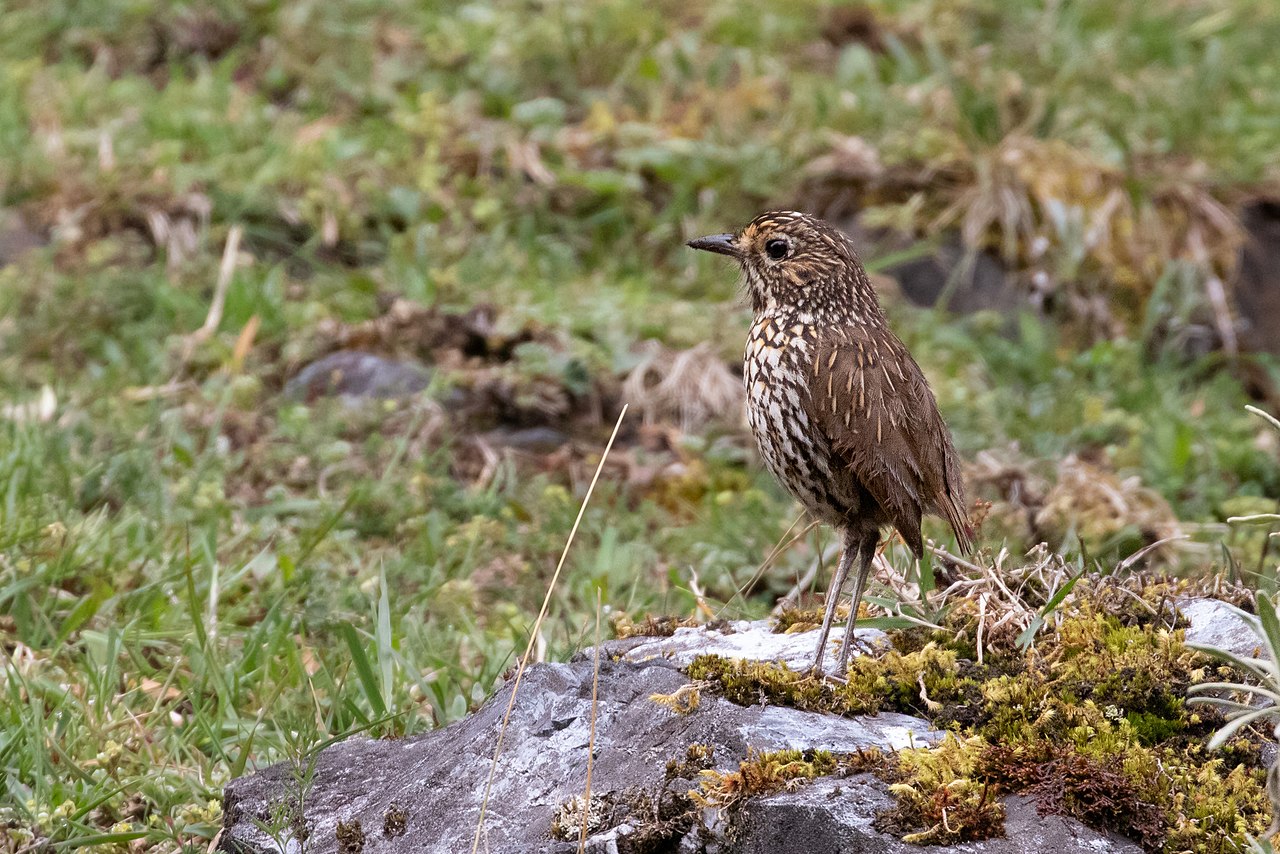
The stripe-chested antwren is a species of bird in subfamily Thamnophilinae of family Thamnophilidae, the "typical antbirds". It is found in Bolivia, Colombia, Ecuador, and Peru.
Region
Western Amazonia and Andean foothills
Typical Environment
Occurs in humid evergreen forest of the Andean foothills and adjacent lowlands, from southern Colombia through eastern Ecuador and Peru to northern Bolivia. Favors dense understory along forest edges, vine tangles, bamboo patches, and streamside thickets within terra firme and foothill forests. Most frequently found in the lower to mid understory, typically 1–6 m above ground. Commonly associates with mixed-species flocks while foraging.
Altitude Range
200–1500 m
Climate Zone
Tropical
Ease of Keeping
Beginner friendly: 1/5
The stripe-chested antwren is a tiny understory antbird that forages methodically through tangles and viney thickets, often with mixed-species flocks. It occurs on the Andean foothills and adjacent western Amazonia of Colombia, Ecuador, Peru, and Bolivia. Pairs keep close contact with soft, high-pitched calls and are more often heard than seen. Like many antwrens, it specializes in gleaning small arthropods from leaves and dead-leaf clusters.


Temperament
secretive but active
Flight Pattern
short rapid wingbeats
Social Behavior
Usually found in pairs that maintain close contact calls and often join mixed-species understory flocks. Nests are small suspended cups placed low in dense cover; both parents participate in incubation and care. Territorial during breeding, with soft countersinging between neighboring pairs.
Migratory Pattern
Resident
Song Description
Song is a short, high, thin series of notes accelerating into a light trill. Calls include a sharp tsip and soft tinkling notes used for pair contact while foraging.
Plumage
Compact antwren with fine dark streaking across a paler chest and underparts; upperparts gray to brownish with subtle streaking and faint wingbars. Females tend to be warmer brown above with buffy underparts and dusky streaks; males appear grayer with crisper chest striping.
Diet
Feeds primarily on small arthropods such as ants, beetles, spiders, and caterpillars. Gleans prey from live foliage, dead-leaf clusters, and fine twigs, occasionally making short sallies to snatch flushed insects. May opportunistically attend small ant swarms but is not an obligate ant follower.
Preferred Environment
Forages in dense understory, vine tangles, secondary growth edges, and bamboo stands, often near streams. Most activity occurs between 1–6 m above the ground within shaded, humid forest.