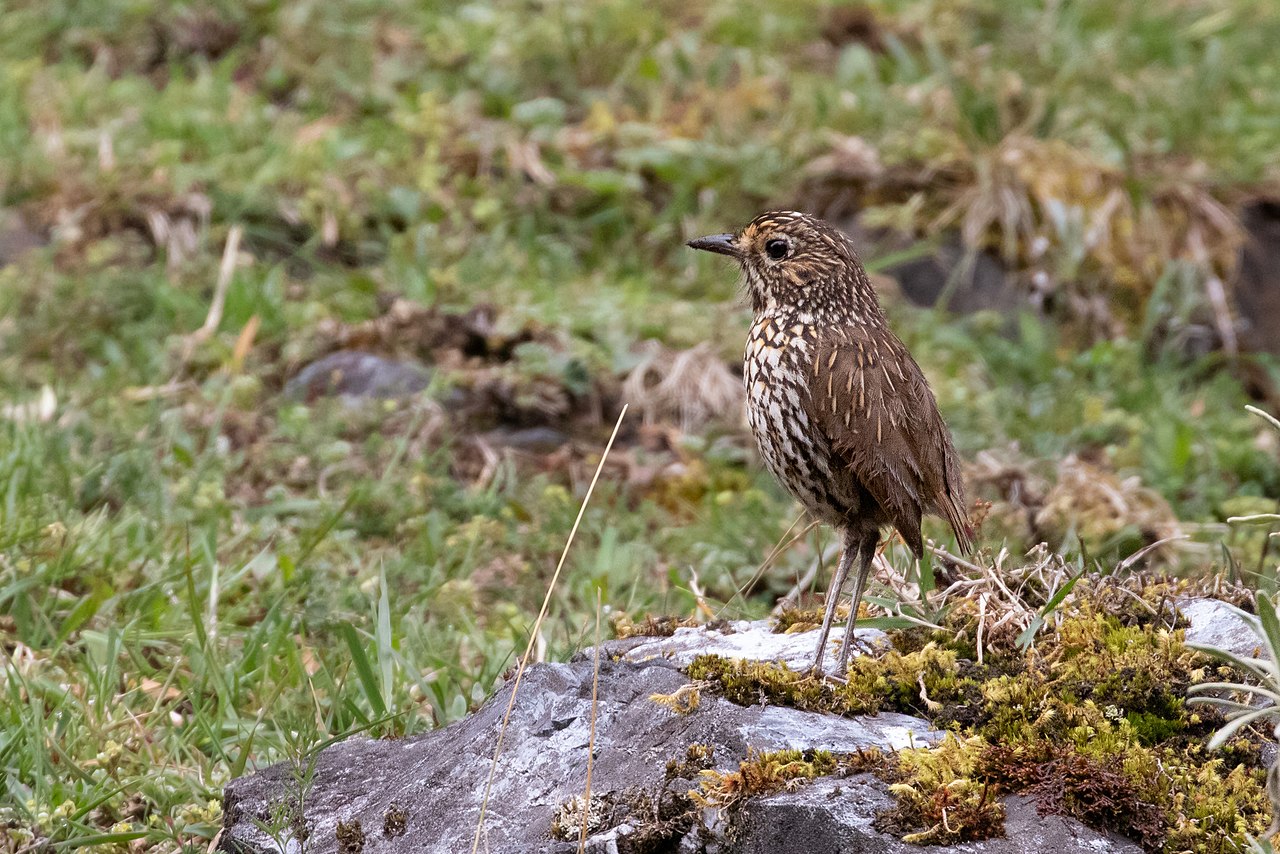
The stripe-cheeked woodpecker is a species of bird in subfamily Picinae of the woodpecker family Picidae. It is endemic to Panama.
Region
Panamanian Highlands
Typical Environment
Occurs in humid foothill and montane forests on both Caribbean and Pacific slopes in central and western Panama. Favors mature evergreen forest, tall secondary growth, and forest edges with abundant snags. Often forages in the midstory to canopy on trunks and larger limbs. It is patchy but can be locally fairly common where suitable habitat remains.
Altitude Range
400–1600 m
Climate Zone
Highland
Ease of Keeping
Beginner friendly: 1/5
This medium-sized woodpecker is confined to the humid foothills and mountains of Panama. It was historically treated near the golden-olive woodpecker complex but is distinguished by its boldly striped face and different vocalizations. Both sexes excavate their own nest cavities in soft or dead wood, and they communicate frequently with sharp calls and drumming.


Temperament
solitary and territorial
Flight Pattern
short, direct flights with bounding undulations
Social Behavior
Usually seen alone or in pairs; may join mixed-species flocks while foraging. Pairs excavate nest cavities in dead or decaying wood and share incubation and chick-rearing duties. Territorial drumming and calling are most frequent during the breeding season.
Migratory Pattern
Resident
Song Description
Gives sharp, metallic peek and pik notes, often in series. Drumming is a short, rapid roll on resonant wood, used for advertisement and territory defense.
Plumage
Olive to golden-olive upperparts with darker barring on the wings and tail; underparts pale to buffy with fine dark barring. The face shows distinct pale and dark striping on the cheek and malar area. Males typically have a red crown or forecrown, reduced or absent in females.
Diet
Feeds mainly on ants, termites, and wood-boring beetle larvae extracted from bark and decaying wood. Probes crevices, pecks, and occasionally scales bark to reach hidden prey. Will supplement with small fruits and berries when insect activity is low.
Preferred Environment
Forages on trunks, larger branches, and dead snags in humid forest and tall secondary growth. Often works the midstory to canopy but may descend to lower levels at forest edges and along trails.