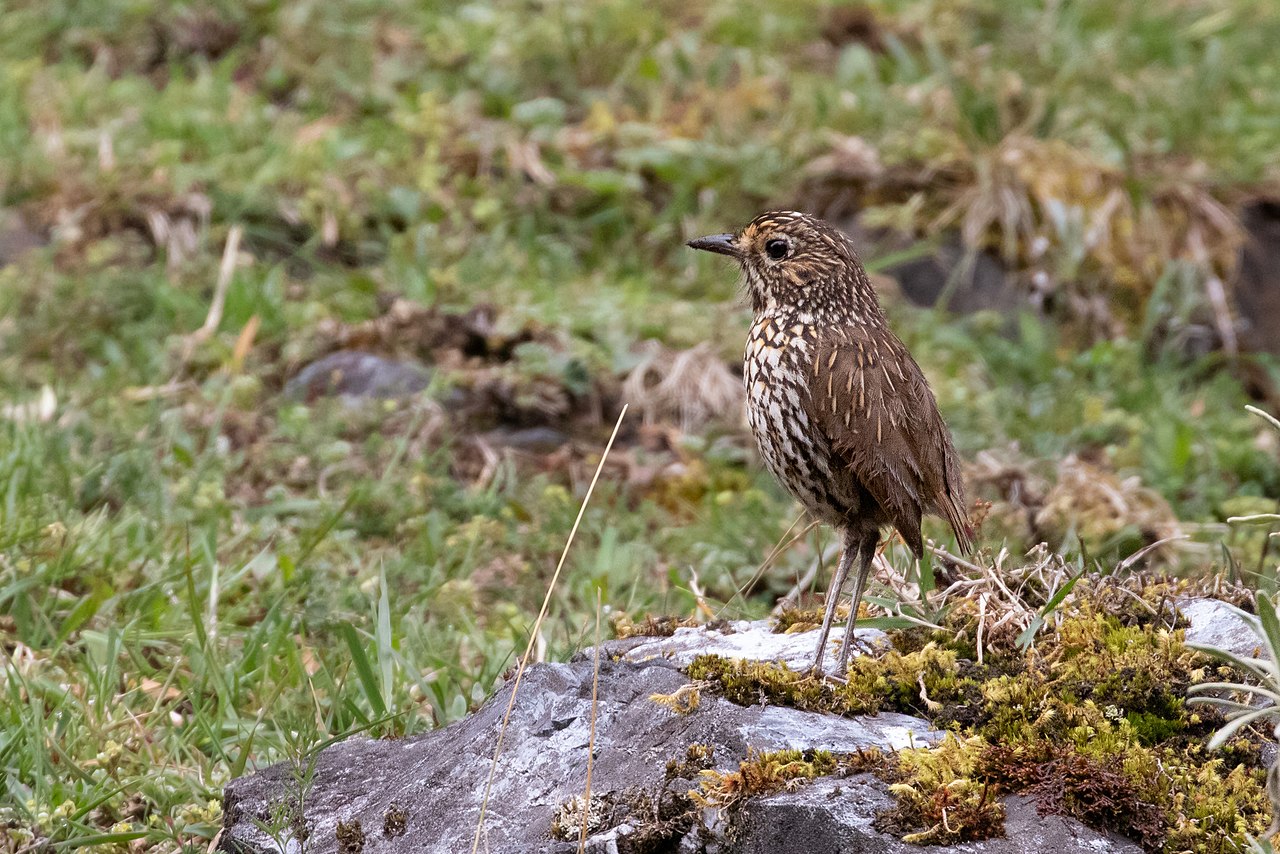
The stripe-cheeked greenbul is a species of the bulbul family of passerine birds. It is found in south-eastern Africa. Its natural habitat is subtropical or tropical moist montane forests.
Region
Southeast Africa
Typical Environment
Occurs in moist montane forests and adjacent secondary growth across highlands of southern Tanzania, Malawi, northern Mozambique, and nearby ranges. Favors evergreen forest, forest edges, bamboo thickets, and riparian gullies. Frequently forages in the midstory and canopy, but will descend to understory tangles along trails and clearings. It tolerates some habitat disturbance and uses regenerating forest, provided there is dense cover and fruiting shrubs.
Altitude Range
800–2400 m
Climate Zone
Highland
Ease of Keeping
Beginner friendly: 1/5
A canopy-loving bulbul of southeastern Africa’s montane forests, the stripe-cheeked greenbul is named for the pale streaking along its cheeks. It often joins mixed-species flocks, moving restlessly through midstory foliage in search of fruit and insects. Its ringing, whistled phrases carry through dense forest, making it easier to detect by ear than by sight.


Temperament
secretive and active
Flight Pattern
short rapid wingbeats through dense cover
Social Behavior
Usually seen in pairs or small family groups, and commonly joins mixed-species flocks in the canopy. Builds a neat cup nest in dense foliage or low shrubs. Likely monogamous, with both adults involved in nest defense and provisioning.
Migratory Pattern
Resident
Song Description
A series of clear, ringing whistles and chatter, often delivered from mid-canopy perches. Phrases may accelerate and vary in pitch, with scolding contact calls given while foraging in flocks.
Plumage
Olive-green upperparts with duller olive-brown wings and tail; underparts olive-washed with yellowish tones toward the belly and vent. The cheeks show pale, fine streaking that contrasts with duskier ear-coverts. Plumage is soft-textured, with subtle mottling on the throat and breast.
Diet
Takes a mixed diet of small fruits and berries, supplemented by insects and other arthropods. Gleans caterpillars, beetles, and spiders from foliage and twigs. Will visit fruiting trees and shrubs seasonally, and occasionally hawks short distances for flying insects.
Preferred Environment
Forages mainly in midstory to canopy of moist montane forest and at edges, including along trails and clearings where fruiting plants are accessible. Also uses secondary growth and thickets near streams.