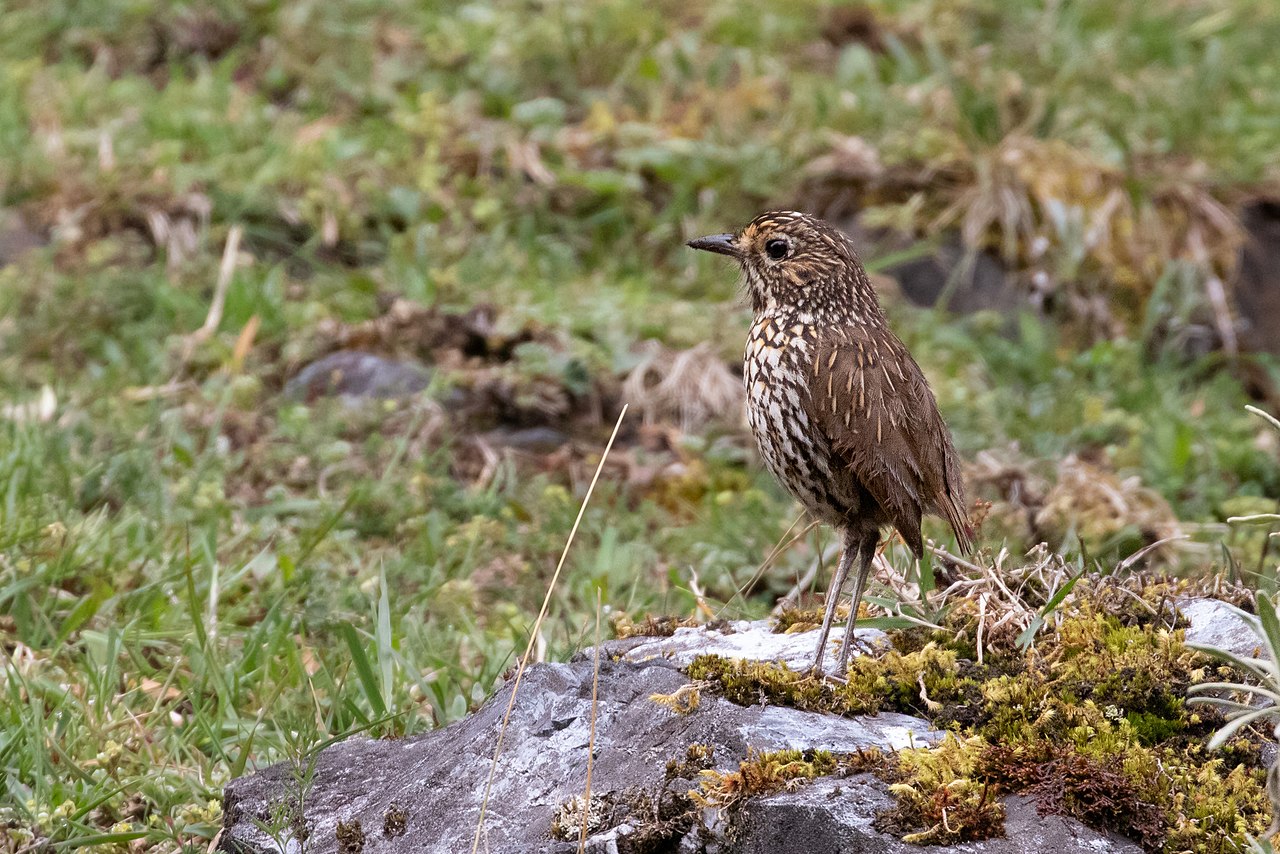
The stripe-breasted wren is a species of bird in the family Troglodytidae. It is found in Honduras, Nicaragua, Costa Rica, and Panama.
Region
Central America
Typical Environment
Occurs from northern Honduras south through Nicaragua and Costa Rica into western Panama, mainly on the Caribbean slope and adjacent foothills. It favors humid lowland and foothill forests, forest edges, and secondary growth with dense understory. Often associated with vine tangles, thickets, and riparian vegetation. Readily uses semi-open habitats near forest such as cacao or coffee plantations with ample shrub cover.
Altitude Range
0–1500 m
Climate Zone
Tropical
Ease of Keeping
Beginner friendly: 1/5
A shy understory wren of humid forests, the stripe-breasted wren is best detected by its loud, antiphonal duets performed by mated pairs. It keeps close to dense tangles and vines, often near streams or forest edges. Its boldly streaked breast and strong white eyebrow help separate it from similar brown wrens in Central America.


Temperament
skulking and wary
Flight Pattern
short rapid wingbeats, low and direct through cover
Social Behavior
Usually found in pairs or small family groups within dense understory. Mated pairs maintain territories and perform well-coordinated duets. Nests are typically domed and placed low in thick vegetation or vine tangles.
Migratory Pattern
Resident
Song Description
A loud, musical series of whistles and rich phrases often delivered as an antiphonal duet between male and female. Calls include sharp chips and scolds when alarmed, with the duet carrying far through forest understory.
Plumage
Warm brown upperparts with barred wings and tail; underparts buffy with heavy dark streaking across the breast and upper flanks. Face shows a bold white supercilium contrasting with a darker cheek. Feathers appear close-textured and sleek, suited to moving through dense undergrowth.
Diet
Primarily consumes insects and other small arthropods such as spiders and beetles, gleaned from foliage, vines, and leaf litter. Probes bark crevices and dead leaves, and occasionally takes small invertebrates from the ground. May rarely sample small berries when available but remains mainly insectivorous.
Preferred Environment
Forages in dense shrub layers, vine tangles, and along riparian thickets. Often works near forest edges, gaps, and secondary growth where cover is abundant.