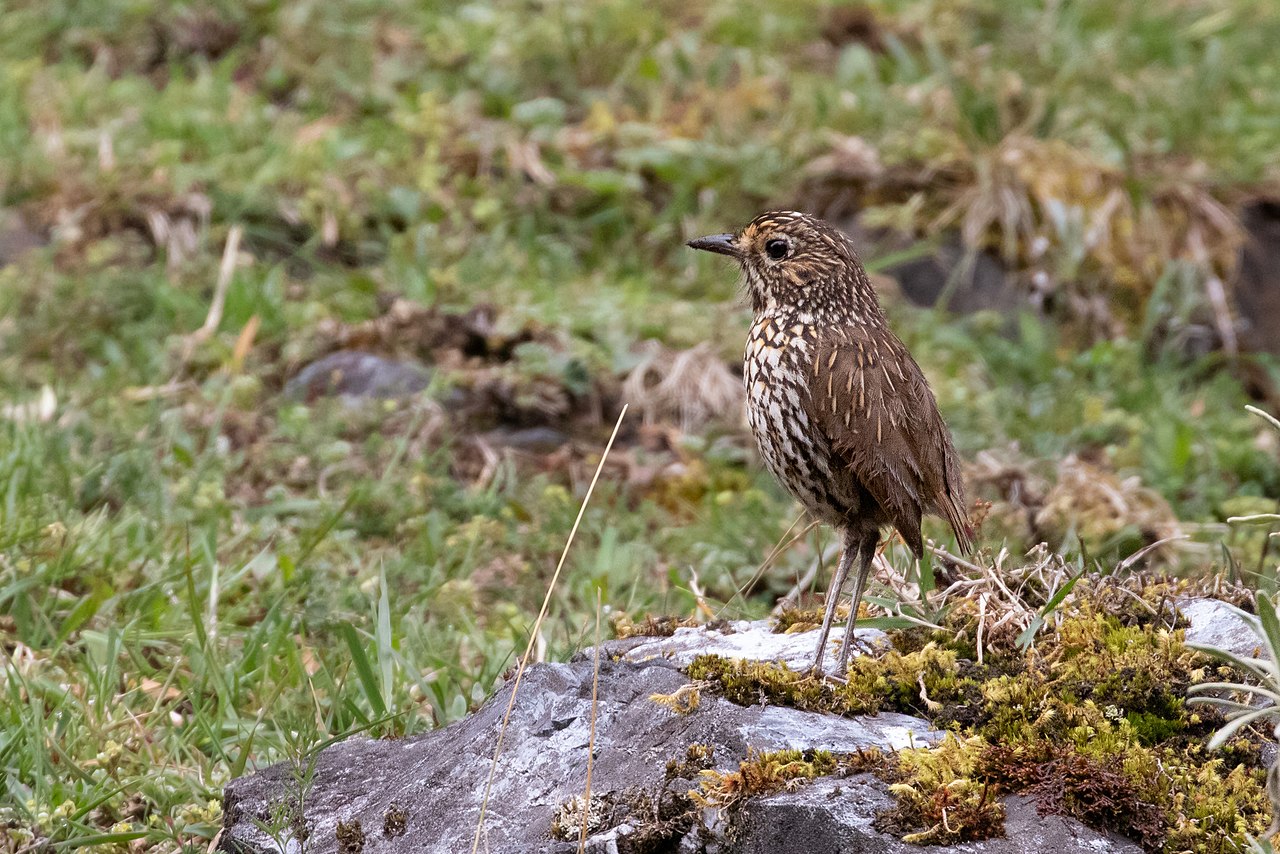
The stripe-faced wood quail is a species of New World quail. It is found in Bolivia and Peru.
Region
Andean Yungas of Peru and Bolivia
Typical Environment
The stripe-faced wood quail inhabits humid montane and foothill forests on the east slope of the central Andes in southeastern Peru and northwestern Bolivia. It favors dense understory, especially Chusquea bamboo thickets, vine tangles, and forest edges with abundant leaf litter. Birds typically remain on or near the ground, using cover and only flushing for short, explosive flights when disturbed. It can occur in selectively logged or secondary forest if sufficient understory remains.
Altitude Range
800–2400 m
Climate Zone
Highland
Ease of Keeping
Beginner friendly: 1/5
This shy, ground-dwelling quail of the Andean foothills is far more often heard than seen, giving resonant whistled duets at dawn and dusk. It forms tight-knit coveys that move quietly through dense bamboo and leaf litter. Habitat loss and hunting pressure in parts of its range make local populations sensitive to disturbance.


O. balliviani in Iconographia Zoologica.

Temperament
shy and secretive
Flight Pattern
short rapid wingbeats
Social Behavior
Usually found in small coveys, often family groups, that keep close contact while foraging on the ground. Nests are concealed on the forest floor with minimal structure, and pairs are thought to be monogamous during the breeding season. Birds communicate with soft contact calls while moving through cover.
Migratory Pattern
Resident
Song Description
A series of clear, resonant whistles, often given as antiphonal duets between mates or covey members. Vocal activity peaks around dawn and dusk and can carry through dense vegetation.
Plumage
Dark brown to olive-brown body with fine mottling and scalloping, warmer rufous tones on the underparts, and a distinctly patterned face. The facial stripes are bold and pale, contrasting with a darker mask and crown. Feathers appear dense and slightly glossy, aiding camouflage on the forest floor.
Diet
Feeds on a mix of fallen seeds, small fruits, tender shoots, and a variety of invertebrates such as insects and spiders. It scratches through leaf litter to uncover food items and will glean low vegetation. Seasonal availability of fruits and arthropods likely shapes local diet composition.
Preferred Environment
Forages on the forest floor of humid montane forests, especially in bamboo patches, along streams, and at forest edges with dense understory. It often uses narrow trails and natural openings for movement between foraging spots.