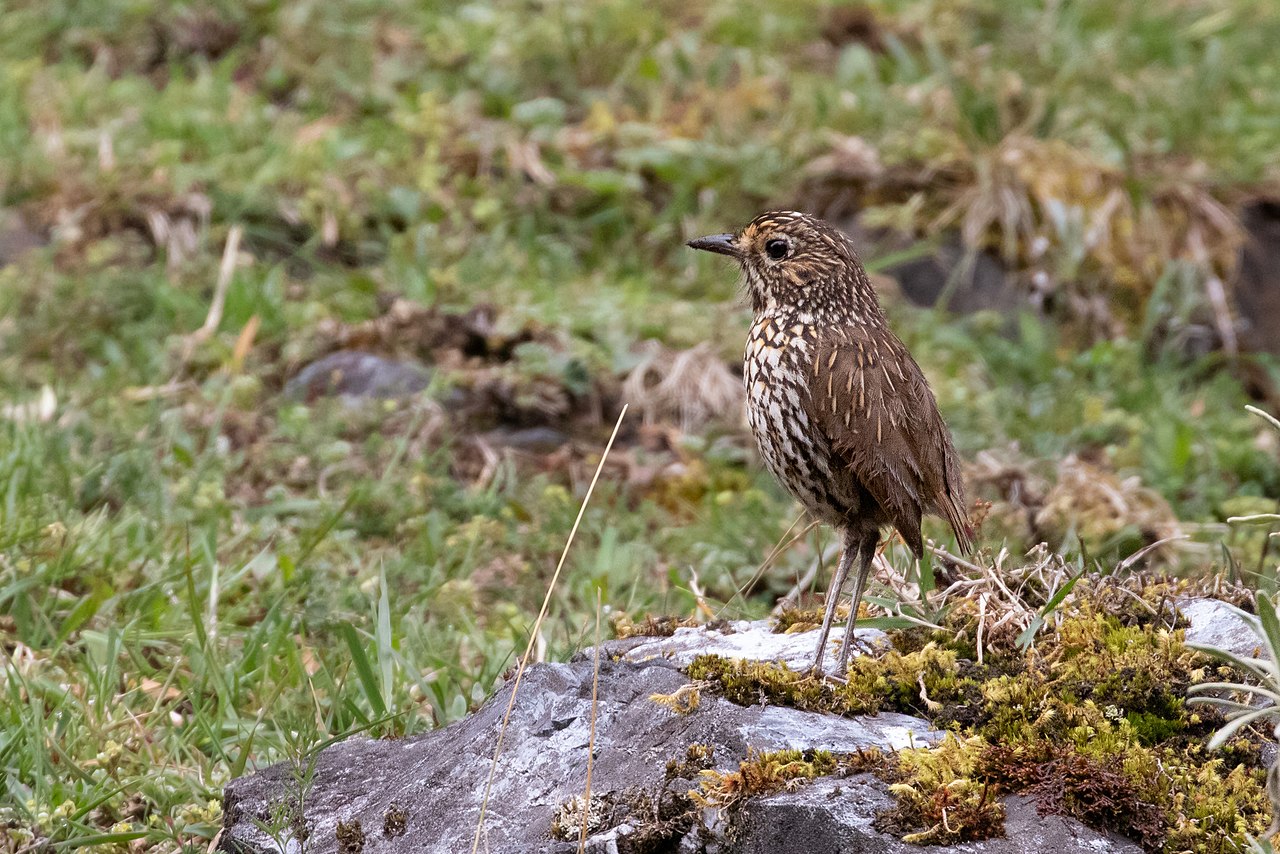
The stripe-crowned spinetail is a species of bird in the Furnariinae subfamily of the ovenbird family Furnariidae. It is found in Argentina, Bolivia, Brazil, Paraguay, and Uruguay.
Region
Southern South America
Typical Environment
Occurs in the Gran Chaco and adjacent regions of Argentina, Bolivia, Paraguay, Uruguay, and southwestern Brazil. It favors dry to semi-humid forests, thorn scrub, and gallery woodlands, including second growth and edges. Often seen in understory to midstory tangles and along woodland margins. It tolerates some habitat modification and can persist near rural settlements and ranchlands.
Altitude Range
0–2500 m
Climate Zone
Subtropical
Ease of Keeping
Beginner friendly: 1/5
This active spinetail of the ovenbird family frequents dry woodlands and thorn scrub, especially in the Gran Chaco. It often joins mixed-species flocks, moving methodically through branches as it gleans insects. Its striped crown and warm rufous tail are good field marks. The species is generally common across its range and adapts well to lightly disturbed habitats.


Temperament
active and somewhat skulking
Flight Pattern
short rapid wingbeats
Social Behavior
Usually found in pairs or family groups and frequently joins mixed-species flocks. Nests are bulky, often domed structures placed in shrubs or trees; both sexes participate in construction. Breeding occurs mainly in the austral spring and summer.
Migratory Pattern
Resident
Song Description
Song is a brisk series of sharp chips and trills that accelerates slightly, delivered from cover. Calls include dry ticks and scolding chatters while foraging.
Plumage
Warm brown upperparts with rufous wings and long rufous tail; underparts grayish-buff. Crown shows pale streaking, giving a striped-crown appearance, with a pale supercilium. Feathers appear slightly loose and spiky on the crown when alert.
Diet
Primarily feeds on arthropods such as insects and spiders, gleaned from leaves, twigs, and bark. It methodically works through dense foliage, probing crevices and small branch clusters. Occasionally takes small larvae or eggs and may very rarely sample small berries.
Preferred Environment
Forages in understory and midstory of dry forests, thorn scrub, and woodland edges. Often uses vine tangles, fallen branches, and dead limb clusters where prey is concentrated.