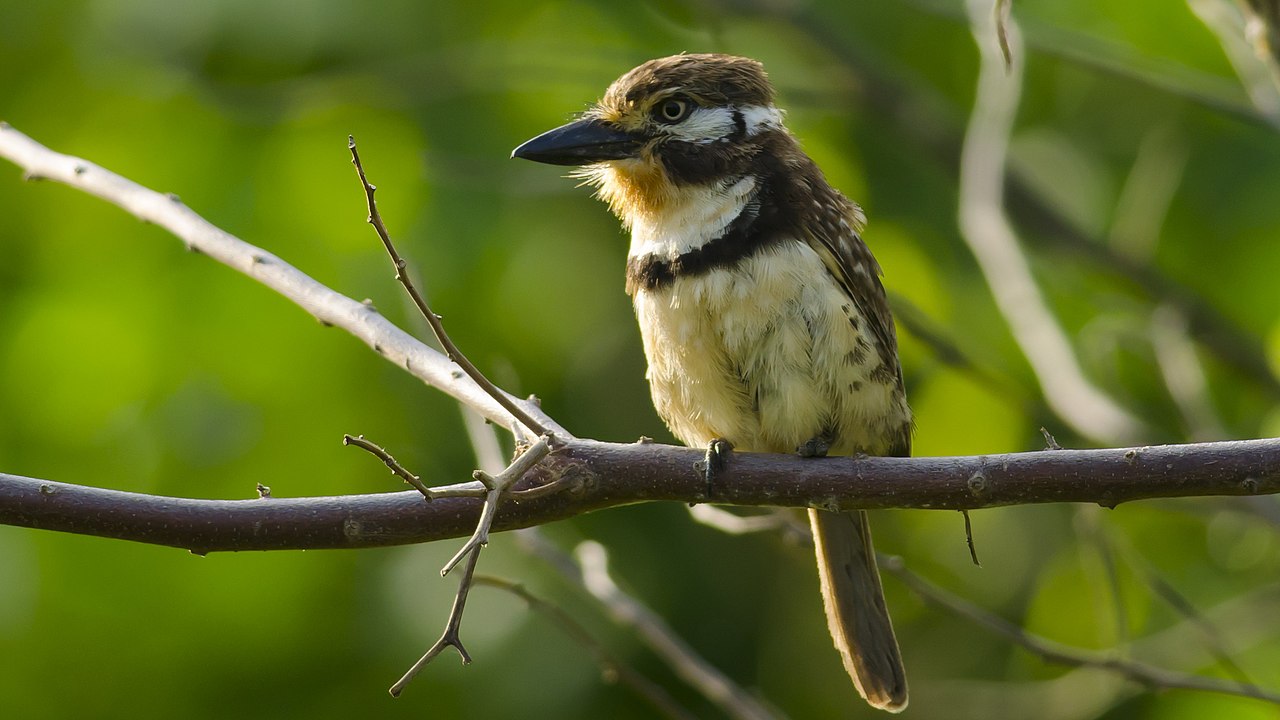
The russet-crowned quail-dove is a species of bird in the family Columbidae. It is found in Panama and far northwestern Colombia.
Region
Eastern Panama and far northwestern Colombia (Darién–Chocó)
Typical Environment
Occurs in humid evergreen rainforest, mature secondary growth, and gallery forests. Typically keeps to dense understory and forest edges near streams or fruiting shrubs, where it forages on the ground. It is most often encountered on quiet forest trails and clearings deep within intact forest. In Colombia, it is restricted to the Chocó region near the Panamanian border.
Altitude Range
Sea level to 1500 m
Climate Zone
Tropical
Ease of Keeping
Beginner friendly: 1/5
The russet-crowned quail-dove is a secretive forest-floor pigeon of humid lowland and foothill forests. It often goes undetected, moving quietly through dense understory and along shaded trails. Its low, mournful coo carries surprisingly far at dawn and dusk. Habitat loss and hunting pressure likely affect local populations.


Temperament
shy and secretive
Flight Pattern
short rapid wingbeats low through understory; explosive flush when disturbed
Social Behavior
Usually solitary or in pairs, keeping to dense cover on or near the forest floor. Nests are built low in shrubs or small trees, often a flimsy platform of twigs. Clutch size is small (typically one to two eggs). Courtship involves soft coos and short, quiet pursuits through the understory.
Migratory Pattern
Resident
Song Description
A low, mournful single-note coo repeated at regular intervals, most frequent at dawn and dusk. Calls include soft grunts and hoots given from concealed perches within thick vegetation.
Plumage
Rich olive-brown to chestnut-brown upperparts with a soft purplish sheen on the mantle and wings, contrasting with a russet crown and nape. Underparts are buffy to grayish with warmer tones on the breast and flanks. The throat is paler with a subtle whitish patch bordered by darker malar lines.
Diet
Feeds on fallen fruits, seeds, and small invertebrates such as insects and snails. It forages by walking and pecking, occasionally scratching through leaf litter. Seasonal availability of fruit influences diet composition, with more invertebrates taken during lean fruit periods.
Preferred Environment
Primarily forages on shaded forest floors, along quiet trails, and near fruiting shrubs and trees. Often remains close to dense thickets or streamside tangles that offer quick cover.