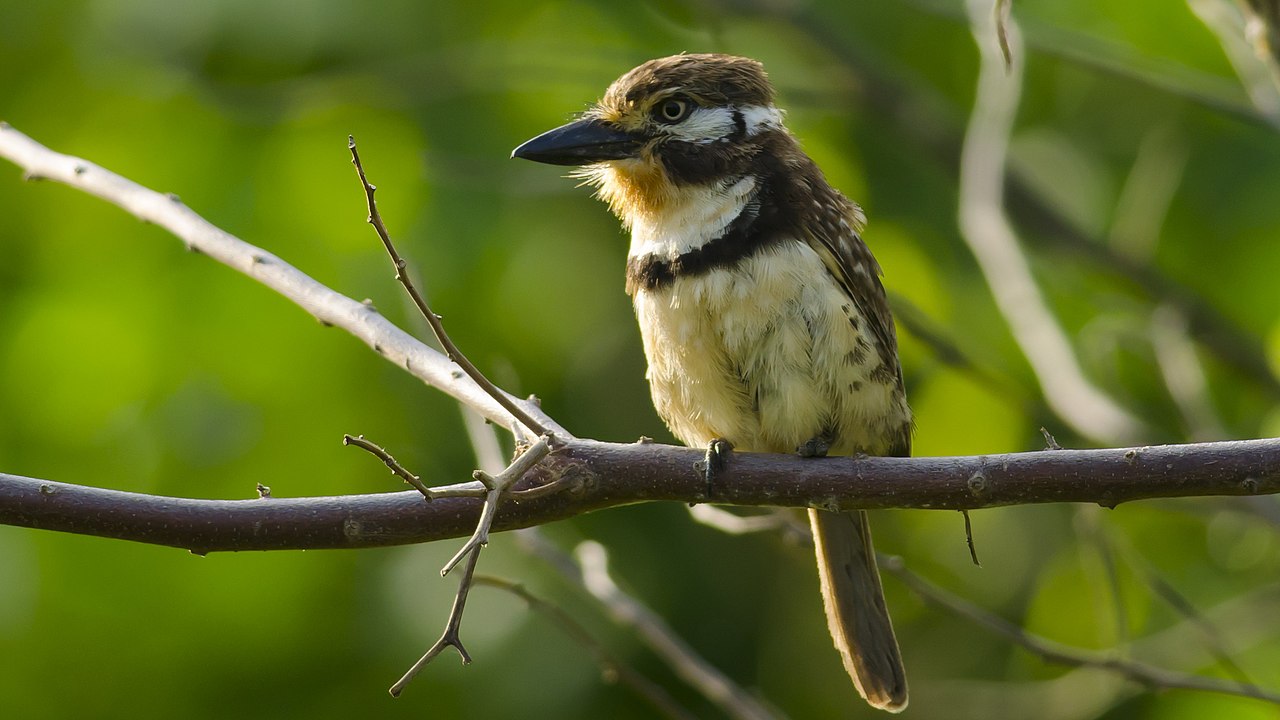
The russet-crowned warbler is a species of bird in the family Parulidae. It is found in Bolivia, Colombia, Ecuador, Peru, and Venezuela. Its natural habitats are subtropical or tropical moist montane forests and heavily degraded former forest.
Region
Andes Mountains
Typical Environment
Occurs from Venezuela and Colombia south through Ecuador and Peru to Bolivia, mainly along humid Andean slopes. Favors subtropical and tropical moist montane forests, forest edges, and dense secondary growth. Common in thickets, bamboo (Chusquea), and along streamside vegetation. It tolerates some disturbance and is often found in heavily degraded former forest as long as understory cover remains.
Altitude Range
1200–3200 m
Climate Zone
Highland
Ease of Keeping
Beginner friendly: 1/5
The russet-crowned warbler is a lively Andean understory bird that often joins mixed-species flocks, gleaning insects from leaves and moss. Its distinctive rufous crown bordered by dark stripes makes it easier to identify in dim montane forest light. It builds domed nests low to the ground or on banks, with a side entrance hidden in dense vegetation.


Temperament
active and skulking
Flight Pattern
short rapid wingbeats
Social Behavior
Usually forages in pairs or small family groups and readily joins mixed-species flocks in the understory and midstory. Nests are domed and placed low, often on banks or within dense grass and bamboo, with both parents attending the nest. Territorial singing is common during the breeding season.
Migratory Pattern
Resident
Song Description
Song is a sweet, accelerating series of clear whistles and trills, delivered from low perches within dense cover. Calls are sharp chips and thin tseet notes that help keep contact within pairs and flocks.
Plumage
Olive-green upperparts with bright yellow underparts and throat; head shows a rich rufous crown bordered by black lateral crown stripes and a pale supercilium. Underparts are clean yellow with subtle olive wash on flanks; wings and tail are olive without wingbars.
Diet
Primarily feeds on insects and other small arthropods such as spiders and caterpillars, gleaned from leaves, twigs, and moss. Occasionally takes small berries or seeds, especially when insect prey is scarce. Often forages methodically, probing leaf clusters and dead foliage.
Preferred Environment
Forages in dense understory, bamboo thickets, and along forested streams and edges. Frequently accompanies mixed-species flocks moving through humid montane forest.