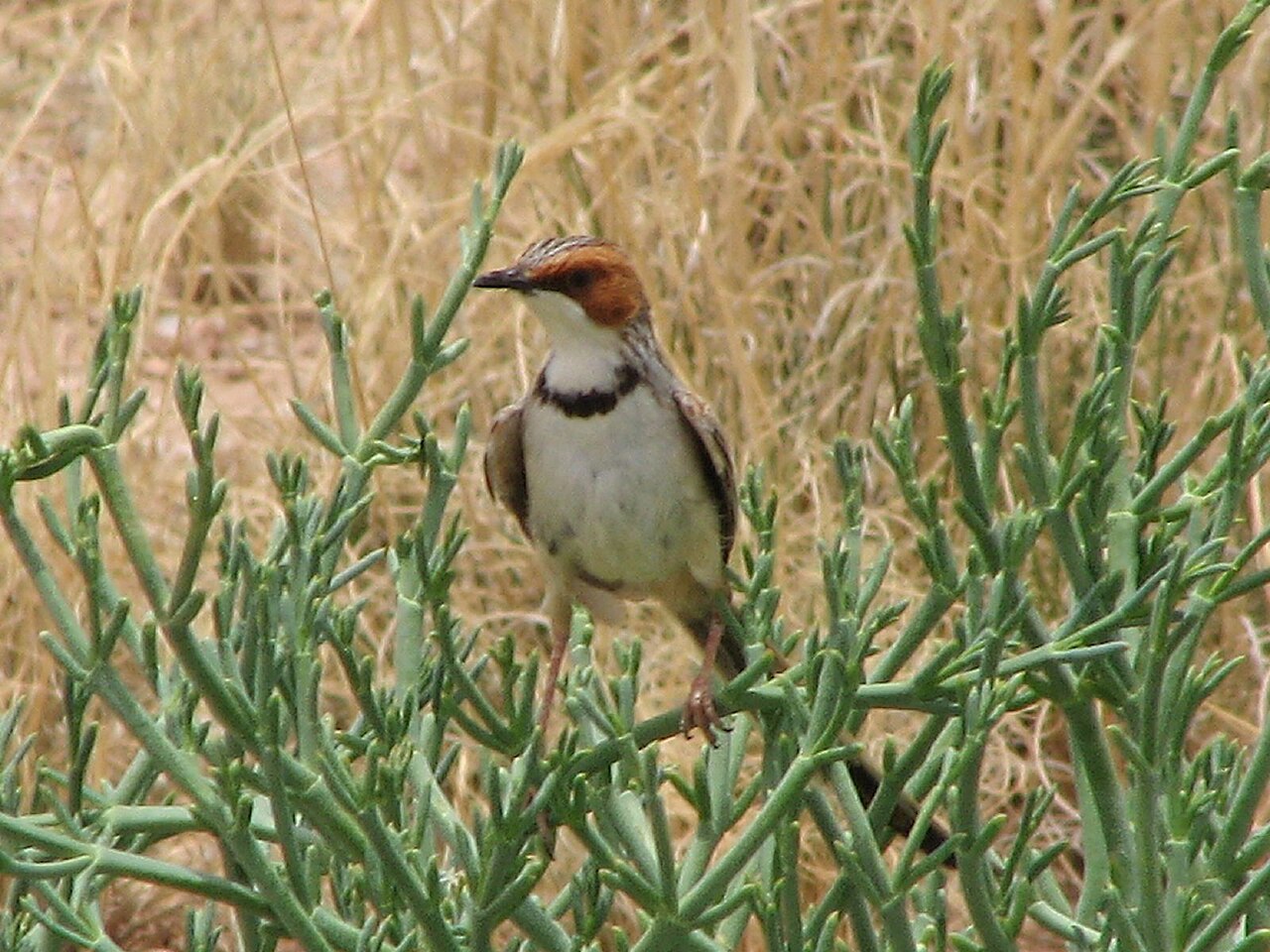
The rufous-eared brushfinch is a species of bird in the family Passerellidae.
Region
Central Andes of Peru
Typical Environment
Occurs in montane shrublands, forest edges, and openings with dense understory, including bamboo and Polylepis patches. It favors tangled thickets and secondary growth where it can remain concealed while foraging. The species is patchy but can be locally common where suitable habitat persists. It generally keeps to mid- to high-elevation slopes and valley margins with scattered bushes.
Altitude Range
2400–3800 m
Climate Zone
Highland
Ease of Keeping
Beginner friendly: 1/5
The rufous-eared brushfinch is a shy Andean songbird best recognized by its rich rufous ear patch set against a gray head. It stays low in dense shrubbery and forest edges, often moving in pairs or small family groups. It forages methodically near the ground, picking insects, seeds, and small berries. Its clear, whistled phrases can carry surprisingly far in mountain valleys.


Temperament
skulking and wary
Flight Pattern
short rapid wingbeats, low over vegetation
Social Behavior
Usually found in pairs or small family groups, maintaining loose territories in dense shrubbery. Nests are cup-shaped and placed low in thick vegetation. It may occasionally accompany mixed-species flocks along edges but tends to remain inconspicuous.
Migratory Pattern
Resident
Song Description
Song is a series of clear, sweet whistles and short phrases delivered from within cover. Calls include sharp chips and soft contact notes between mates. Vocalizations are repetitive but vary subtly in pitch and tempo.
Plumage
Slate-gray head and breast with a contrasting rufous ear patch; olive-brown back and wings; grayish underparts with paler throat and belly; darker tail.
Diet
Consumes small insects and other arthropods gleaned from leaves and ground litter. Also takes seeds and small berries, especially when insect prey is less abundant. Foraging is deliberate, with frequent pauses to peer into tangles and leaf clusters.
Preferred Environment
Feeds close to the ground in dense shrubs, forest edges, and secondary growth. Often works along sheltered slopes, ravines, and hedgerows where cover is continuous.