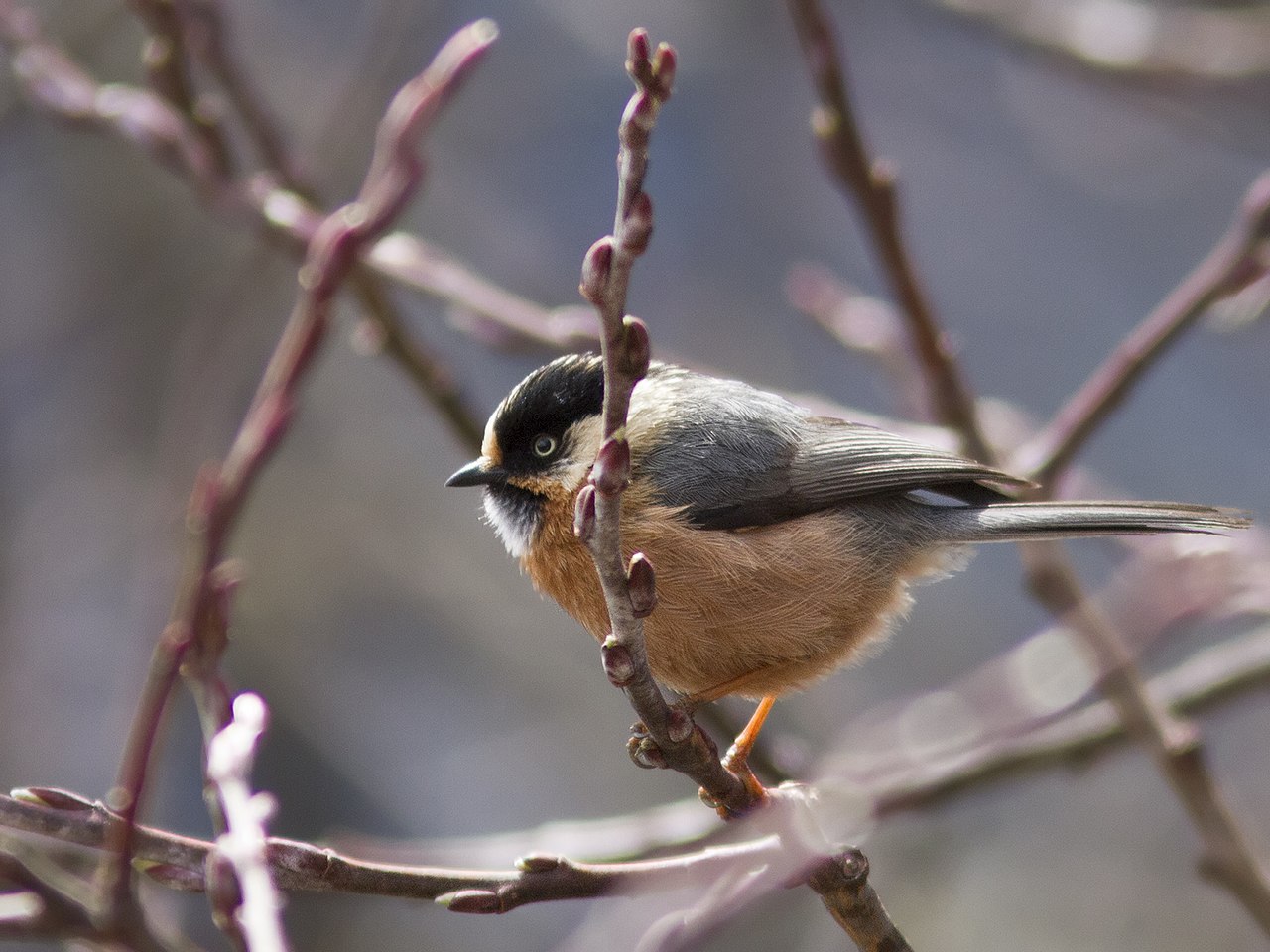
The rufous-faced warbler is a species of the bush warbler family, Cettiidae. It was formerly included in the "Old World warbler" assemblage.
Region
Himalayas to southern China and northern Southeast Asia
Typical Environment
Found from the Himalayan foothills east through southern and central China and on Taiwan, extending into parts of northern mainland Southeast Asia. It inhabits broadleaf and mixed montane forests, forest edges, and bamboo thickets, especially near streams. The species favors dense, tangled understory where it forages by gleaning. It is mostly sedentary, with some local altitudinal movements depending on season.
Altitude Range
200–2500 m
Climate Zone
Subtropical
Ease of Keeping
Beginner friendly: 1/5
This tiny bush warbler is named for its warm rufous face set off by a neat white throat. It tends to skulk in dense undergrowth along forested streams but readily joins mixed-species flocks. Its domed nest is often suspended low in vegetation, cleverly concealed among leaves.


Temperament
active and skulking
Flight Pattern
short rapid wingbeats through dense cover
Social Behavior
Typically seen singly, in pairs, or in family parties, and often joins mixed-species flocks in the understory. Nests are dome-shaped and placed low in vegetation, often near water. Both parents contribute to feeding the chicks.
Migratory Pattern
Resident
Song Description
Delivers a clear, high-pitched series of whistles and thin tinkling notes, often repeated in short phrases. Calls include sharp tseep or tick sounds used to keep contact in dense foliage.
Plumage
Compact warbler with olive-green upperparts and paler yellowish underparts, a rich rufous face and ear-coverts, and a clean white throat contrasting with the face. Wings and tail are olive with subtle edging. Plumage is smooth, with fine, neat feathering around the head.
Diet
Primarily hunts small insects and other arthropods such as beetles, caterpillars, and spiders. It forages by gleaning prey from leaves, twigs, and bamboo culms, occasionally hovering briefly to pick items from the undersides of foliage. It may sally short distances to snatch tiny flying insects.
Preferred Environment
Feeds in dense understory, bamboo thickets, and riparian shrubs along shaded streams. Frequently works within 1–3 meters of the ground where cover is thick.