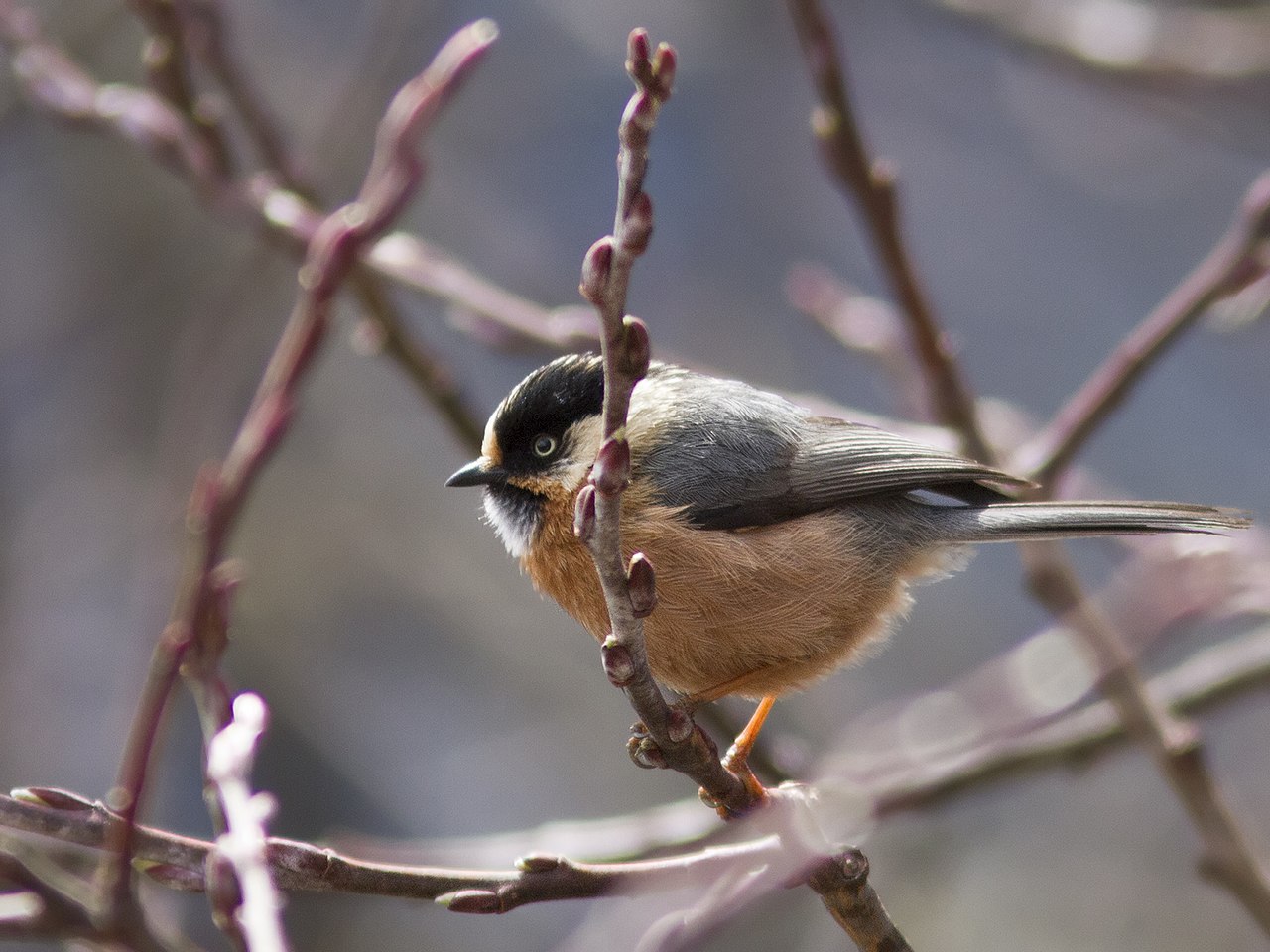
The rufous-fronted babbler is a babbler species in the Old World babbler family. It occurs in the Eastern Himalayan foothills, Myanmar, Thailand, northern Indochina and south to the Malay Peninsula and the islands of Sumatra and Borneo. The buff-chested babbler is now subsumed into this species.
Region
Eastern Himalayas to Sundaland
Typical Environment
Occurs from the foothills of the Eastern Himalayas through Northeast India, Bangladesh, Myanmar, Thailand, Laos, Cambodia, and Vietnam, south through the Malay Peninsula to Sumatra and Borneo. Prefers dense understory in evergreen and mixed forests, secondary growth, bamboo thickets, and forest edge. Often found near stream gullies and in low, tangled vegetation where it forages close to the ground. Tolerant of lightly disturbed habitats but relies on shrub-layer cover.
Altitude Range
Sea level to 1800 m
Climate Zone
Tropical
Ease of Keeping
Beginner friendly: 1/5
A small, skulking babbler of dense undergrowth, the rufous-fronted babbler is noted for its warm rufous forehead and soft, buffy underparts. It often travels in pairs or small family groups and readily joins mixed-species flocks. Recent taxonomic treatments have subsumed the buff-chested babbler within this species across its broad Southeast Asian range.

Temperament
secretive and active
Flight Pattern
short rapid wingbeats
Social Behavior
Usually forages in pairs or small family parties and frequently joins mixed-species flocks in the understory. Nests are placed low in dense vegetation, often domed or well-concealed cups. Both parents typically participate in care of the young.
Migratory Pattern
Resident
Song Description
A high, tinkling series of thin notes and trills, often delivered as quick, repetitive phrases. Pairs may give antiphonal duets, creating a rapid, conversational quality from dense cover.
Plumage
Warm brown upperparts with a distinct rufous forehead and forecrown, buffy to pale underparts, and slightly darker wings and tail. Throat and breast are buff-washed with subtle, fine streaking on the throat in some individuals. Feathers are soft-textured and sleek, aiding its skulking habits in dense cover.
Diet
Primarily feeds on small insects and other arthropods, including beetles, ants, caterpillars, and spiders. Gleans prey from leaves, twigs, and vine tangles, and occasionally picks items from the ground. May take small berries opportunistically, especially in the non-breeding season.
Preferred Environment
Forages in dense shrub layers, bamboo, and vine tangles within forest and edge habitats. Often keeps within a meter or two of the ground, moving methodically through cover.