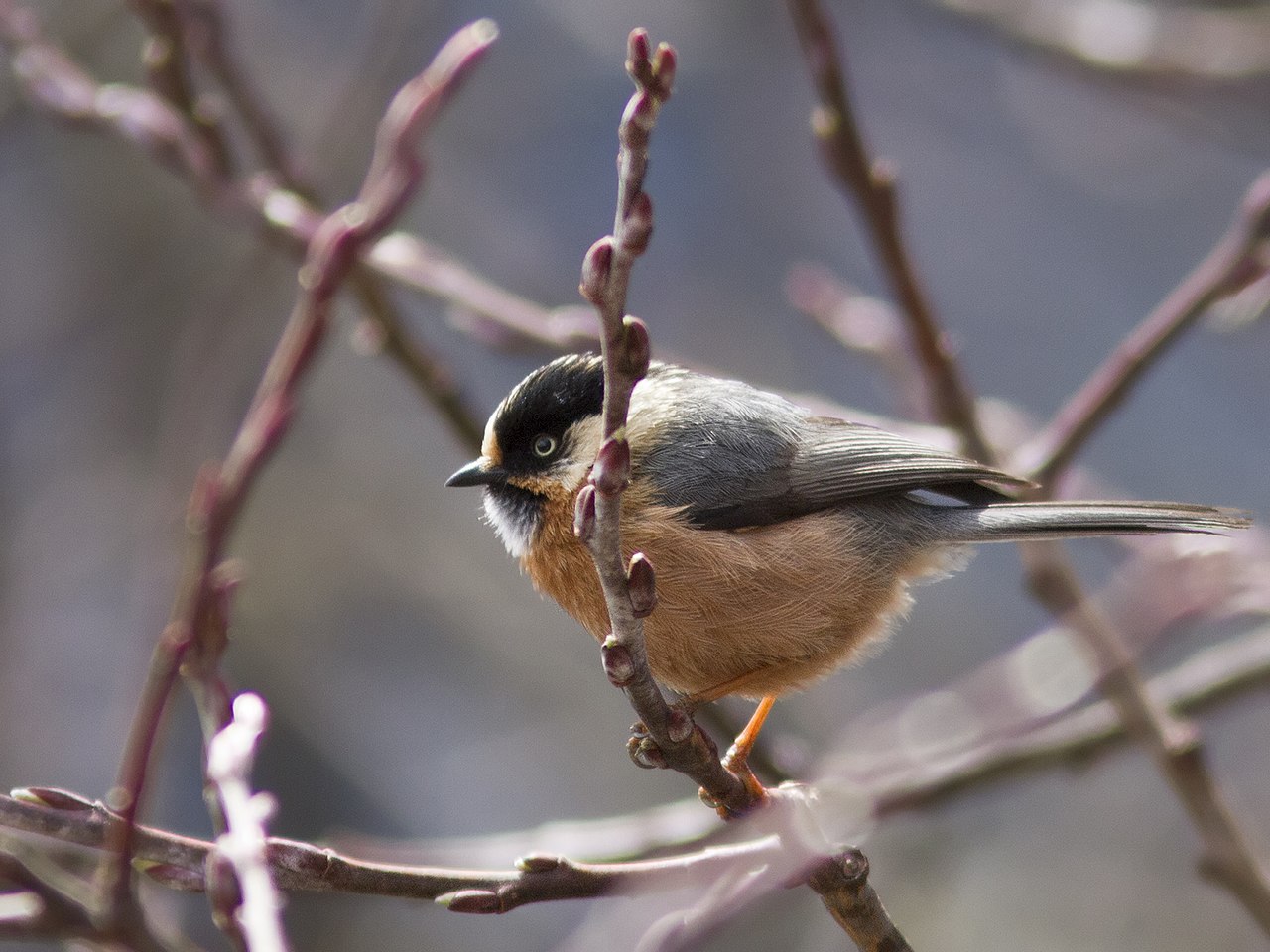
The rufous-faced antbird is a species of bird in subfamily Thamnophilinae of family Thamnophilidae, the "typical antbirds". It is endemic to Brazil.
Region
Southwestern Brazilian Amazon
Typical Environment
Primarily inhabits lowland terra firme rainforest with dense understory, vine tangles, and patches of bamboo. It also uses edges of seasonally flooded forests and selectively logged second growth where cover remains thick. Birds keep close to the ground, moving through thickets and along forest edges and streamside tangles. It is typically absent from open or heavily degraded habitats and avoids wide river islands.
Altitude Range
0–600 m
Climate Zone
Tropical
Ease of Keeping
Beginner friendly: 1/5
The rufous-faced antbird is a shy understory specialist of the Brazilian Amazon, often staying close to the forest floor. It will occasionally attend army-ant swarms to snatch flushed arthropods but more commonly forages quietly in dense tangles and bamboo. Pairs keep small territories and communicate with clear, whistled songs. Habitat loss from deforestation in southwestern Amazonia is a concern for this localized species.


Temperament
skulking and territorial
Flight Pattern
short rapid wingbeats in low, direct dashes
Social Behavior
Usually found in pairs or small family groups in dense understory. Pairs defend small territories and may duet. Nests are placed low, typically a cup hidden in thick vegetation; both parents attend the young.
Migratory Pattern
Resident
Song Description
Song is a clear, whistled series that rises and then falls, delivered from low perches within cover. Calls include sharp chips and soft contact notes used between mates.
Plumage
Male is mostly dark slaty to gray-black with a contrasting rich rufous face and ear-coverts; wings and tail are dusky. Female is warmer brown above with rufous face and paler brownish underparts; both sexes lack obvious wingbars. Feathers are smooth and close-fitting, aiding movement through dense understory.
Diet
Primarily eats arthropods such as beetles, ants, spiders, and orthopterans, taken from leaves, twigs, and the leaf litter. It gleans methodically and also makes short sallies to seize prey. The species may attend army-ant swarms opportunistically but is not an obligate follower.
Preferred Environment
Forages within 0–2 m of the ground in dense tangles, bamboo, and along fallen logs. Often works along edges of trails, streams, and light gaps where cover remains thick.