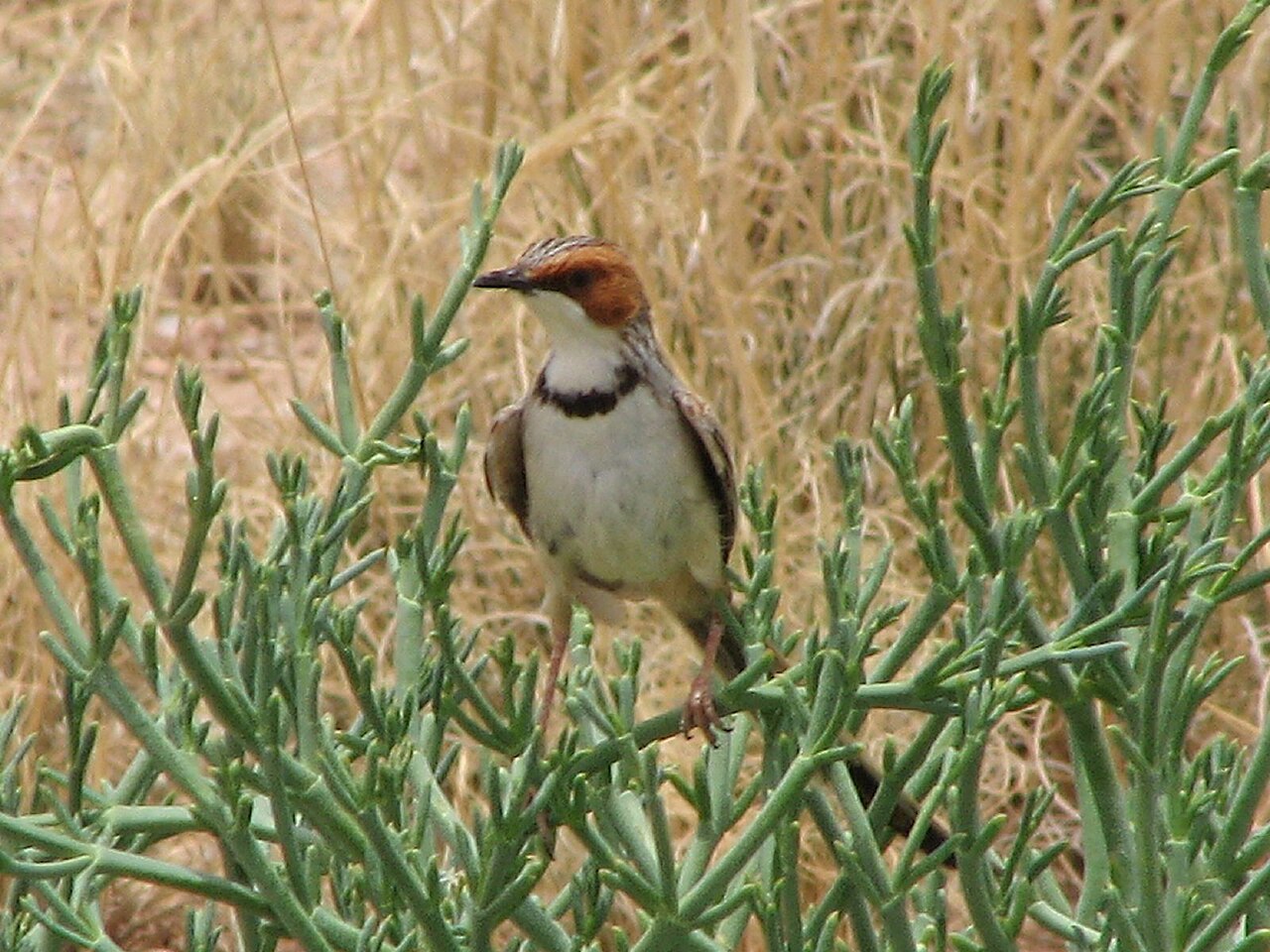
The rufous-crowned sparrow is a small American sparrow. This passerine is primarily found across the Southwestern United States and much of the interior of Mexico, south to the transverse mountain range, and to the Pacific coast to the southwest of the transverse range. Its distribution is patchy, with populations often being isolated from each other. Twelve subspecies are generally recognized, though up to eighteen have been suggested. This bird has a brown back with darker streaks and gray underparts. The crown is rufous, and the face and supercilium are gray with a brown or rufous streak extending from each eye and a thick black malar streak.
Region
Southwestern United States and interior Mexico
Typical Environment
Occurs in patchy populations from California and the Southwest across Arizona, New Mexico, and west/central Texas into the Mexican Plateau and Pacific-slope ranges. Prefers arid to semi-arid, rocky hillsides with scattered shrubs, grasses, and open ground. Common in chaparral, desert scrub, oak scrub, and canyons with boulder outcrops. Typically avoids dense forests and expansive grasslands without shrub cover. Often near ecotones where shrubs meet open, stony ground.
Altitude Range
0–2500 m
Climate Zone
Arid
Ease of Keeping
Beginner friendly: 1/5
This ground-oriented sparrow favors rocky slopes with sparse shrubs and grasses, often in chaparral and desert scrub. Its populations are patchy, with many small, isolated groups across its range. Pairs maintain year-round territories, and birds often sing from boulders or low perches. When nesting on the ground, adults may perform a distraction “rodent-run” display to lure predators away.


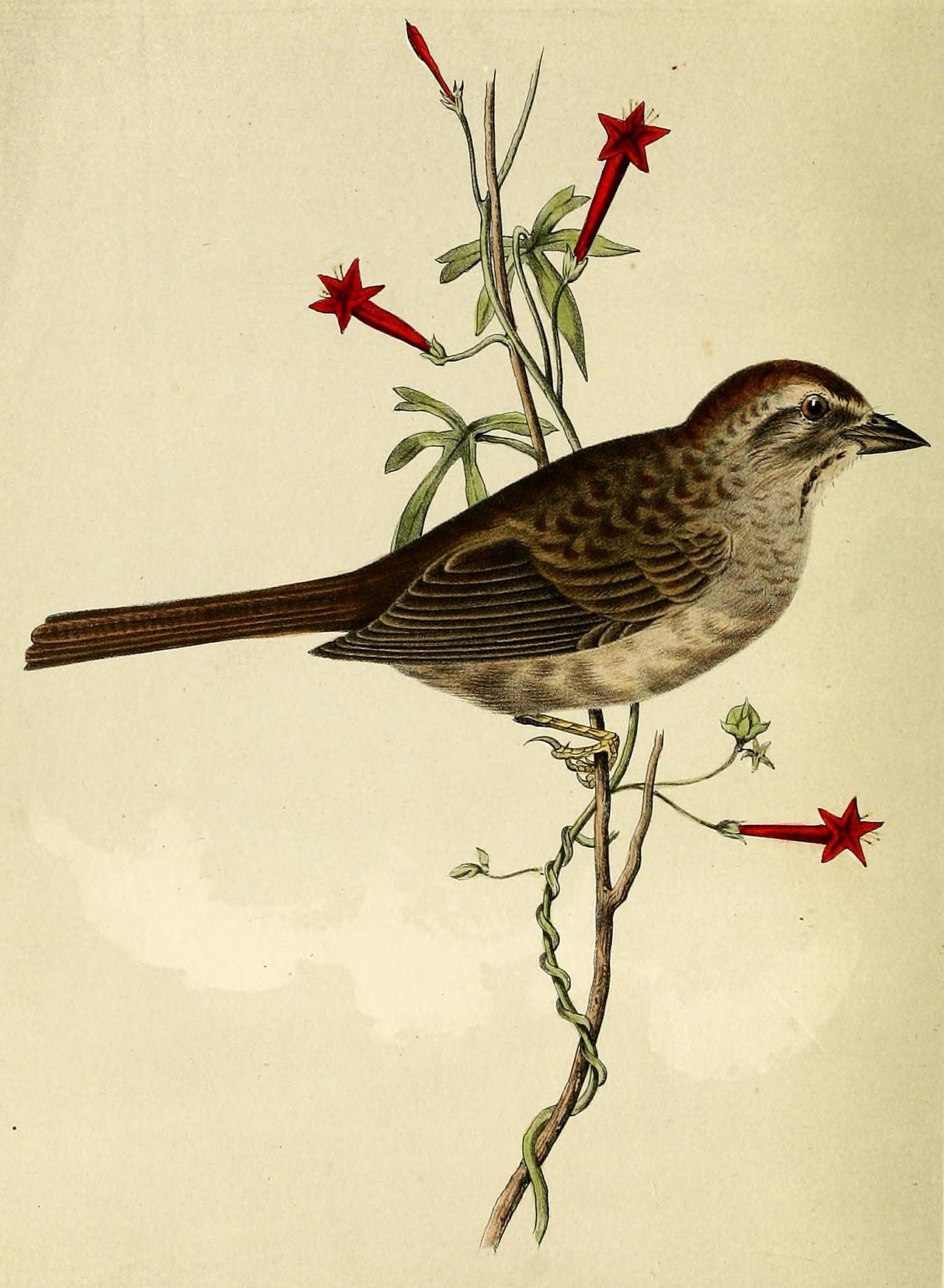
Drawing joined to the original description by John Cassin

Rufous-crowned sparrow general characteristics

A. r. boucardi

Rufous-crowned Sparrow in Placer County, California.

Chaparral nesting habitat in California

A pair in California
Temperament
skulking yet alert; often shy in dense cover
Flight Pattern
short rapid wingbeats, low bounding flights between shrubs
Social Behavior
Typically found as pairs or small family groups and maintains territories year-round. Monogamous pairs nest on or near the ground beneath shrubs or grasses, building well-concealed cup nests. Displays distraction behaviors near nests to deter predators.
Migratory Pattern
Resident
Song Description
The male delivers a bright, tinkling series of clear notes that may accelerate into a short trill. Calls include sharp chips and thin tseep notes, often given from a rock or low shrub.
Plumage
Brown upperparts with darker streaking and plain gray underparts; texture is smooth with subtle streaks on the back. The head shows a bright rufous crown contrasting with a gray face and supercilium. A bold black malar stripe borders a pale throat, and the bird shows a neat, pale eye-ring.
Diet
Feeds on grass and forb seeds, small fruits, and a variety of invertebrates including beetles, caterpillars, and grasshoppers. Insects make up a larger proportion of the diet during the breeding season. Forages mostly by hopping and scratching on the ground beneath or between shrubs, picking items from leaf litter and bare soil.
Preferred Environment
Open, rocky slopes with scattered shrubs and patches of bare ground, often along edges of chaparral or desert scrub. Will also feed along trails, washes, and boulder-strewn hillsides where seeds and insects are concentrated.