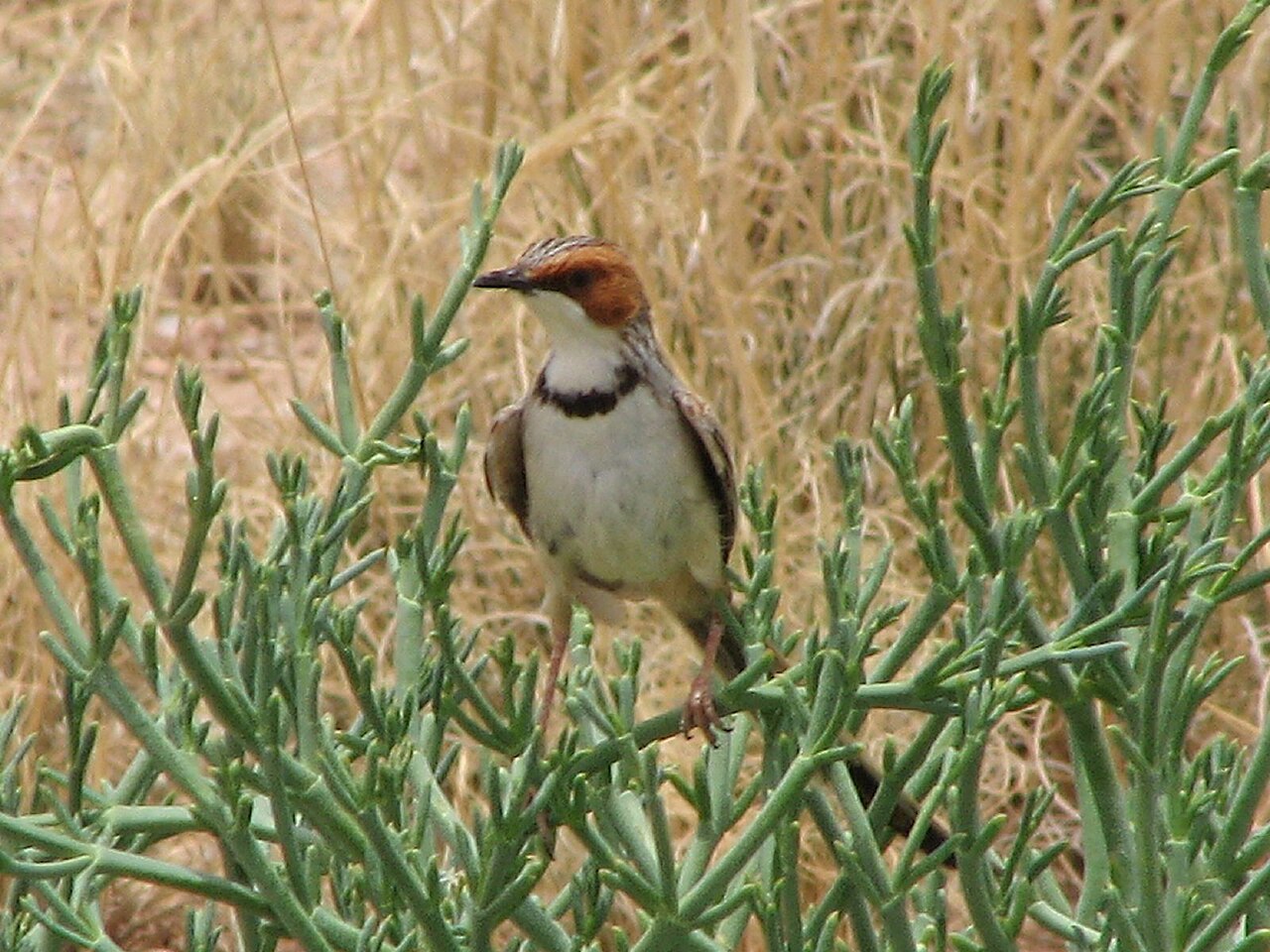
The rufous-crowned prinia is a species of bird in the family Cisticolidae. It is native to Eastern Himalaya.
Region
Eastern Himalaya and Northeast India
Typical Environment
Occurs in the lower to mid-elevation hills of the Eastern Himalaya and adjacent ranges, favoring scrubby slopes, tall grasslands, secondary growth, tea estates, and forest edges. It thrives in mosaics of bushes and grassy patches, especially where lianas and bamboo provide cover. The species is typically associated with open, shrubby habitats rather than dense closed-canopy forest. It is largely sedentary, with local movements following cover and food availability.
Altitude Range
400–1800 m
Climate Zone
Subtropical
Ease of Keeping
Beginner friendly: 1/5
The rufous-crowned prinia is a small, active warbler of the Eastern Himalaya and adjoining hill ranges. It keeps its long, graduated tail often cocked and flicking as it moves through scrub and grass. Its bright rufous crown and buzzy, repetitive song help distinguish it from similar prinias. Pairs are discreet but vocal during the breeding season, when they build neat cup nests low in dense vegetation.

Temperament
active and skulking
Flight Pattern
short rapid wingbeats with low, undulating flights between bushes
Social Behavior
Typically found singly or in pairs during the breeding season; small family groups may form post-breeding. Builds a neat cup nest low in grasses or shrubs, well concealed in dense cover. Both sexes participate in territorial displays and vocal duets. Clutch size is small, and nests are guarded vigilantly against predators.
Migratory Pattern
Resident
Song Description
A buzzy, repetitive series of high-pitched notes delivered from exposed perches or within shrubs. Calls include sharp ticks and dry trills, often accelerating into a rapid chatter during territorial exchanges.
Plumage
Warm rufous crown contrasting with olive-brown upperparts, a pale buffy supercilium, whitish throat, and buff to warm underparts. Long, graduated tail with darker subterminal bars and paler tips; tail often held cocked. Fine, sleek plumage with minimal streaking.
Diet
Feeds mainly on small insects such as beetles, caterpillars, grasshoppers, and spiders gleaned from foliage and stems. Will also take small flies on short sallies from low perches. Forages methodically through grass heads, seed heads, and leaf clusters, picking prey with a fine bill. Occasional ingestion of tiny seeds may occur but is incidental.
Preferred Environment
Forages in dense scrub, tall grasses, edges of secondary forest, and bushy ravines. Frequently uses tea and bamboo plantations where undergrowth is thick and insect-rich.