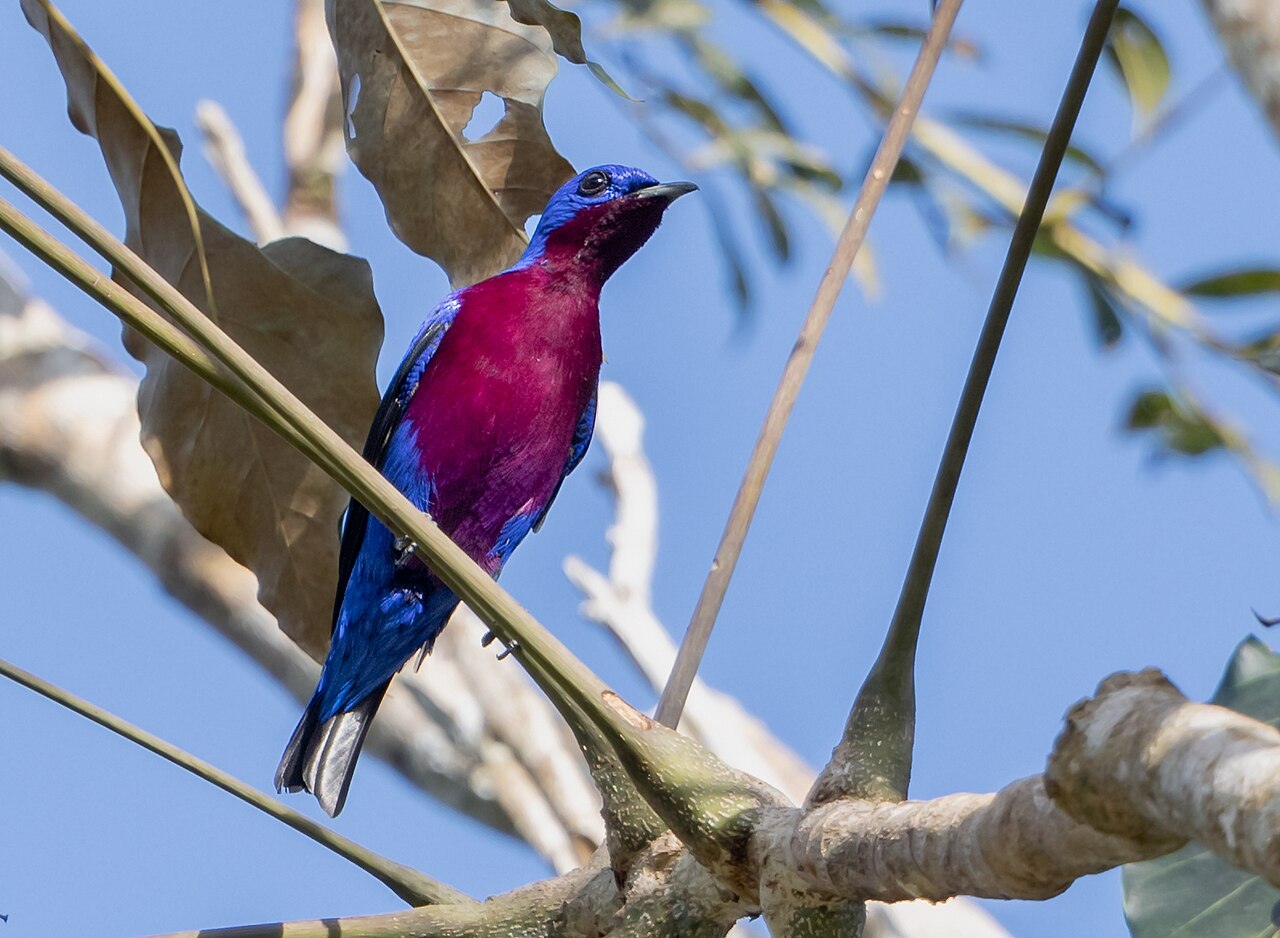
The purple-backed thornbill is a species of hummingbird in the "coquettes", tribe Lesbiini of subfamily Lesbiinae. It is found in Bolivia, Colombia, Ecuador, Peru, and Venezuela.
Region
Northern and Central Andes
Typical Environment
Occurs from Venezuela through Colombia, Ecuador, and Peru to Bolivia, mainly along Andean slopes. It uses montane cloud forest edges, elfin forest, shrubby páramo margins, and Polylepis or other high-elevation woodlands. The species is frequently seen at flowering shrubs on ridgelines and in clearings where nectar sources are concentrated. It will visit forest interior gaps but prefers edge habitats with abundant blooms.
Altitude Range
2500–4200 m
Climate Zone
Highland
Ease of Keeping
Beginner friendly: 1/5
The purple-backed thornbill is a tiny Andean hummingbird with an exceptionally short, thorn-like bill that gives the genus its name. Males show a striking iridescent purple back and a dark tail with contrasting white tips. It favors high-elevation forest edges and shrublands where tubular flowers are abundant, and it often makes short altitudinal movements following blooms. Like most hummingbirds, it also takes small insects for protein, especially during breeding.


Temperament
solitary and territorial
Flight Pattern
short rapid wingbeats with agile hovering
Social Behavior
Typically forages alone, defending rich flower patches with swift chases. Courtship consists of aerial displays and chases; there is no true lekking. The female builds a tiny cup nest of plant down and lichen and alone incubates 1–2 eggs.
Migratory Pattern
Partial migrant
Song Description
Vocalizations are thin, high-pitched chips and rapid, tinkling trills given during foraging and territorial bouts. Wingbeats produce a distinct, insect-like hum at close range.
Plumage
Male with iridescent purple back and rump, darker head and upperparts with bronzy-green tones, and grayish underparts; tail dark with conspicuous white tips. Female is duller with bronzy-green upperparts and pale gray-buff underparts, tail also showing white tips. Both sexes have very short, straight bills and compact proportions.
Diet
Nectar from small tubular flowers of high-Andean shrubs (including ericaceous plants and other montane bloomers) forms the bulk of the diet. It supplements with small arthropods captured in aerial sallies or gleaned from foliage, especially during breeding. The extremely short bill is effective for certain flower types and for probing small corollas.
Preferred Environment
Feeds along forest edges, shrublands, and páramo margins where flowering shrubs are concentrated. Often visits flowering patches along ridges, gaps, and clearings, occasionally descending along drainages when blooms are scarce at higher elevations.