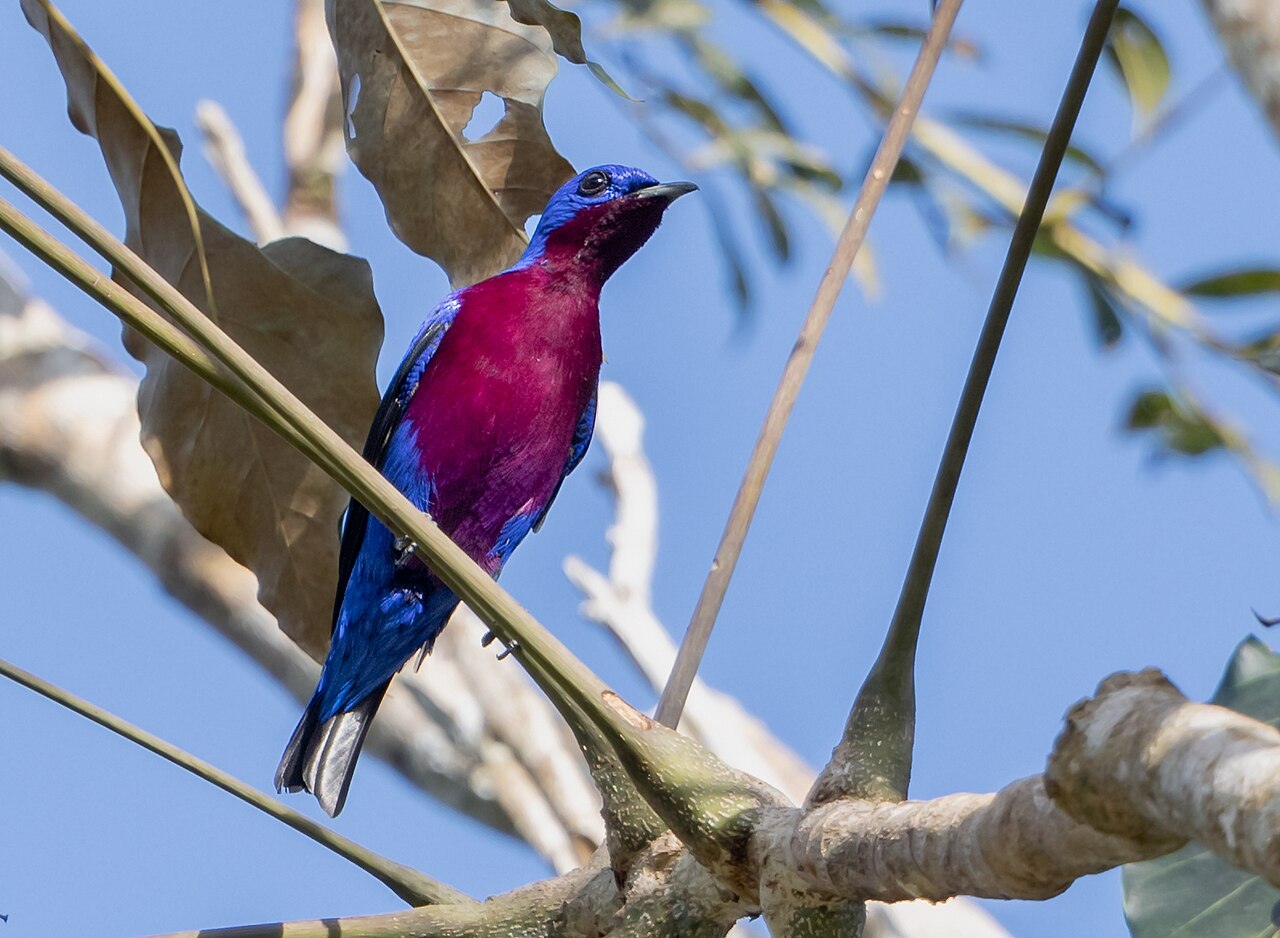
The purple-banded sunbird is a species of bird in the family Nectariniidae. It is found in Angola, Botswana, Republic of the Congo, Democratic Republic of the Congo, Ethiopia, Eswatini, Gabon, Kenya, Malawi, Mozambique, Namibia, Rwanda, Somalia, South Africa, Tanzania, Uganda, Zambia, and Zimbabwe.
Region
Eastern and Southern Africa
Typical Environment
Occurs widely from coastal lowlands to inland savannas and woodlands, including riverine thickets, forest edges, and suburban gardens. It favors areas with abundant flowering shrubs and trees such as aloes and Erythrina. The species tolerates human-altered landscapes and is frequently seen in parks and around dwellings. It generally avoids dense closed-canopy rainforest but uses woodland mosaics and scrub.
Altitude Range
Sea level to 2000 m
Climate Zone
Tropical
Ease of Keeping
Beginner friendly: 1/5
The purple-banded sunbird is a small, fast-moving nectar specialist that also snaps up insects for protein. Males defend rich flowering shrubs and trees and will chase other sunbirds from their feeding patches. They are important pollinators of aloes, coral trees, and many garden ornamentals. Although they can hover, they usually perch while feeding.

Temperament
active and territorial
Flight Pattern
short rapid wingbeats with brief hovering at flowers
Social Behavior
Usually seen singly or in pairs, sometimes in loose groups where flowers are abundant. Males defend flowering territories vigorously. The nest is a suspended, purse-shaped structure of plant fibers and spider silk with a side entrance, built by the female. Clutches are small, and both parents tend the young.
Migratory Pattern
Partial migrant
Song Description
A high, thin series of rapid twitters and tsee-tsee notes delivered from exposed perches. Calls include sharp chips and buzzy trills used in territorial displays and contact.
Plumage
Male shows glossy, iridescent green on the head and throat with distinct purple bands across the upper breast above a pale belly; upperparts are dark. Female is olive-brown above with pale yellowish to greyish underparts and faint streaking on the throat and breast.
Diet
Takes nectar from a wide variety of flowering plants, including aloes, Erythrina, and garden ornamentals. Also consumes small insects and spiders, gleaned from foliage or caught on short sallies to supplement protein needs, especially during breeding. Will occasionally take small fruits or sip from sugar-water feeders in gardens.
Preferred Environment
Feeds in flowering shrubs, trees, and creepers along forest edges, savannas, and suburban gardens. Often selects perches adjacent to blooms and makes repeated visits along a feeding circuit.