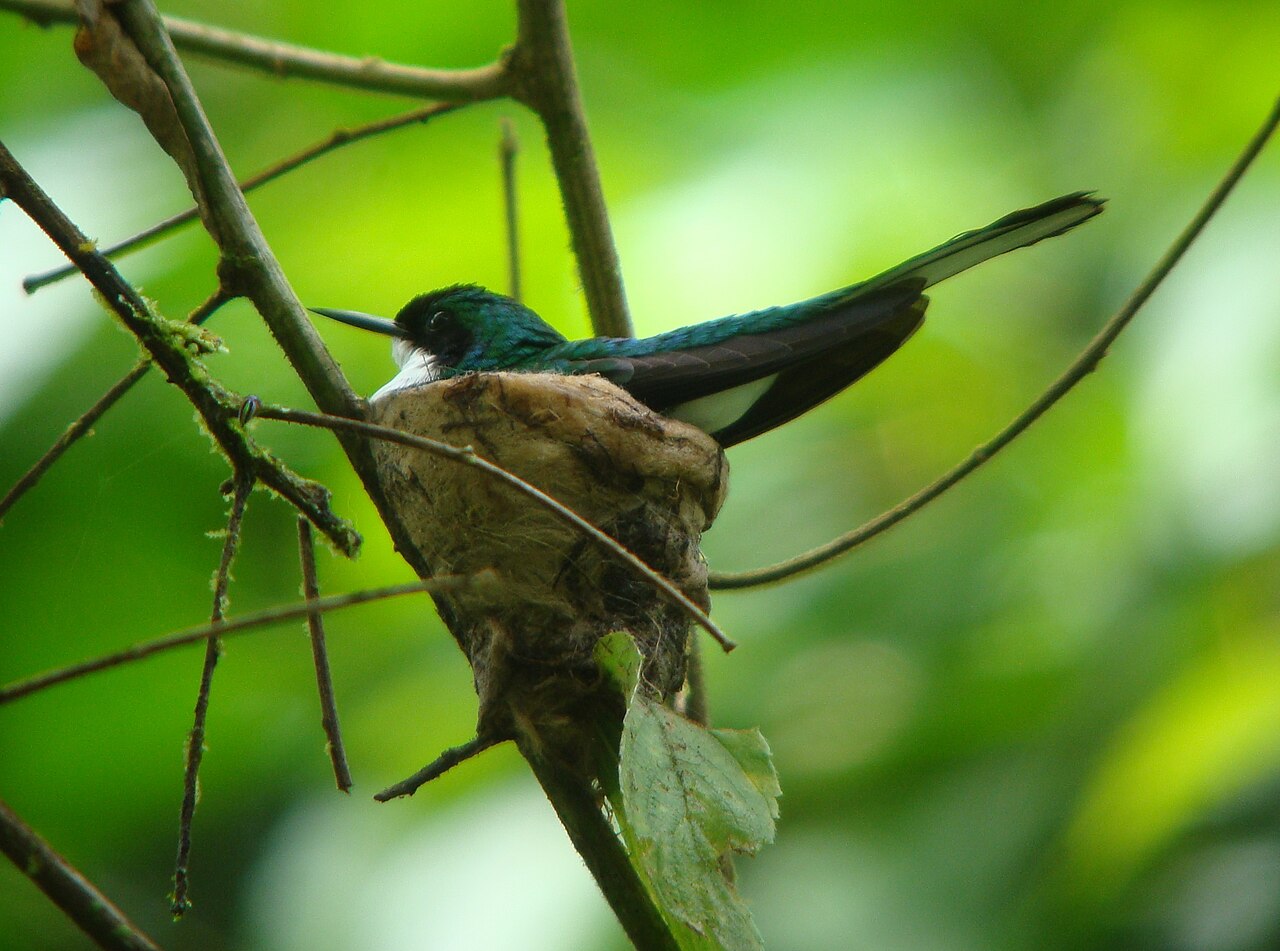
The purple-breasted sunbird is a species of bird in the family Nectariniidae. It is native to the Albertine Rift montane forests. The Albertine Rift is a Rift valley which passes through east Africa. This bird is endemic to this Rift.
Region
Albertine Rift of East-Central Africa
Typical Environment
Occurs in the montane forests of the Albertine Rift, primarily in eastern Democratic Republic of the Congo, Rwanda, Burundi, and western Uganda. Favors mature montane forest, forest edges, and secondary growth with abundant flowering plants. Also visits clearings, bamboo zones, and forest-fringe gardens when nectar sources are available. Often follows seasonal flowering at different elevations within the same mountain slopes.
Altitude Range
1600–3000 m
Climate Zone
Highland
Ease of Keeping
Beginner friendly: 1/5
This small sunbird is endemic to the Albertine Rift montane forests of East-Central Africa. Males show a striking iridescent purple breast set against metallic green, while females are much duller. It hovers briefly to sip nectar but usually feeds while perched, acting as an important pollinator. Territorial males defend rich flowering patches vigorously.

Temperament
active and territorial
Flight Pattern
short rapid wingbeats with frequent hovering at flowers
Social Behavior
Often seen singly or in pairs; small loose groups gather at profusely flowering trees. Males defend nectar-rich territories and display to females with song and chase flights. Nests are typically pendant, purse-like structures woven from plant fibers and spider webs, suspended in vegetation.
Migratory Pattern
Resident
Song Description
High, thin twittering and rapid chittering phrases, interspersed with sharp tsee notes. Calls accelerate during displays and when defending feeding territories.
Plumage
Male is glossy with metallic green head and upperparts, a vivid purple breast panel, and darker belly; female is olive-brown above with duller, paler underparts. Feathers show iridescence that shifts with light, especially on the head and breast of males.
Diet
Primarily feeds on nectar from tubular and brushy flowers, inserting the curved bill to access nectar. Supplements diet with small insects and spiders, especially during breeding to provide protein. Will glean arthropods from foliage and occasionally sally after flying insects. Also takes small amounts of soft fruit when available.
Preferred Environment
Forages in flowering shrubs and trees at forest edge, along clearings, and in secondary growth. Frequently visits canopy blossoms as well as midstory and forest-fringe gardens.