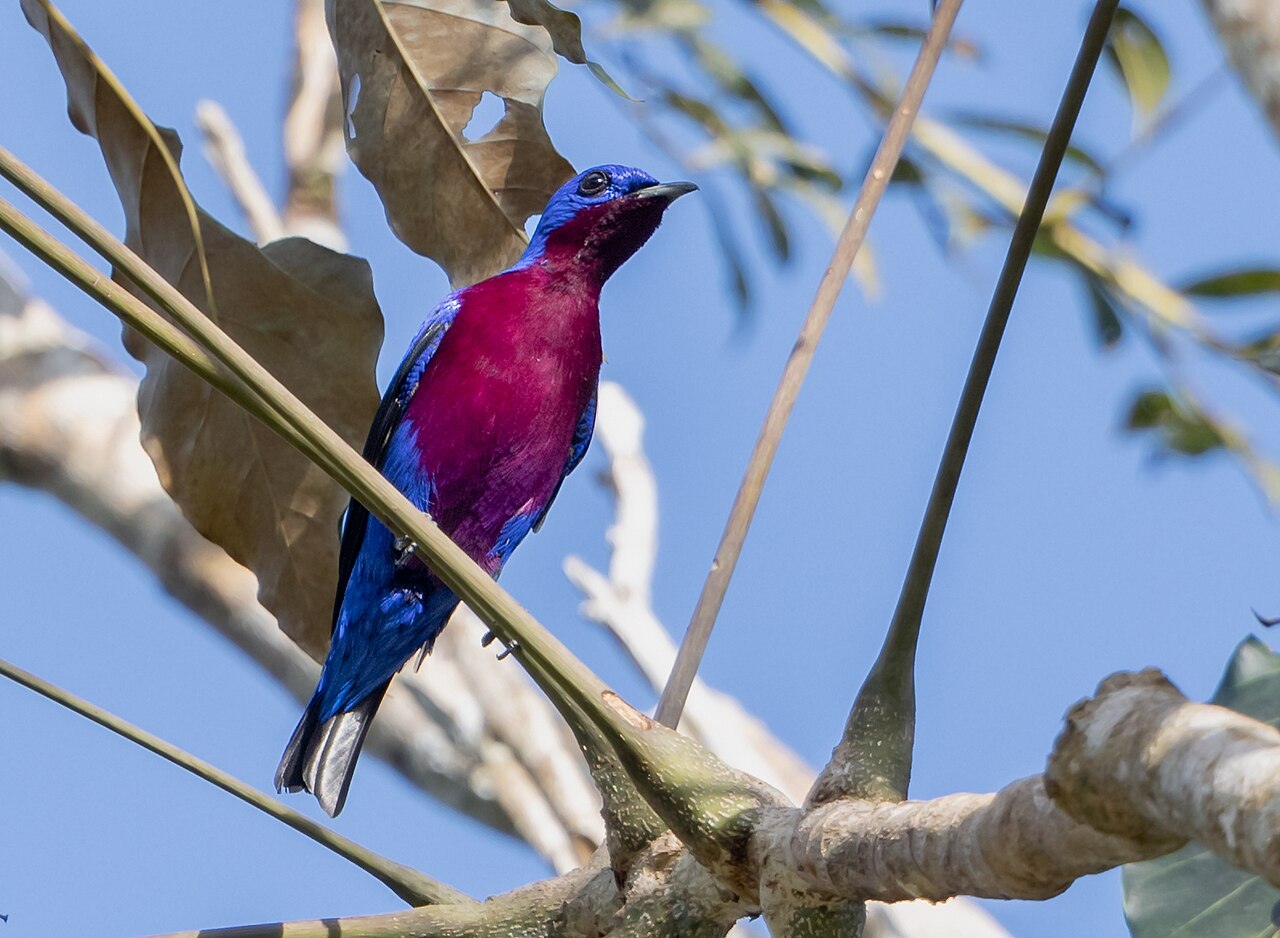
The purple-bibbed whitetip is a species of hummingbird in the "brilliants", tribe Heliantheini in subfamily Lesbiinae. It is found in Colombia and Ecuador.
Region
Western Andes of Colombia and Ecuador
Typical Environment
Occurs on the west and sometimes adjacent slopes of the Andes in humid premontane and montane forests, especially cloud-forest edges, ravines, and secondary growth. Often uses flowering shrubs along forest borders, along streams, and in partially shaded plantations or gardens. Forages mainly in the understory to midstory, visiting patches of tubular flowers. Local abundance varies with flowering cycles, and it may shift locally to track blooms.
Altitude Range
400–2000 m
Climate Zone
Highland
Ease of Keeping
Beginner friendly: 1/5
A small Andean hummingbird, the male flashes a vivid purple throat patch and crisp white tail tips that help with display and recognition. It frequents cloud-forest edges and clearings where it defends rich flower patches or follows a trapline. By visiting tubular flowers, it is an important pollinator of many montane plants. Its rapid, insect-catching sallies supplement a nectar-heavy diet.


in flight in Ecuador


Temperament
territorial around rich flower patches
Flight Pattern
short rapid wingbeats with agile hovering
Social Behavior
Generally solitary at flowers, with males defending small feeding territories when blooms are concentrated. Courtship involves rapid shuttling flights and tail flashing; the white tail tips are conspicuous during displays. Nest is a tiny cup of plant fibers and moss bound with spider silk, placed on a slender branch or over a stream; the female alone incubates two eggs.
Migratory Pattern
Resident
Song Description
Vocalizations are high, thin chips and short buzzy twitters given while foraging or in brief chases. Wing hum is pronounced at close range, with occasional mechanical trills in displays.
Plumage
Glossy green upperparts with contrasting white tips to the tail; underparts mostly greenish with cleaner white undertail area. Male shows a striking iridescent purple bib (gorget); female lacks the solid purple bib and has a more mottled throat.
Diet
Primarily nectar from tubular flowers such as Fuchsia, Besleria, Centropogon, and other cloud-forest shrubs. Supplements nectar with small arthropods captured by hawking or gleaning from foliage for protein. May follow a trapline of routinely visited blooms, but also defends particularly productive flower patches.
Preferred Environment
Feeds along forest edges, clearings, and along streams where flowering shrubs are abundant. Also visits shade gardens and plantations within humid montane zones.