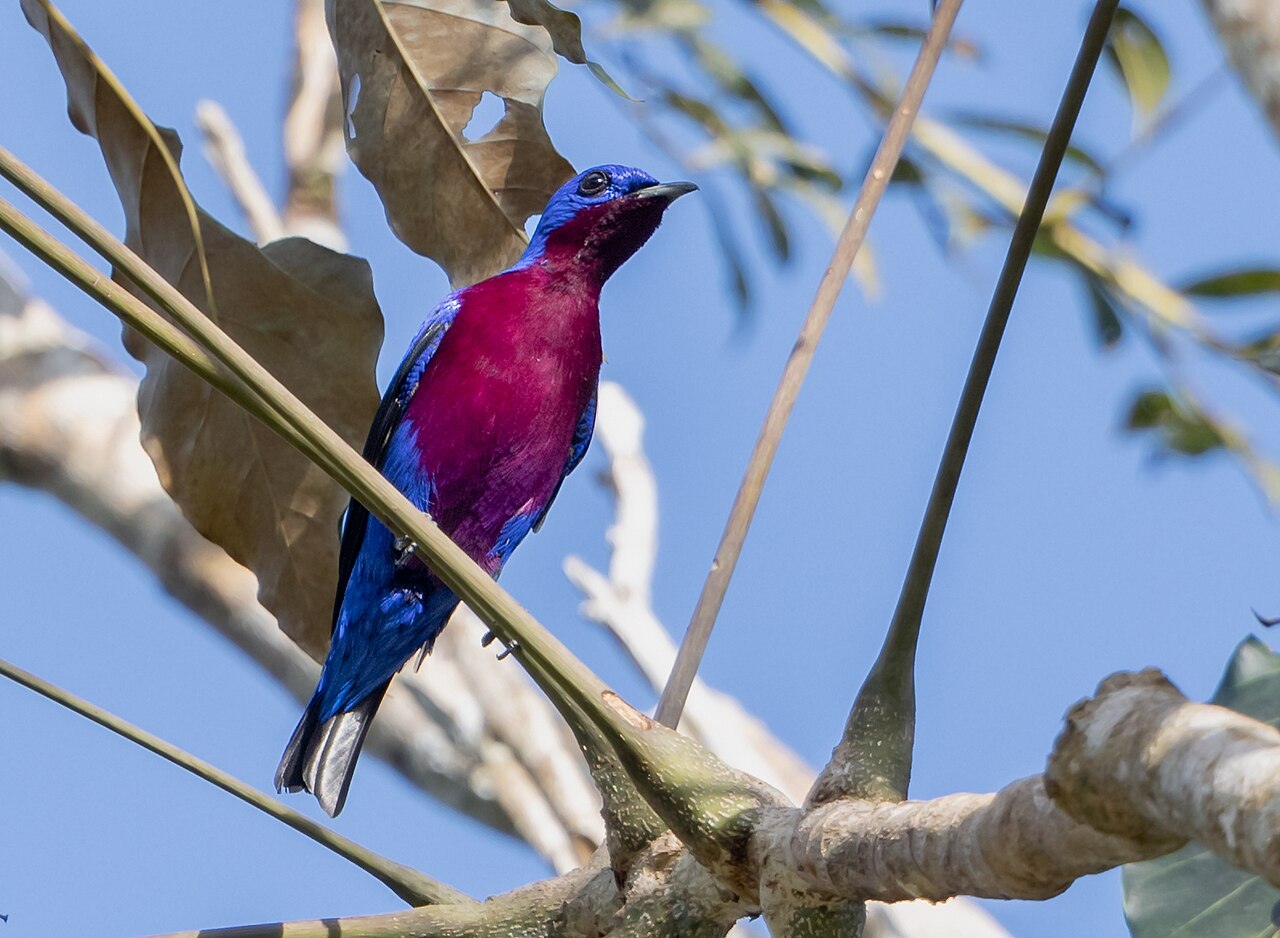
The purple-breasted cotinga is a species of bird in the family Cotingidae. It is found in Brazil, Colombia, French Guiana, Guyana, Peru, Suriname, and Venezuela.
Region
Amazon Basin
Typical Environment
Occurs in lowland tropical rainforest across northern Amazonia, including Brazil, Colombia, Venezuela, Guyana, Suriname, French Guiana, and Peru. Prefers mature terra firme forest but also uses várzea and river-edge forest where fruiting trees are abundant. It spends most of its time high in the canopy and emergent layer. Often visits canopy fruiting trees and occasionally forest edges and clearings.
Altitude Range
Sea level to 1000 m
Climate Zone
Tropical
Ease of Keeping
Beginner friendly: 1/5
A striking canopy frugivore of the Amazon, the male shows a vivid purple breast set against bright blue upperparts, while the female is brown and finely mottled for camouflage. It is most often seen at fruiting trees, sometimes alongside other cotingas and toucans. By swallowing fruits whole and passing the seeds, it plays an important role in forest regeneration. Habitat loss from Amazonian deforestation is its main long-term threat, though it is currently not considered globally threatened.


Temperament
solitary and shy
Flight Pattern
short rapid wingbeats between high perches
Social Behavior
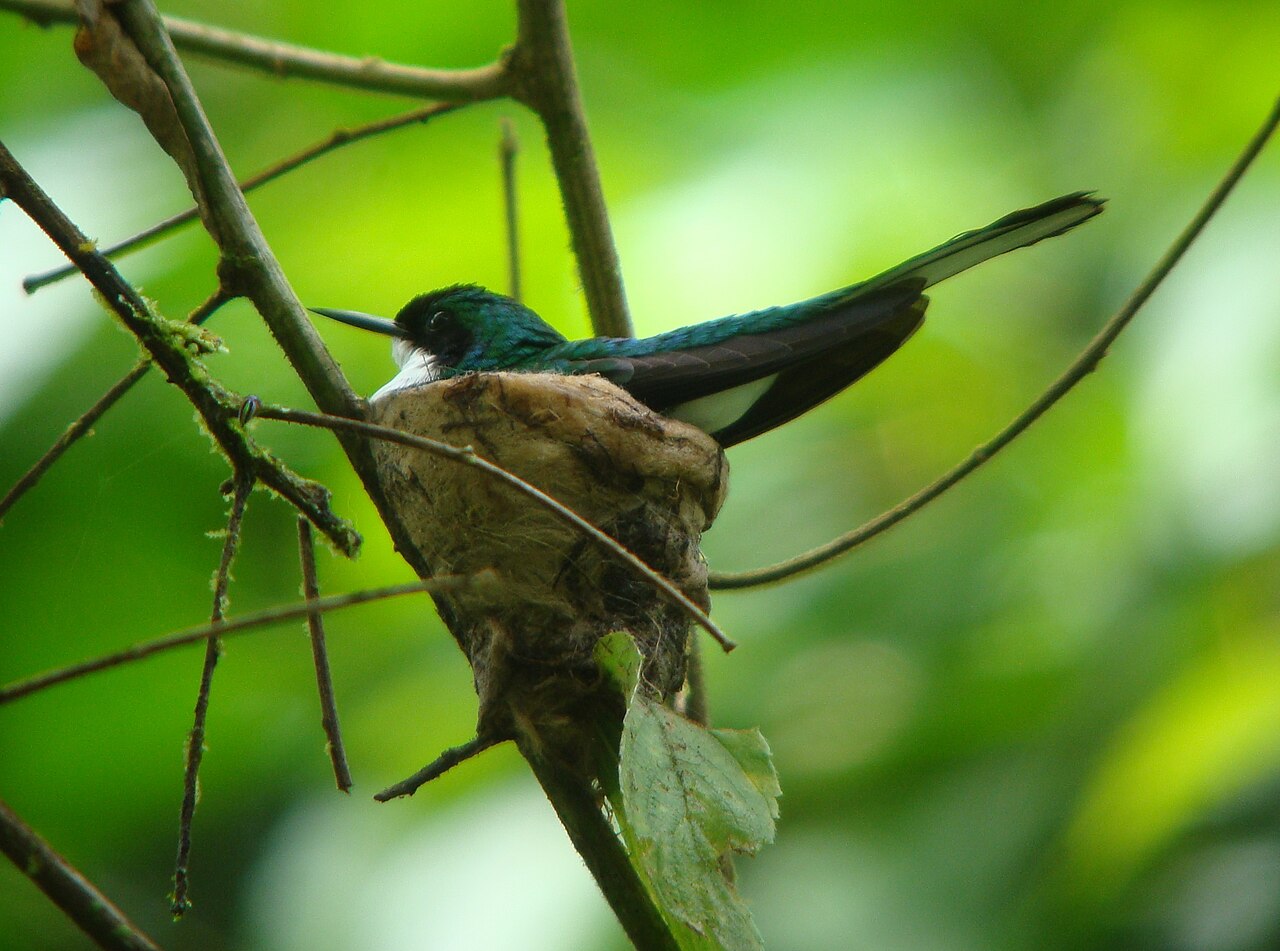
Usually solitary or in loose associations at fruiting trees, sometimes alongside mixed frugivore flocks. Males display from prominent canopy perches; courtship involves perching and visual displays. Nesting is high in the canopy in a small, flimsy platform; the clutch is typically one egg and parental care is primarily by the female.
Migratory Pattern
Resident
Song Description
Vocalizations are soft, thin whistles and brief, high-pitched notes that can be easily overlooked amid canopy noise. Calls are given from high exposed perches and during display.
Plumage
Male with glossy blue upperparts and a bold, rich purple breast and belly; wings and tail darker. Female is brownish with dense buff and whitish mottling and scaling, offering strong camouflage in the canopy.
Diet
Primarily consumes small to medium fruits and berries, including figs and palm fruits. Swallows fruit whole and later regurgitates or passes seeds, aiding dispersal. Occasionally takes insects, especially when fruit is scarce, but animal matter is a minor component of the diet.
Preferred Environment
Feeds mainly in the upper canopy and emergent crowns of mature rainforest. Often visits fruiting trees along rivers, forest edges, and gaps created by treefalls.