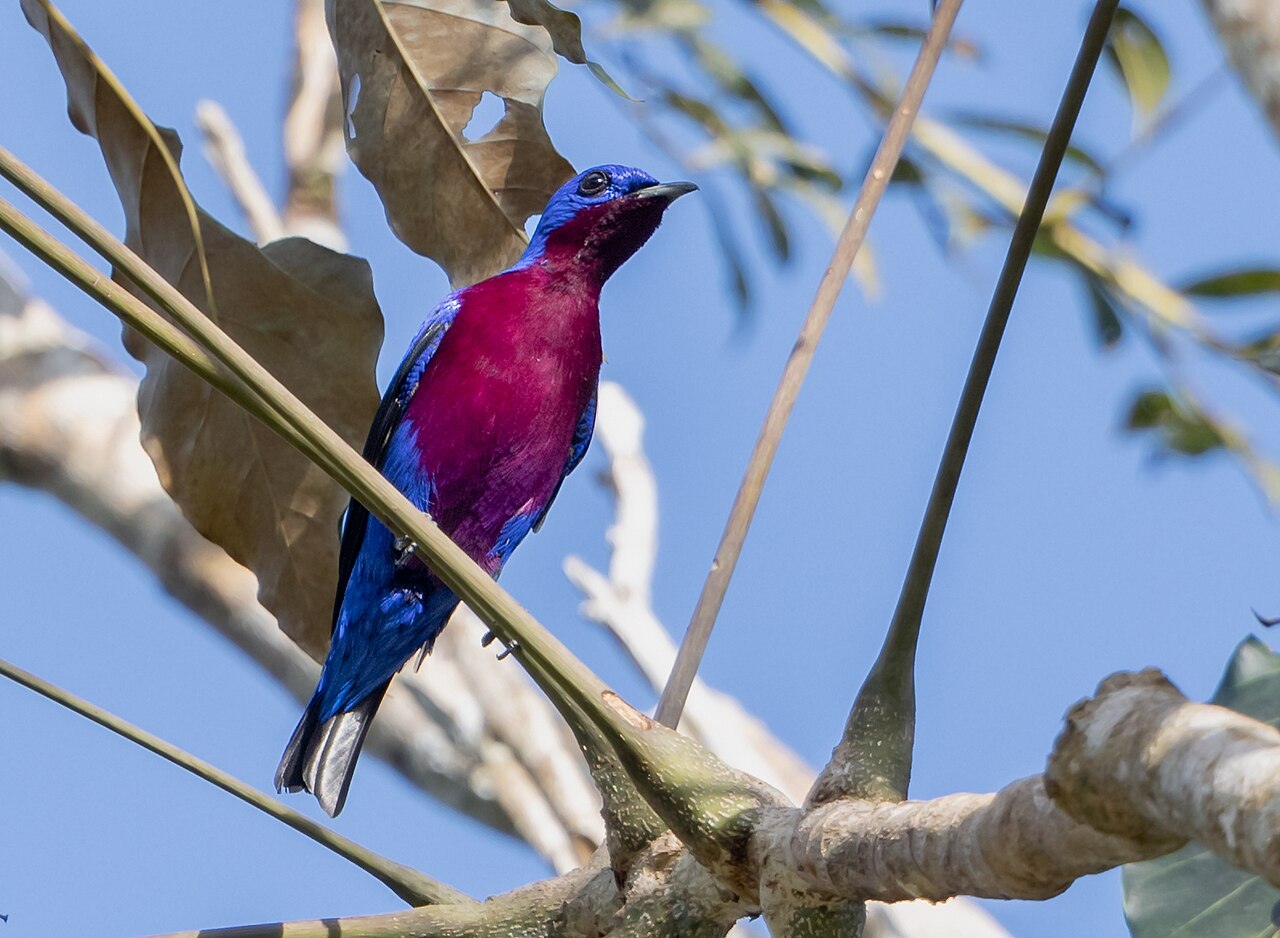
The purple-bearded bee-eater or Celebes bee-eater is a species of bee-eater endemic to the island of Sulawesi, Indonesia. This species is often seen in clearings inside dense forest.
Region
Sulawesi (Wallacea)
Typical Environment
Endemic to the island of Sulawesi and some nearby islets, where it inhabits lowland and foothill evergreen forest. It favors forest clearings, edges, and lightly logged areas, as well as riverbanks and road cuttings where it can perch and hunt. The species uses open shafts of light within dense forest to sally after flying insects. It is generally uncommon to locally fairly common depending on habitat quality.
Altitude Range
0–1500 m
Climate Zone
Tropical
Ease of Keeping
Beginner friendly: 1/5
Also called the Celebes bee-eater, this species is the only member of its genus and is confined to Sulawesi, Indonesia. It often hunts from shaded perches along forest edges and clearings, sallying out to catch flying insects. Like other bee-eaters, it deftly removes stingers from wasps and bees by beating them against a perch. It typically nests in burrows excavated in earthen banks or sloping ground.

Temperament
solitary and territorial
Flight Pattern
short rapid wingbeats with agile sallies
Social Behavior
Usually encountered singly, in pairs, or small family groups rather than large colonies. Pairs excavate nesting burrows in earthen banks, road cuttings, or gently sloping ground. They are monogamous and defend foraging areas around favored perches.
Migratory Pattern
Resident
Song Description
Gives soft, rolling trills and dry chwit or prrt notes from shaded perches. Calls are less piercing than many open-country bee-eaters and often delivered intermittently while scanning for prey.
Plumage
Predominantly green with a distinctive, elongated purple 'beard' of throat feathers, and contrasting darker facial mask. Underparts show warmer tones with bluish highlights toward the vent and tail. Wings are green with darker flight feathers and a slightly bluish tail.
Diet
Feeds mainly on flying insects, especially bees, wasps, and hornets, as well as dragonflies, beetles, moths, and butterflies. Prey is typically captured in mid-air during short sallies from a perch. As with other bee-eaters, stinging insects are subdued and de-stingered by beating them against a branch before swallowing.
Preferred Environment
Hunts along sunlit gaps and edges within dense forest, often near streams, landslides, or road margins. Commonly uses low to mid-level perches that provide clear flight paths into open airspace.