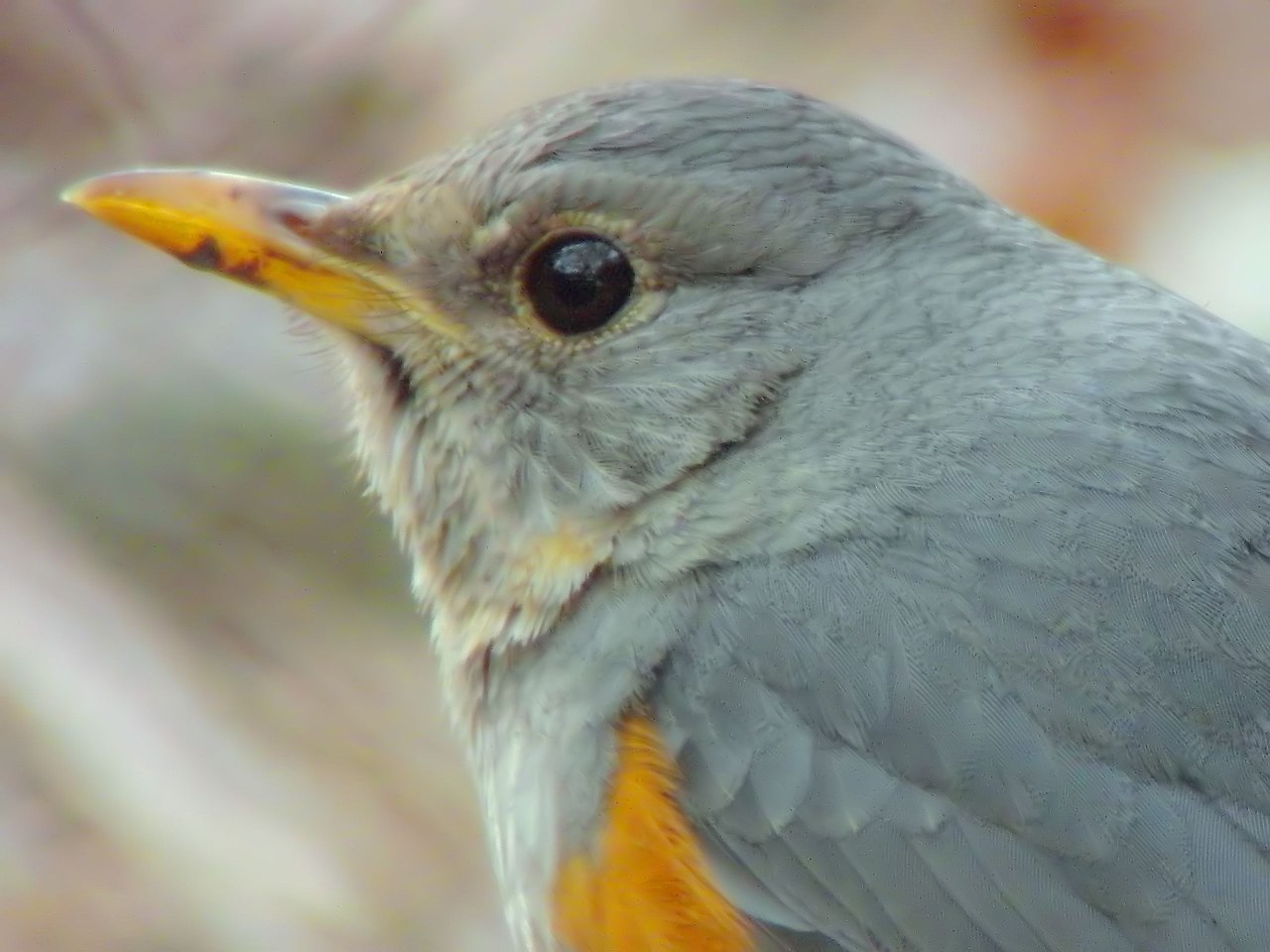
The grey-backed hawk is an Endangered species of bird of prey in subfamily Accipitrinae, the "true" hawks, of family Accipitridae. It is found in Ecuador and far northern Peru.
Region
Tumbesian region of southwestern Ecuador and northwestern Peru
Typical Environment
This species inhabits lowland and foothill forests, especially tropical dry, semi-deciduous, and semi-evergreen forest, as well as forest edges and riparian corridors. It tolerates some secondary growth and mosaic landscapes with scattered tall trees, but relies on forest structure for perching and hunting. It is most frequently encountered along slopes and valleys where forest remains intact or partially continuous. Occurrence is patchy and tied to remnants of suitable habitat, including a few protected areas.
Altitude Range
Sea level to 1500 m
Climate Zone
Tropical
Ease of Keeping
Beginner friendly: 1/5
The Grey-backed Hawk is an Endangered raptor of the Tumbesian region, occurring in southwestern Ecuador and far northern Peru. It was formerly placed in the genus Leucopternis and is now in Pseudastur within the true hawks (Accipitrinae). It is a shy, low-density forest hawk that often hunts from concealed perches. Habitat loss and fragmentation of dry and semi-evergreen forests are the primary threats to its survival.


Temperament
solitary and territorial
Flight Pattern
soaring glider with short rapid wingbeats between glides
Social Behavior
Usually seen alone or in pairs, often perched quietly within mid- to upper-story forest. Breeding pairs maintain territories and likely nest high in tall trees, with a small clutch typical of large raptors. Courtship involves soaring displays and calling above the canopy. Overall densities are low and encounters are infrequent.
Migratory Pattern
Resident
Song Description
Vocalizations are sharp, high-pitched whistles and drawn-out notes delivered from perches or during brief display flights. Calls are sporadic, often a plaintive, rising whistle repeated at intervals. Overall it is less vocal than many open-country hawks.
Plumage
Medium-sized hawk with a smooth grey mantle and upperparts contrasting with clean white underparts. Flight feathers are darker, giving a two-toned wing in flight, and the tail shows bold pale bands on a darker background. The throat and chest are mostly white with minimal barring; the head can show a dusky mask that accentuates the eye.
Diet
A sit-and-wait predator that takes small mammals, birds, lizards, snakes, and large insects. It typically hunts from a concealed perch, launching swift ambushes into the understory or along forest edges. Prey choice is opportunistic, focusing on movement and availability within forested habitats.
Preferred Environment
Feeds along forest edges, riparian strips, and within semi-open interiors where perches overlook clearings or trails. Uses canopy gaps, secondary growth, and plantation margins so long as nearby tall trees remain for perching.