
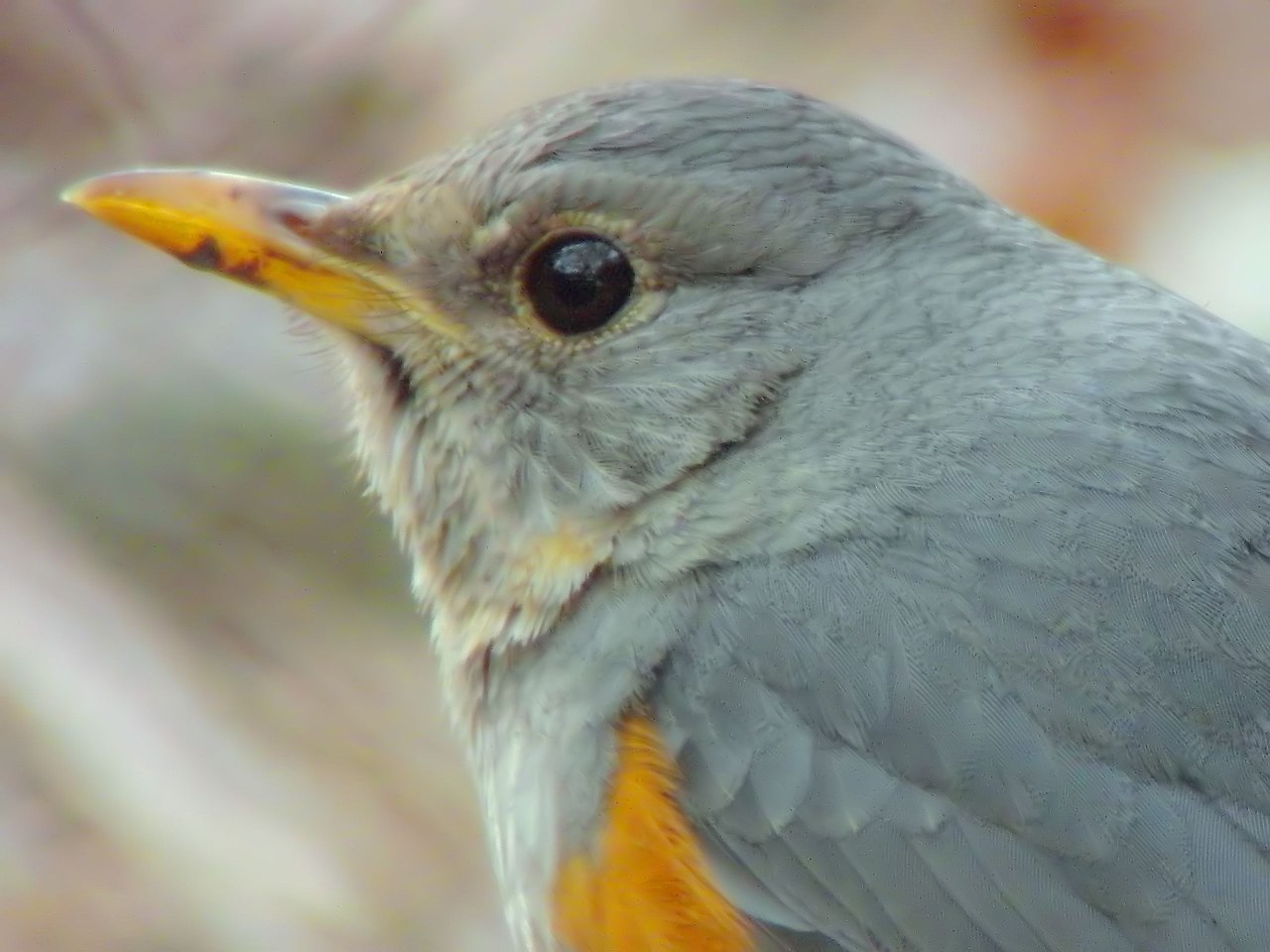
The grey-backed thrush is a species of bird in the family Turdidae. It breeds in northeastern China and the Russian Far East and winters in southern China and northern Vietnam. Its natural habitat is temperate forests. A captive bred pair laid five eggs, which hatched 14 days after the first egg was laid. The young left the nest 12 days later.
Region
East Asia
Typical Environment
Breeds in temperate broadleaf and mixed forests of northeastern China and the Russian Far East, favoring dense understory and forest edges. During migration it uses wooded river valleys, thickets, and shelterbelts. In winter it occupies lowland and foothill forests, secondary growth, orchards, and well-wooded parks in southern China and reaches into northern Vietnam. It typically keeps to shaded, damp leaf-littered areas with good cover and nearby fruiting shrubs.
Altitude Range
Sea level to 1800 m
Climate Zone
Temperate
Ease of Keeping
Beginner friendly: 1/5
The grey-backed thrush is a shy forest thrush that breeds in northeastern China and the Russian Far East and winters in southern China and northern Vietnam. It can be confused with Pale Thrush, but shows a cleaner grey back and whiter underparts. Nests are neat cups placed low in trees or shrubs; incubation lasts about two weeks and fledging occurs around 12 days later. It forages quietly on the forest floor, turning leaf litter for insects and seasonally taking fruits.


Egg, Collection Museum Wiesbaden
Temperament
shy and secretive
Flight Pattern
short rapid wingbeats with low, direct flights through cover
Social Behavior
Breeds in pairs, building a cup nest low in a tree or shrub. Typical clutches contain 3–5 eggs; incubation is about 14 days and young fledge around 12 days later. Outside breeding, it is usually solitary or in small, loose groups, sometimes joining mixed flocks at fruiting trees in winter.
Migratory Pattern
Seasonal migrant
Song Description
Song is a soft, melodious series of fluted whistles and short phrases delivered from a concealed perch. Calls include a thin tseep during movement and a sharper chak when alarmed.
Plumage
Smooth slate-grey upperparts with clean whitish underparts; flanks may show faint dusky streaking. Females and immatures are browner above with warmer tones and more subdued contrast.
Diet
Takes beetles, ants, caterpillars, earthworms, and other invertebrates by gleaning and probing in leaf litter. In the non-breeding season it consumes berries and small fruits such as Viburnum and wild cherry. Occasionally snatches prey from low foliage and will visit fruiting shrubs and trees.
Preferred Environment
Feeds mainly on the forest floor in shaded, moist areas with ample leaf litter. Uses forest edges, thickets, and riparian woodlands, and in winter may forage in orchards and wooded parks.


