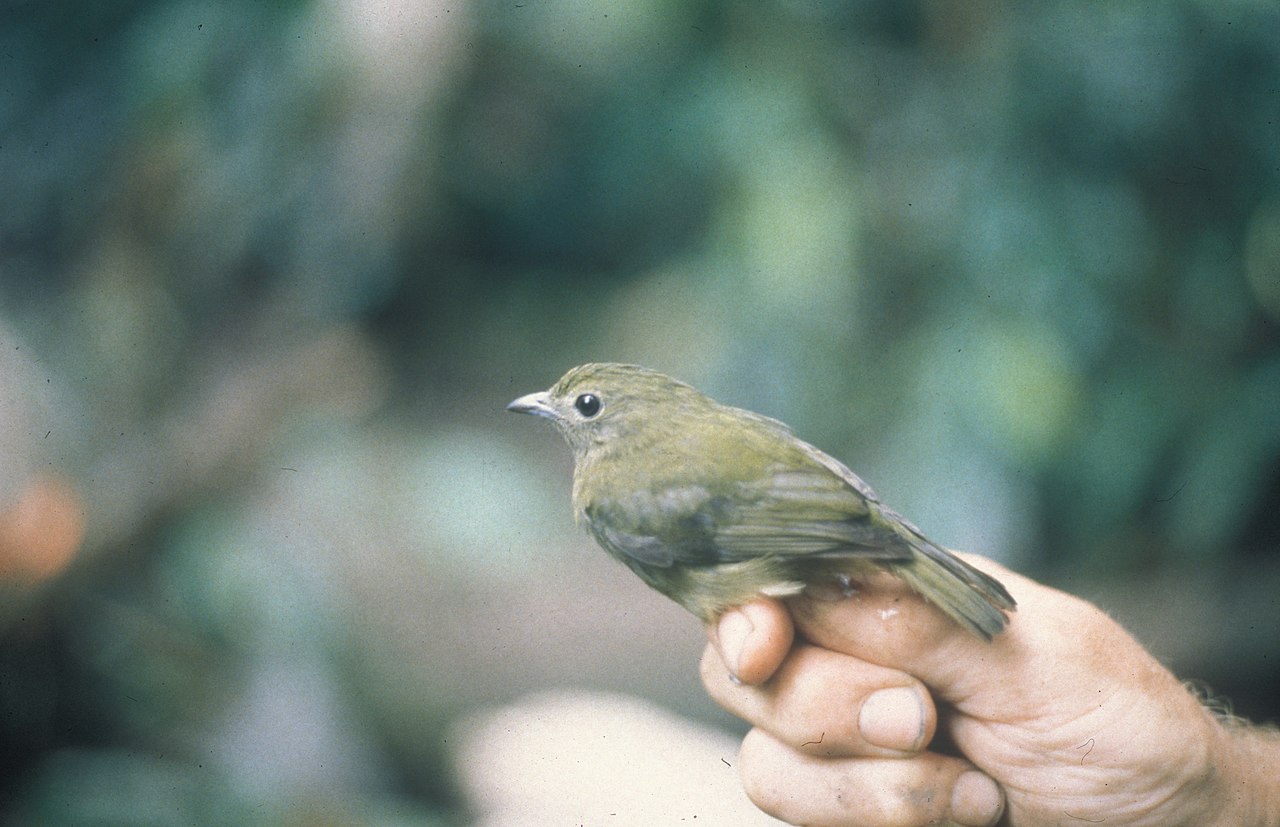
The green malkoha or whistling yellowbill is a species of cuckoo in the family Cuculidae. This species and the blue malkoha were previously considered conspecific and together known as the yellowbill.
Region
West and Central Africa
Typical Environment
Occurs across the lowland rainforest belt from West Africa into Central Africa, favoring mature evergreen forest, secondary growth, riparian thickets, and forest edges. It forages mainly in the midstory to canopy, often within dense tangles and lianas. The species generally avoids open savanna and heavily degraded habitats. It may be locally common where closed-canopy forest persists.
Altitude Range
Sea level to 1600 m
Climate Zone
Tropical
Ease of Keeping
Beginner friendly: 1/5
The green malkoha, also called the whistling yellowbill, is a non-parasitic cuckoo that builds its own nest and raises its young. It favors dense forest canopies where it moves stealthily with a long, graduated tail and a striking yellow bill. Pairs often join mixed-species flocks and may follow primates to catch flushed insects.

Temperament
skulking and wary
Flight Pattern
short rapid wingbeats with brief glides through dense foliage
Social Behavior
Usually seen in pairs or small family groups and frequently associates with mixed-species flocks. Unlike many cuckoos it is not a brood parasite and builds a nest in dense vegetation, with both parents caring for the young. Territorial calling and duet-like exchanges are common during the breeding season.
Migratory Pattern
Resident
Song Description
Clear, melodious whistles given in sequences, often carrying far through the forest. Calls can include descending whee-oo notes and conversational clucks when foraging.
Plumage
Glossy green upperparts with darker tail and paler grayish underparts; long, graduated tail often with pale or whitish tips.
Diet
Feeds mainly on large insects such as caterpillars, grasshoppers, mantises, and beetles, as well as spiders. It may take small vertebrates like lizards or frogs on occasion and sometimes supplements its diet with small fruits. Prey is gleaned from foliage or snapped up during short sallies between branches.
Preferred Environment
Forages in midstory and canopy layers, especially in dense tangles and along forest edges and riverine thickets. Often follows mixed flocks or primates to exploit disturbed prey.