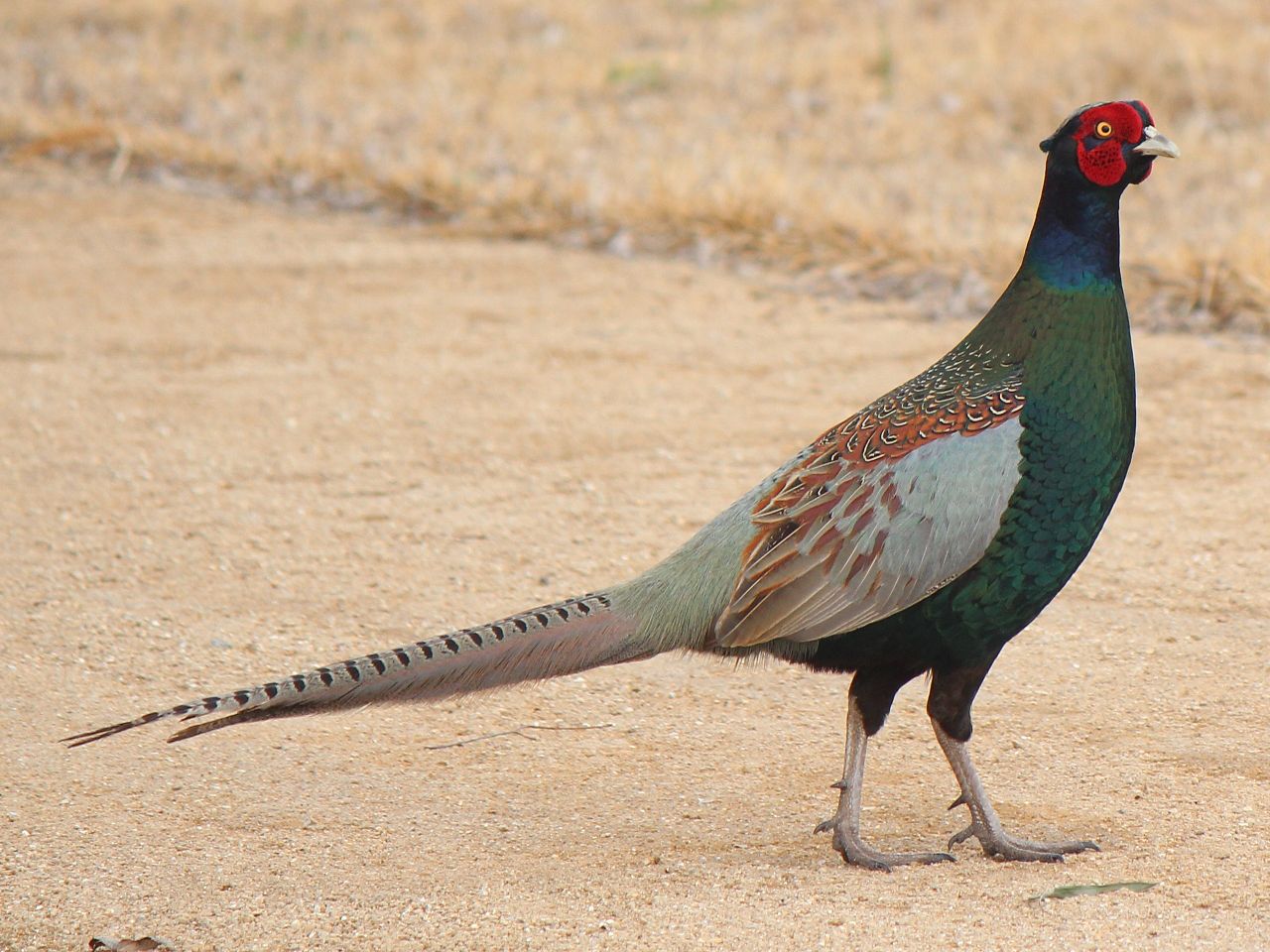
The green peafowl is a peafowl species native to the tropical forests of Southeast Asia and Indochina. It is the national bird of Myanmar. Formerly common throughout Southeast Asia, only a few isolated populations survive in Cambodia and adjacent areas of Vietnam. It has been listed as endangered on the IUCN Red List since 2009. This is primarily due to widespread deforestation, agriculture and loss of suitable habitat, severely fragmenting populations and contributing to an overall decline in numbers. The green peafowl is in demand for private and home aviculture and threatened by the pet trade, feather collectors and hunters for meat and targeted.
Region
Southeast Asia
Typical Environment
Historically widespread from Myanmar and Thailand through Laos, Cambodia, and Vietnam, with remnant populations in Yunnan (southern China) and on Java, Indonesia. Today it persists mostly in fragmented lowland dry forests and open woodland mosaics, especially in Cambodia and adjacent regions. It favors dry deciduous dipterocarp forests, riverine gallery forests, forest edges, and lightly wooded grasslands near water. It avoids dense, closed-canopy rainforest and heavily cultivated areas but can use lightly disturbed farmland near natural cover. Birds roost in tall trees and rely on intact understory for nesting and cover.
Altitude Range
Sea level to 2000 m
Climate Zone
Tropical
Ease of Keeping
Beginner friendly: 2/5
The green peafowl is the national bird of Myanmar and one of the largest pheasants. Unlike the Indian peafowl, both sexes have a glossy green neck and a tall, hair-like crest; males carry a long, ornate train. It is shy and wary, often staying near water and roosting high in tall trees. Extensive habitat loss and hunting have caused severe declines across its range.


1781 painting by Maruyama Okyo

Adult female head and upper neck

Male profile


Female (peahen) with one chick

Fighting peacocks in Baluran National Park, Indonesia

The green peacock was a royal symbol of Burma's monarchs

The flag of the National League for Democracy party features a stylised fighting peacock next to a star.
Temperament
shy and wary
Flight Pattern
strong flier with short rapid wingbeats, often gliding into tall tree roosts
Social Behavior
Usually seen in pairs or small family groups; males may display at traditional leks or solitary display sites. Ground-nesting in dense grass or scrub with clutches of several eggs; females provide all incubation and chick care. Roosts high in trees, often near water, and uses communal roosts in some areas.
Migratory Pattern
Resident
Song Description
Loud, piercing bugling calls and harsh 'pee-ow' notes, especially at dawn and dusk. Males call frequently during the breeding season and from elevated perches or roosts.
Plumage
Iridescent, scale-like green and bronze body with barred brown-and-black wings; males have an elongated train with eye-spotted upper tail coverts. Females are similar but duller and lack the long train.
Diet
Omnivorous, taking seeds, grains, tender shoots, fruits, and flowers, as well as insects, snails, and small reptiles or amphibians. Forages by walking and pecking or scratching through leaf litter. Opportunistically visits harvested fields and forest edges to glean fallen grain and invertebrates.
Preferred Environment
Feeds along forest margins, riverbanks, open woodlands, and scrubby clearings with nearby cover. Often forages near water and along tracks or lightly disturbed fields adjacent to natural habitat.