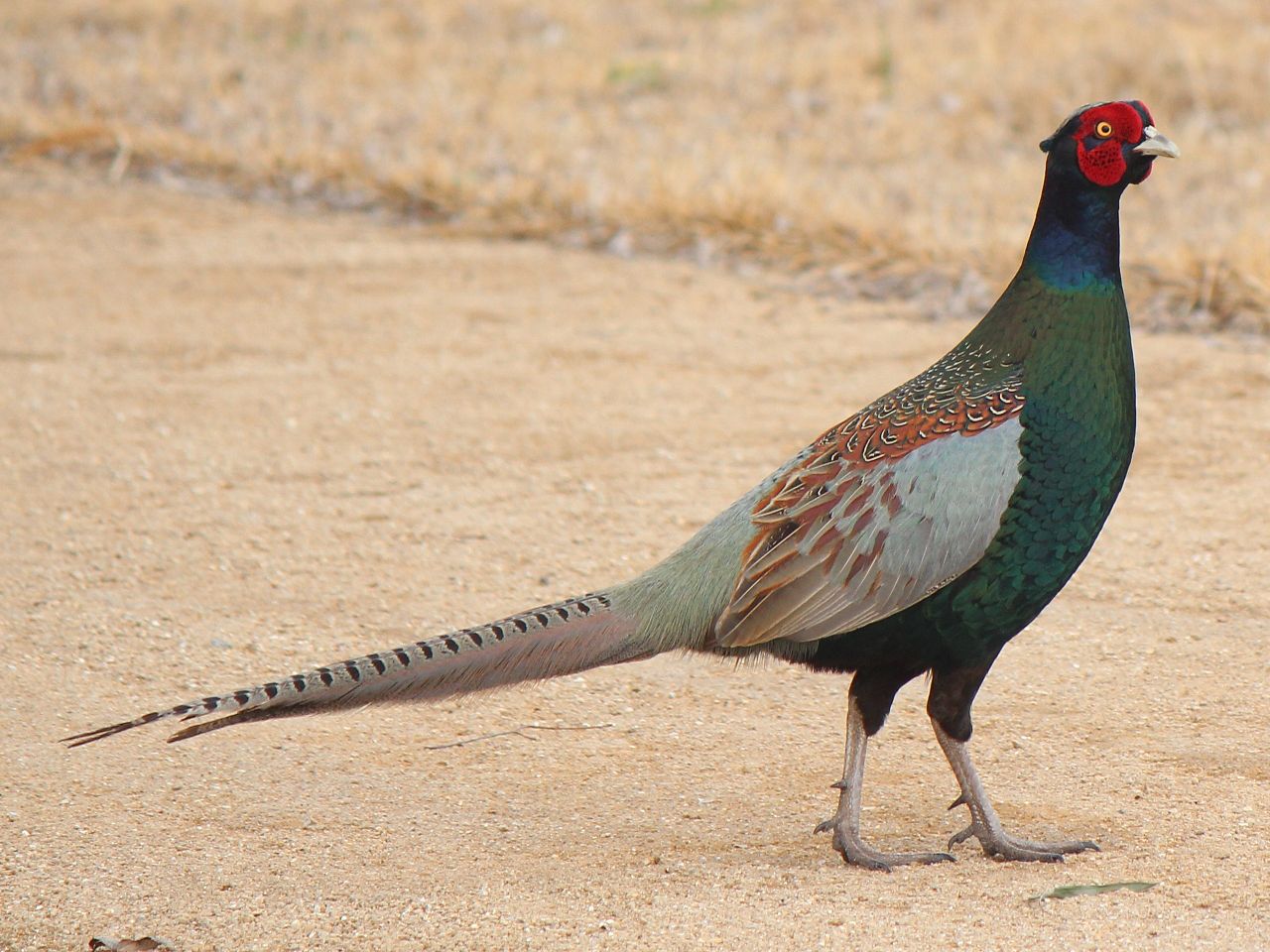
The green oropendola is a species of bird in the family Icteridae. It is found in wooded habitats in the Amazon basin and Guianas of South America, and is generally common. Uniquely among the oropendolas, the green oropendola has a pale bill with an orange tip. Male oropendola weigh around 400 grams, while females are in the 200 gram range. This is a common species and the International Union for Conservation of Nature has rated its status as being of "least concern".
Region
Amazon Basin and the Guianas
Typical Environment
Occurs widely in lowland rainforest across the Amazon Basin and in the Guianas, favoring tall, mature forests and riverine corridors. It uses both terra firme and seasonally flooded várzea forests, and often visits forest edges and clearings with tall trees. Colonies are typically established in exposed crowns of emergent trees that offer protection from predators. It may also forage in secondary growth and along waterways where fruiting trees are abundant.
Altitude Range
Sea level to 1200 m
Climate Zone
Tropical
Ease of Keeping
Beginner friendly: 1/5
The green oropendola is a colonial nester that weaves long, pendulous basket nests high in emergent trees, often near water. It is unique among oropendolas for its pale bill tipped bright orange, which is conspicuous in the canopy. Males perform dramatic bowing displays accompanied by bubbling, gurgling songs. By consuming and dispersing fruits, it plays an important role in Amazonian forest ecology.


At Diergaarde Blijdorp, Netherlands
Temperament
social and active
Flight Pattern
strong flier with steady, direct wingbeats
Social Behavior
Highly colonial, nesting in groups with many long, hanging nests clustered on a single tree. Males are larger and maintain dominance hierarchies, often courting multiple females. Nests are woven from fibers and vines and suspended to deter predators.
Migratory Pattern
Resident
Song Description
Males deliver rich, liquid gurgles and bubbling notes during display, often accompanied by exaggerated bowing movements. Calls also include rattles and chatter used to maintain contact within colonies.
Plumage
Mostly olive-green body with darker wings and contrasting bright yellow tail; overall sleek, glossy appearance.
Diet
Feeds on a mix of fruits (including figs and palms), large insects, and other arthropods. It occasionally takes nectar and small vertebrates such as lizards or frogs. Foraging often focuses on fruiting trees where individuals congregate and move methodically through the canopy.
Preferred Environment
Primarily forages high in the forest canopy and along edges, especially at fruiting trees. It also follows river margins and visits secondary growth when food is abundant.