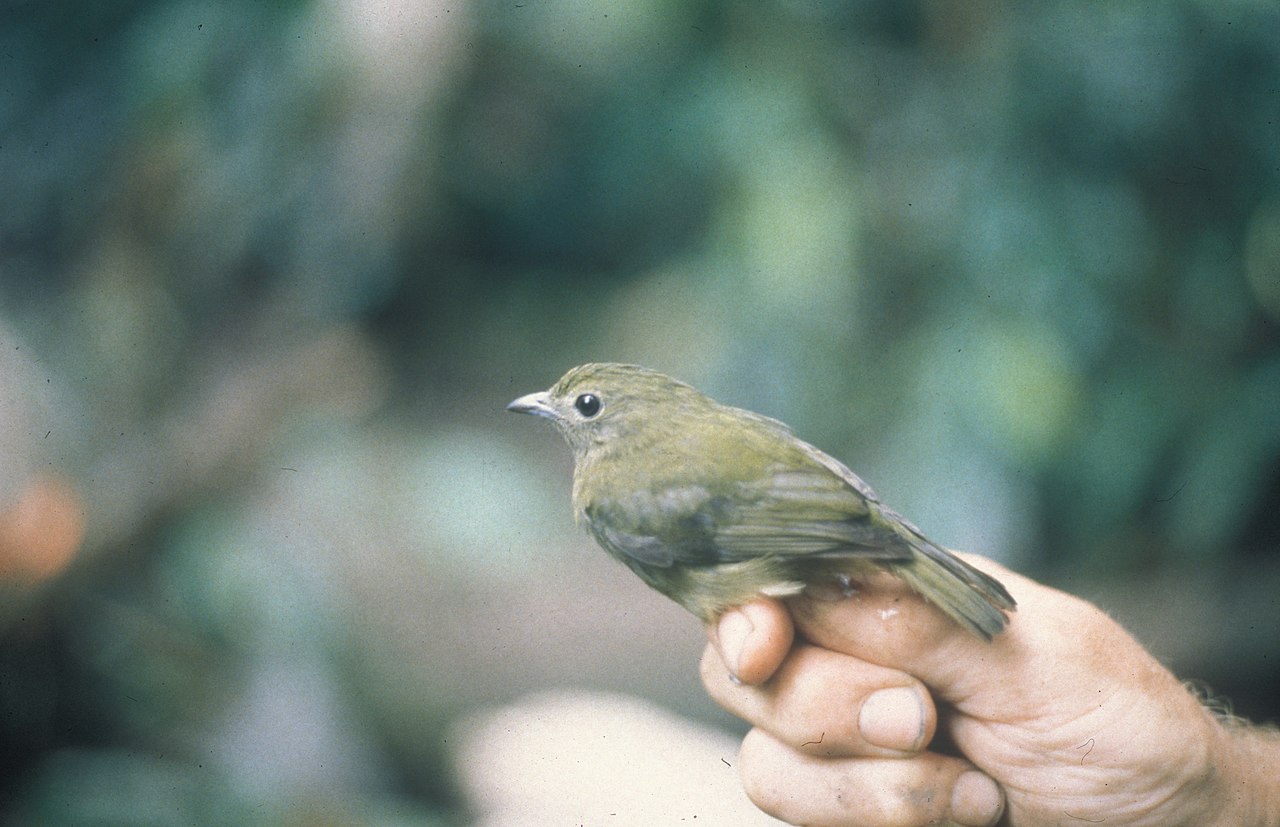
The green longtail is a bird species of the family Cisticolidae, in the monotypic genus Urolais. It is found in the Cameroon line. Its natural habitats are subtropical or tropical moist montane forest and dry savanna.
Region
West-Central Africa (Cameroon Line)
Typical Environment
Occurs along the Cameroon Line from southeastern Nigeria through western Cameroon to Bioko (Equatorial Guinea). Prefers montane forest edges, secondary growth, and dense scrub where it moves low to mid-canopy. It also uses mosaics of montane grassland and shrubby savanna, especially near forest margins. The species is generally localized but can be fairly common where suitable habitat persists.
Altitude Range
800–2600 m
Climate Zone
Highland
Ease of Keeping
Beginner friendly: 1/5
The green longtail is the sole member of the genus Urolais and is tied to the volcanic highlands known as the Cameroon Line. It often joins mixed-species flocks, moving quickly through foliage with its characteristically long, graduated tail. Pairs frequently duet, producing high, thin notes that carry through montane scrub and forest edges.

Temperament
active and somewhat skulking
Flight Pattern
short rapid wingbeats with low, darting flights between shrubs
Social Behavior
Usually seen in pairs or small family groups and commonly associates with mixed-species flocks. Nests are typical of cisticolids, a woven, domed structure placed low in dense vegetation. Breeding timing is linked to regional rainy seasons.
Migratory Pattern
Resident
Song Description
Song is a series of thin, high-pitched trills and see-see notes, often delivered in antiphonal duets by a pair. Calls include sharp chips and short rattles used to maintain contact in dense cover.
Plumage
Olive-green upperparts with a clean whitish throat and paler underparts washed yellow on the flanks; long, graduated tail darker with pale edging. Feathers appear smooth and non-streaked, giving a neat, compact look despite the long tail.
Diet
Primarily gleans small insects and other arthropods from leaves, twigs, and vine tangles. It occasionally sallies to snatch tiny flying insects. Small berries may be taken opportunistically, but animal prey dominates.
Preferred Environment
Feeds along forest edges, in secondary growth, and dense montane scrub, typically from the understory to mid-levels. Frequently forages while moving with mixed flocks, taking advantage of disturbed insects.