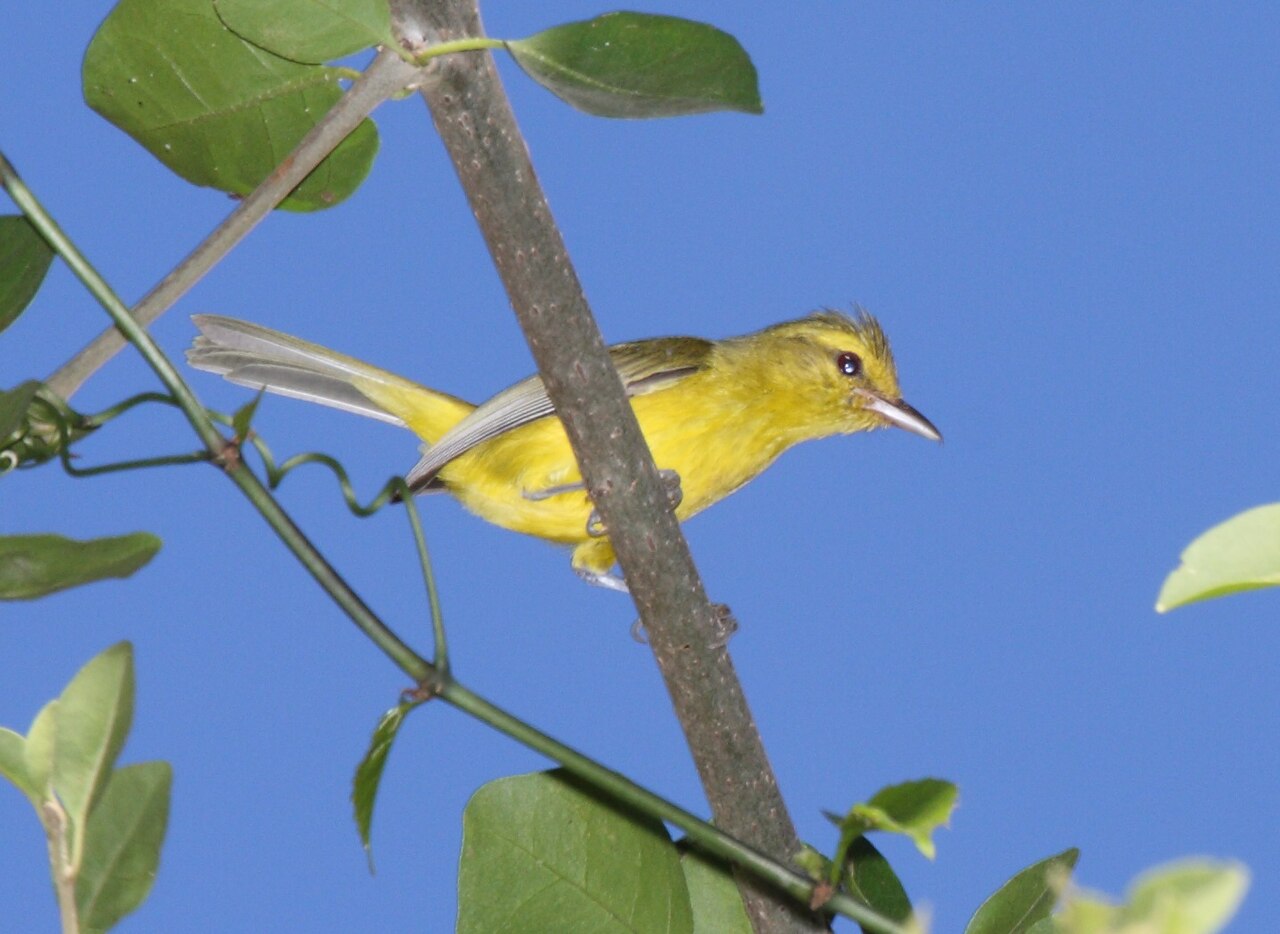
The golden parrotbill is a species of parrotbill in the family Sylviidae. It is found in China, Laos, Japan, Myanmar, Taiwan, and Vietnam. Its natural habitat is subtropical or tropical moist montane forests.
Region
South China and northern Indochina
Typical Environment
Occurs in montane evergreen and mixed forests with extensive bamboo understory in southern and central China, northern Myanmar, northern Laos, and northern Vietnam; some populations occur on Taiwan. It favors dense, tangled bamboo thickets along forested slopes, ridgelines, and clearings. Birds typically remain low to mid-understory, rarely venturing into open canopy. Local abundance can be high where suitable bamboo is continuous, but distribution is patchy.
Altitude Range
800–3200 m
Climate Zone
Subtropical
Ease of Keeping
Beginner friendly: 2/5
Golden parrotbills are small, energetic birds specialized for life in dense bamboo thickets. They often move in chattering flocks and use their stout, parrot-like bills to pry seeds and insects from bamboo. Their conspicuous black facial mask contrasts with rich golden underparts, making them distinctive despite their secretive habitat.


S. v. craddocki (above)
Temperament
social and active
Flight Pattern
short rapid wingbeats
Social Behavior
Typically found in small, noisy parties moving through bamboo, often in family groups or mixed-species flocks. Pairs form during the breeding season and build cup-shaped nests low in dense bamboo. Both sexes participate in nesting duties, and birds remain strongly tied to favored thickets.
Migratory Pattern
Resident
Song Description
A thin, tinkling series of high chips and trills interspersed with buzzy notes. Contact calls are sharp and metallic, helping parties keep together in dense cover.
Plumage
Compact, short-tailed parrotbill with warm brown upperparts and rich golden to orange-golden underparts. The crown is grayish, and the face shows a bold black mask through the lores and ear-coverts. Wings are rufous-brown with paler edging; tail is graduated.
Diet
Feeds on a mix of bamboo and grass seeds, small insects, spiders, and occasionally tender buds and flower parts. Uses its stout bill to pry seeds from bamboo and glean arthropods from leaves and culms. Forages methodically through tangles, often hanging acrobatically to reach food.
Preferred Environment
Dense bamboo understory within montane evergreen or mixed forests, forest edges, and regenerating clearings with thick secondary growth. Frequently remains within a few meters of the ground where bamboo is thickest.