

The golden white-eye is a species of bird in the white-eye family, Zosteropidae. It is the only species within the genus Cleptornis. The golden white-eye was once considered to be a honeyeater in the family Meliphagidae and although it is now known to be a white-eye, its position within that family is still uncertain. The species is restricted to the islands of Saipan and Aguijan in the Northern Mariana Islands, where it is sympatric and competes with the related bridled white-eye. The golden white-eye has golden plumage and a pale eye-ring. It feeds on insects, fruit, and nectar and forages in pairs or small family groups. The bird is monogamous and lays two eggs in a small cup nest.
Region
Micronesia
Typical Environment
Restricted to the islands of Saipan and Aguijan in the Northern Mariana Islands. It occupies native limestone forest, secondary forest, and coastal scrub, and readily uses thickets of tangantangan (Leucaena leucocephala). The species forages from understory to canopy, often along forest edges and in disturbed habitats. It may also enter gardens and plantations where flowering and fruiting plants are available.
Altitude Range
Sea level to 400 m
Climate Zone
Tropical
Ease of Keeping
Beginner friendly: 1/5
The golden white-eye is the sole member of the genus Cleptornis and is confined to Saipan and Aguijan in the Northern Mariana Islands. It is abundant locally but highly vulnerable to invasive predators, especially the brown tree snake should it reach its range. The species is a key pollinator and seed disperser, feeding on nectar, fruit, and small insects. Pairs are monogamous and typically raise two chicks in a small cup nest.


The golden white-eye is distributed on Saipan and Aguijan in the Northern Mariana Islands.
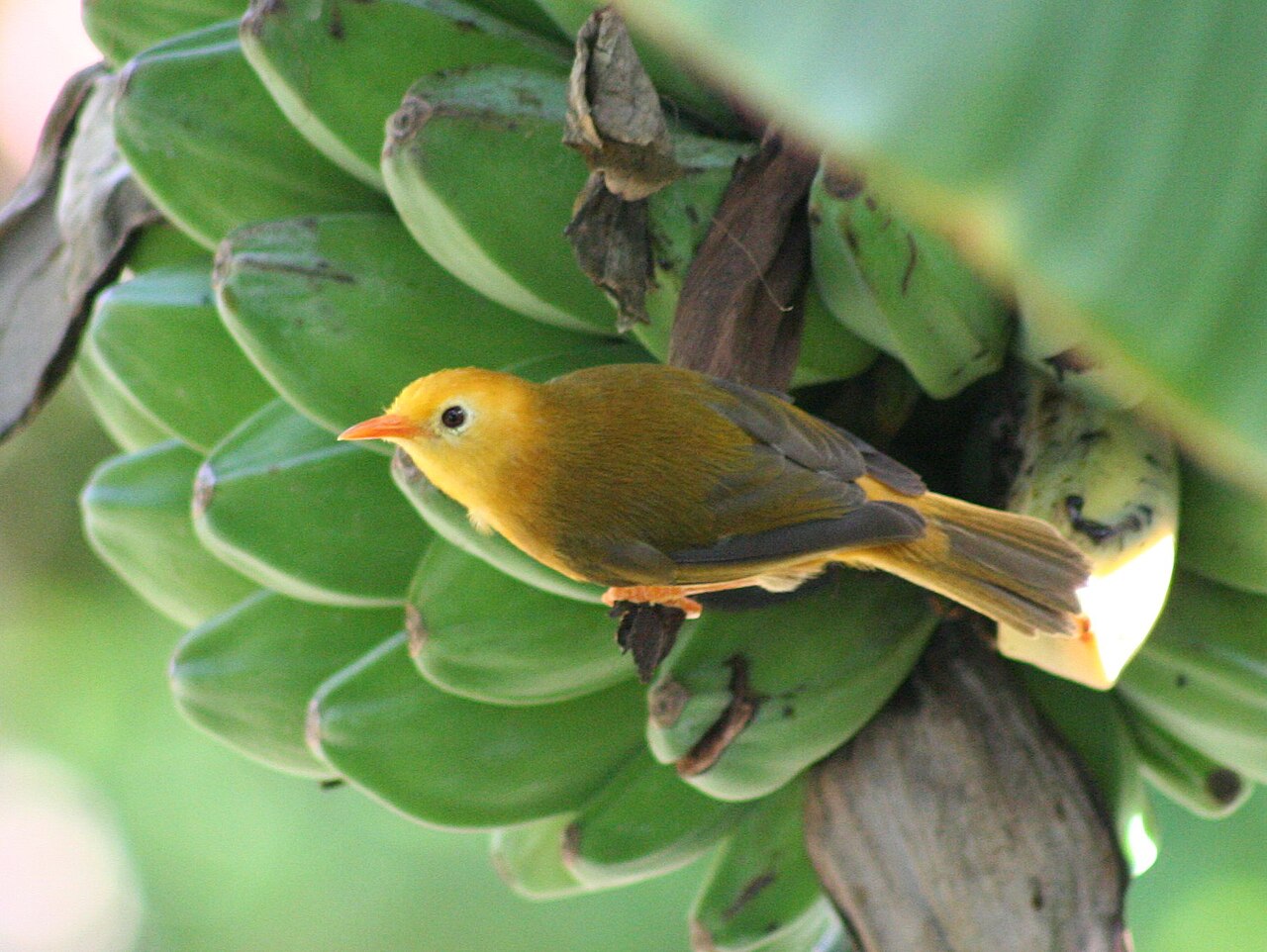
A golden white-eye feeding on bananas

Captive breeding is being attempted in some zoos to safeguard the future of this species.
Temperament
social and active
Flight Pattern
short rapid wingbeats with quick, undulating hops between perches
Social Behavior
Often forages in pairs or small family groups and may join mixed-species flocks. Pairs are monogamous; both parents build the nest and feed the young. Nests are small cup structures placed in shrubs or small trees, typically with a clutch of two eggs.
Migratory Pattern
Resident
Song Description
A lively series of thin, high-pitched twitters and trills interspersed with soft chips. Calls are frequent while foraging and become more sustained during the breeding season.
Plumage
Uniform rich golden-yellow to yellow-olive plumage with slightly paler underparts and a contrasting pale orbital ring.
Diet
Takes small insects, spiders, and other arthropods by gleaning foliage and bark. Consumes nectar from a variety of blossoms and also eats soft fruits and berries. This mixed diet makes it an important pollinator and seed disperser within its island habitats.
Preferred Environment
Feeds from understory to canopy in native and secondary forests, scrub, and tangantangan thickets. Also uses forest edges, gardens, and plantations where flowering plants and fruit are present.


