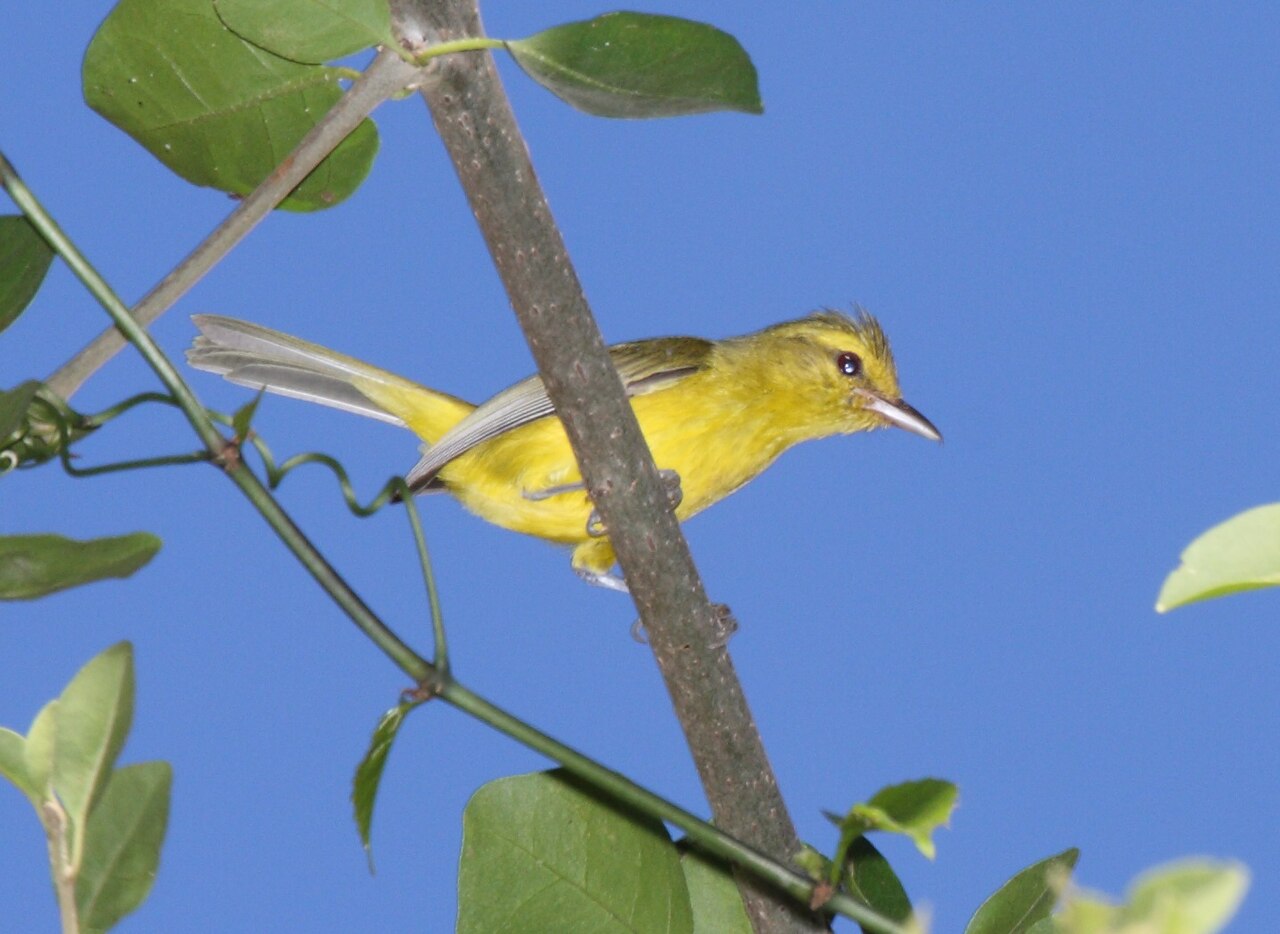
The golden pipit is a distinctive pipit of dry country grassland, savanna and shrubland in eastern Africa. It is native to Ethiopia, Kenya, Somalia, South Sudan, Tanzania and Uganda, and has occurred as a vagrant to Oman, South Africa and Zimbabwe.
Region
East Africa
Typical Environment
Occurs from Ethiopia and Somalia south through Kenya, South Sudan, Uganda, and northern Tanzania, with vagrants recorded to Oman, Zimbabwe, and South Africa. It inhabits dry grassland, open savanna, and thorny shrubland with patches of bare ground. The species favors lightly grazed to overgrazed areas, road verges, and edges of acacia scrub. It avoids dense, tall grass and forested habitats. Local dispersion is influenced by rainfall and the availability of insects.
Altitude Range
0–1800 m
Climate Zone
Arid
Ease of Keeping
Beginner friendly: 1/5
The golden pipit is a striking East African pipit best known for the male’s vivid yellow underparts and conspicuous white wing patches. It favors open, dry country and is often first noticed when it flashes its white wings and outer tail feathers in short flights. Local movements often track recent rains and insect emergences. It occasionally turns up far outside its core range as a vagrant.

Temperament
wary and terrestrial
Flight Pattern
short rapid wingbeats with low, undulating flights
Social Behavior
Usually solitary or in pairs, sometimes in loose groups where food is abundant. Nests on the ground in a shallow cup hidden among grasses. Likely monogamous during the breeding season, with breeding timed to local rains. Adults may perform distraction displays to draw predators away from the nest.
Migratory Pattern
Partial migrant
Song Description
Gives thin, high-pitched calls and soft tsip notes while foraging. The song is a light, tinkling series delivered from a low perch or brief display flight. Vocalizations carry modestly in open habitat but are less conspicuous than its plumage.
Plumage
Male shows bright golden-yellow underparts and face with warm brown, faintly streaked upperparts and two bold white wing panels; white outer tail feathers are obvious in flight. Female is sandy-brown and streaked above with buffy, lightly streaked underparts; the white wing patches are present but duller. Both sexes have slender, pointed bills and relatively long legs typical of pipits.
Diet
Feeds primarily on small insects such as ants, termites, beetles, and grasshoppers. Often picks prey from bare ground and short grass, and may exploit termite emergences after rain. Will occasionally take small seeds when insects are scarce, but animal prey dominates the diet.
Preferred Environment
Forages on open ground in dry grassland, savanna, and thorn scrub with scattered low vegetation. Frequently uses bare patches, tracks, and grazed lawns where visibility and access to prey are high.