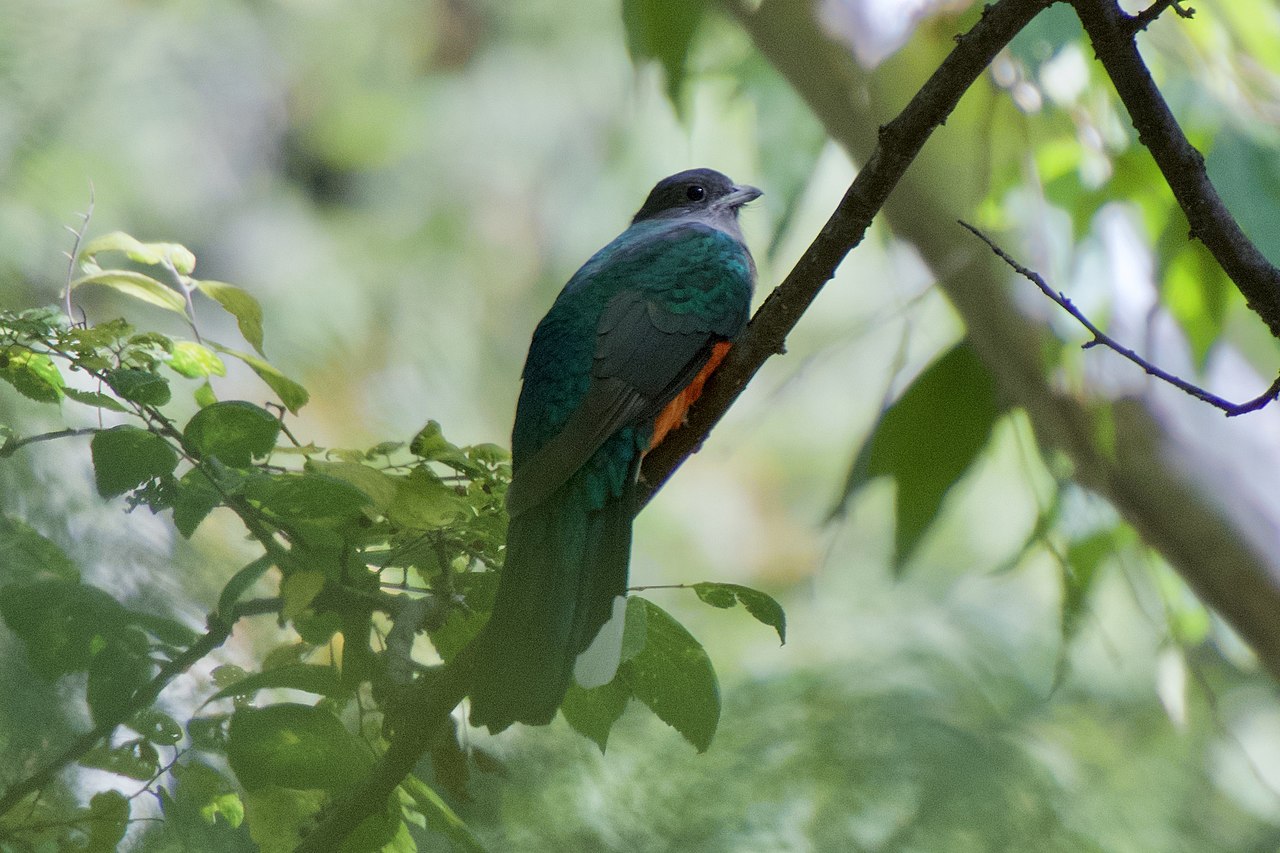
The eared pitta is a species of bird in the pitta family, Pittidae, and is found in Southeast Asia.
Region
Southeast Asia
Typical Environment
Occupies dense evergreen and mixed deciduous forests with thick leaf litter and low understory. Prefers shaded ravines, bamboo thickets, and stream gullies where cover is abundant. Occurs from lowland forests up into foothill and lower montane zones, using secondary growth if understorey remains intact. It is a secretive resident across parts of Myanmar, western and northern Thailand, Laos, Cambodia, and Vietnam.
Altitude Range
Sea level to 1800 m
Climate Zone
Tropical
Ease of Keeping
Beginner friendly: 1/5
The eared pitta gets its name from the male’s striking elongated white ear tufts displayed in the breeding season. A shy forest-floor specialist, it forages by flicking aside leaf litter to uncover insects and other invertebrates. Its mellow, far-carrying whistles are often heard at dawn and dusk, betraying a bird that is otherwise difficult to see. It was formerly placed in the genus Pitta but is now in Hydrornis based on modern taxonomy.

Temperament
solitary and secretive
Flight Pattern
short rapid wingbeats, low to the ground
Social Behavior
Usually encountered singly or in pairs, keeping close to dense cover on the forest floor. Nests are bulky, domed structures of leaves and rootlets placed near the ground or on low banks. Both sexes likely participate in nest building and provisioning of young. Breeding often coincides with the rainy season when invertebrate prey is abundant.
Migratory Pattern
Resident
Song Description
A series of mellow, far-carrying whistles, often rendered as repeated ‘puu’ or ‘pee-oo’ notes at measured intervals. Calls are most frequent at dawn and dusk and can carry through dense forest. The song is simple but penetrating, aiding territory advertisement in low-visibility habitats.
Plumage
Cryptic, finely vermiculated and mottled rufous-brown and black plumage suited to leaf-litter camouflage. Crown darker with contrasting pale supercilium; underparts buffy with dark scalloping. Male in breeding condition shows elongated white ear tufts that project behind the head. Wings and back are warm rufous-brown with fine black barring.
Diet
Feeds primarily on insects such as beetles, ants, and termites, along with earthworms, snails, and other small invertebrates. Uses its strong bill to probe soft soil and flip leaf litter. Will occasionally take small vertebrates like tiny frogs when available. Foraging is quiet and methodical, relying on stealth and camouflage.
Preferred Environment
Forages on the shaded forest floor, especially along damp gullies, stream edges, and bamboo understory. Prefers areas with deep leaf litter and plentiful cover, avoiding open ground.