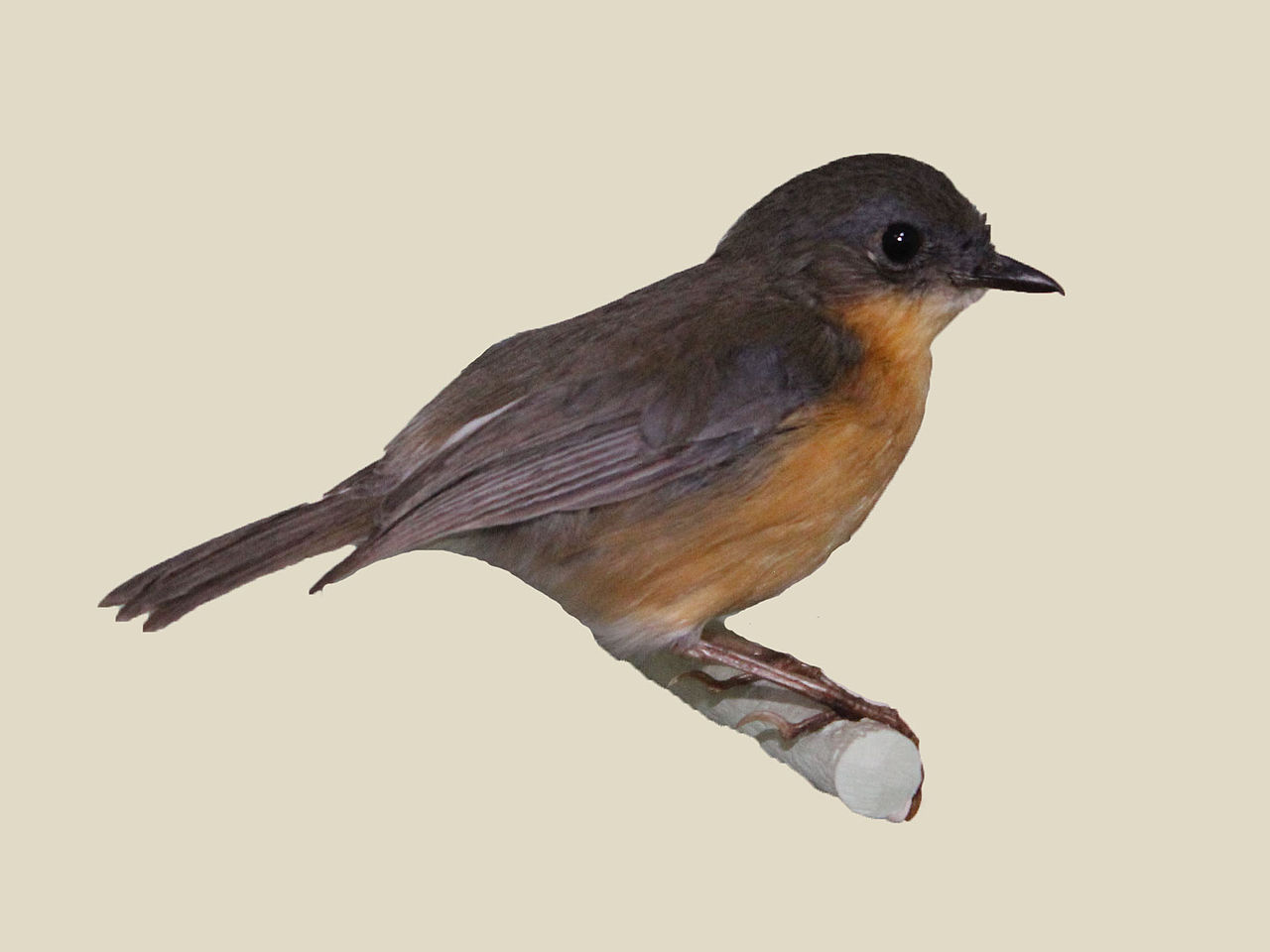
The East Amazonian fire-eye is an insectivorous bird in subfamily Thamnophilinae of family Thamnophilidae, the "typical antbirds". It is endemic to Brazil.
Region
Eastern Amazon Basin
Typical Environment
Occurs in lowland Amazonian forest east of major rivers in Brazil, favoring terra firme and secondary forests with dense understory. It uses forest edges, vine tangles, and bamboo thickets, and will enter selectively logged areas if cover remains. Birds keep close to the ground or within the first few meters of vegetation, moving through thickets with short hops and flicks. It sometimes attends mixed-species flocks and follows army ant swarms.
Altitude Range
0–800 m
Climate Zone
Tropical
Ease of Keeping
Beginner friendly: 1/5
This antbird lives in dense understory where its bright red iris gives the “fire-eye” name. Males are mostly black with a contrasting pale shoulder patch, while females are rich rufous—classic sexual dimorphism of fire-eyes. It often follows army ant swarms to snatch flushed insects and forages low in vine tangles and thickets. Pairs are strongly territorial and frequently duet.

Temperament
skulking and territorial
Flight Pattern
short rapid wingbeats through dense understory
Social Behavior
Typically found in pairs that defend year-round territories. Nests low in dense vegetation; clutch is small and both parents participate in care. Often gives antbird-like postures with tail and wing flicks while foraging. Will occasionally join mixed-species understory flocks.
Migratory Pattern
Resident
Song Description
Song is a ringing series of clear whistles that accelerate slightly, often delivered in duets between pair members. Calls include sharp chips and scolds given from cover. Vocalizations carry well through dense foliage.
Plumage
Male is glossy black with a small pale shoulder/wing patch and a vivid red iris; female is warm rufous to cinnamon with plainer wings and the same striking red eye. Both sexes have dense, sleek body feathers suited to moving through tangles. Underparts are unmarked; tail often held slightly cocked.
Diet
Primarily takes arthropods such as ants, beetles, spiders, and other small invertebrates. Forages by gleaning from leaves, probing tangles, and making short sallies to the ground. Frequently exploits army ant swarms to capture flushed prey. It may also take small caterpillars and orthopterans when available.
Preferred Environment
Feeds in the shaded understory of terra firme and secondary forest, especially in areas with thick vine growth and fallen logs. Often works along edges of trails, streams, and natural gaps where insects are more easily flushed.