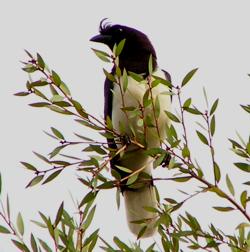
The Cuban trogon or tocororo is a species of bird in the family Trogonidae. It is endemic to Cuba, where it is also the national bird.
Region
Greater Antilles (Cuba)
Typical Environment
Occurs throughout mainland Cuba and the Isla de la Juventud in a variety of wooded habitats. It favors evergreen and semi-deciduous forests, moist montane forests, and well-wooded edges and ravines. It also uses secondary growth, coffee and shade plantations, and coastal forest where large trees remain. Nesting requires soft, decayed trunks or old woodpecker cavities, so it is most common where mature trees persist.
Altitude Range
Sea level to 1500 m
Climate Zone
Tropical
Ease of Keeping
Beginner friendly: 1/5
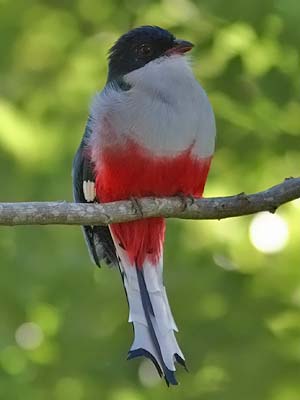
Also called the tocororo, the Cuban trogon is Cuba’s national bird, chosen because its plumage echoes the colors of the Cuban flag. It often perches quietly and makes short sallies to snatch insects or fruit, giving a repetitive, mellow call that sounds like “tocororo.” It nests in natural cavities or old woodpecker holes in soft, decayed wood.



Temperament
shy but vocal
Flight Pattern
short rapid wingbeats with brief glides
Social Behavior
Usually seen singly or in pairs, especially during the breeding season. Pairs maintain small territories and nest in natural cavities or abandoned woodpecker holes in decayed wood. Both sexes participate in nest selection and care for the young.
Migratory Pattern
Resident
Song Description
The call is a repeated, mellow series of cooing notes rendered as “to-co-ro-ro,” often delivered from a shaded perch. Songs are most frequent at dawn and in the cool of late afternoon, carrying well through forest understory.
Plumage
Iridescent green to blue-green head and upperparts, with a clean white throat and breast and a vivid crimson belly and undertail coverts. The long, slightly graduated tail shows blue above and contrasting white with dark barring or tips below. Feathers are soft with a loose texture typical of trogons.
Diet
Feeds on a mix of small fruits and berries, supplemented by insects such as beetles, caterpillars, and orthopterans. It occasionally takes small invertebrates off foliage and may snatch prey in short aerial sallies. Seasonal fruit availability influences diet, with more insects taken when brooding chicks.
Preferred Environment
Forages from midstory to canopy in mature and secondary forests, along edges, and in shaded agroforestry like coffee plantations. Often hunts from quiet, shaded perches, making short dashes to pluck fruit or seize insects.