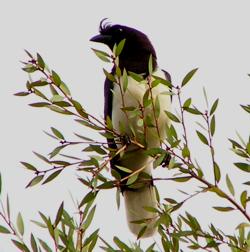
The Cundinamarca antpitta is a species of bird in the family Grallariidae. It is endemic to Colombia.
Region
Eastern Andes of Colombia
Typical Environment
Occurs in humid montane and cloud forests with dense understory, often in thickets of Chusquea bamboo and along steep ravines. It favors shaded forest floors with deep leaf litter and abundant cover, and it can persist in selectively logged or secondary forest if understory structure remains intact. The species keeps to interior forest and forest edges rather than open habitats. Its range is patchy and limited to a narrow elevational band within the department of Cundinamarca.
Altitude Range
1800–2600 m
Climate Zone
Highland
Ease of Keeping
Beginner friendly: 1/5
Also known as Kaestner’s Antpitta, this elusive ground-dweller inhabits dense Andean cloud forests and was only described to science in the early 1990s. It is highly sensitive to habitat loss and fragmentation, which threatens its very restricted range. Like many antpittas, it is more often heard than seen, giving mournful whistles from deep cover.


Temperament
shy and skulking
Flight Pattern
short rapid wingbeats
Social Behavior
Usually solitary or in pairs, moving quietly through dense understory and leaf litter. Nests are placed low, often near the ground in well-concealed sites; both parents are thought to share incubation and chick rearing. Territories are defended with persistent vocalizations.
Migratory Pattern
Resident
Song Description
Gives a clear, melancholy whistle delivered as single or paired notes, often repeated at measured intervals. The ventriloquial quality makes it difficult to locate, and it frequently calls at dawn and dusk from thick cover.
Plumage
Plump, long-legged antpitta with warm rufous-brown upperparts and paler buffy underparts. Face and throat slightly grayer, with subtle mottling on the breast and a faint pale eye ring. Plumage is plain overall, aiding camouflage in deep understory.
Diet
Primarily consumes terrestrial invertebrates such as beetles, ants, spiders, and other arthropods gleaned from leaf litter. It will also take small vertebrates like tiny frogs or lizards when available. Foraging is done by short hops interspersed with pauses, flicking leaves aside to expose prey.
Preferred Environment
Feeds on the shaded forest floor of mature and secondary cloud forest with dense understory. Often forages along damp gullies, near fallen logs, and within bamboo tangles where cover is abundant.