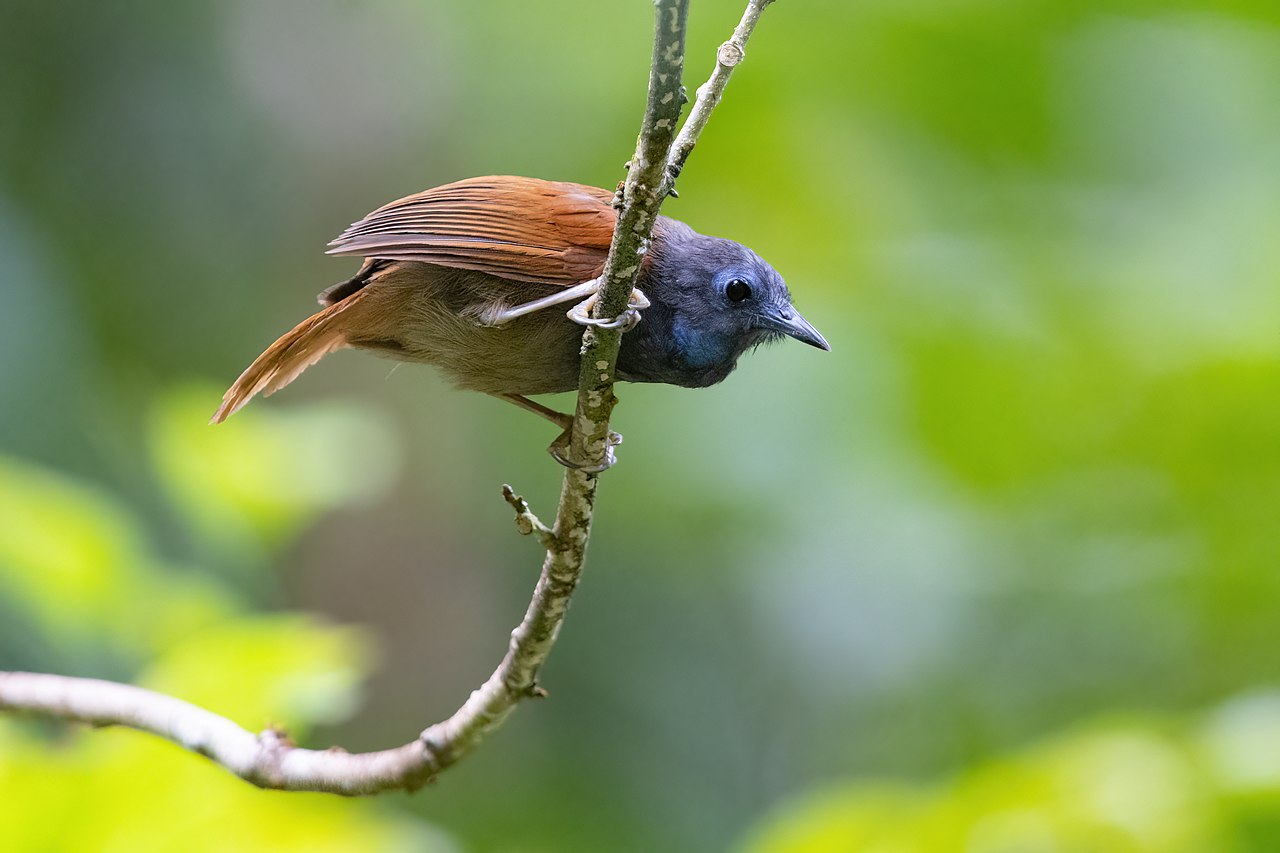
The chestnut-throated seedeater is a Neotropical songbird in the family Thraupidae.
Region
Pacific lowlands of western South America
Typical Environment
Occurs mainly along the coastal lowlands and river valleys of western Ecuador and Peru, locally reaching extreme northern Chile. It frequents wetlands, marshy edges, and wet grasslands where grasses and sedges set seed. The species also uses disturbed habitats such as fallow fields, canal margins, and rice fields. It perches conspicuously on reed tops and tall grasses while foraging or singing.
Altitude Range
Sea level to 1200 m
Climate Zone
Subtropical
Ease of Keeping
Beginner friendly: 2/5
The chestnut-throated seedeater is a small Neotropical tanager that favors grassy wetlands and agricultural edges. Males are easily recognized by their rich chestnut throat, while females are plain and buffy-brown. They often join mixed-species flocks of other seedeaters and can concentrate in rice fields where seed is abundant. Outside the breeding season they roam locally in search of seeding grasses.


Temperament
social and active
Flight Pattern
short rapid wingbeats
Social Behavior
Often forms small flocks outside the breeding season, sometimes mixing with other Sporophila species. During breeding, pairs defend small territories in grassy or reedy patches. The nest is a small cup placed low in grasses or shrubs, and both parents attend the young.
Migratory Pattern
Resident
Song Description
The male delivers a sweet, thin series of whistles and trills from exposed perches such as reed tops. Calls are short, metallic chips used to keep contact within flocks.
Plumage
Male shows a distinct chestnut throat and upper breast contrasting with grayish head and brownish upperparts; underparts pale to buff. Female is uniformly warm brown above with paler buff underparts and lacks the chestnut throat. Both sexes have a short, thick seed-cracking bill.
Diet
Primarily consumes seeds of grasses and sedges, husking them with its stout bill. It readily exploits seeding stands in wetlands and agricultural margins, including rice. During the breeding season it may take small insects to feed nestlings, supplementing its mostly seed-based diet.
Preferred Environment
Feeds in wet grasslands, rush and reed beds, canal edges, and weedy field margins. Often forages low, clinging to grass seed heads, or dropping to the ground to pick fallen seeds.