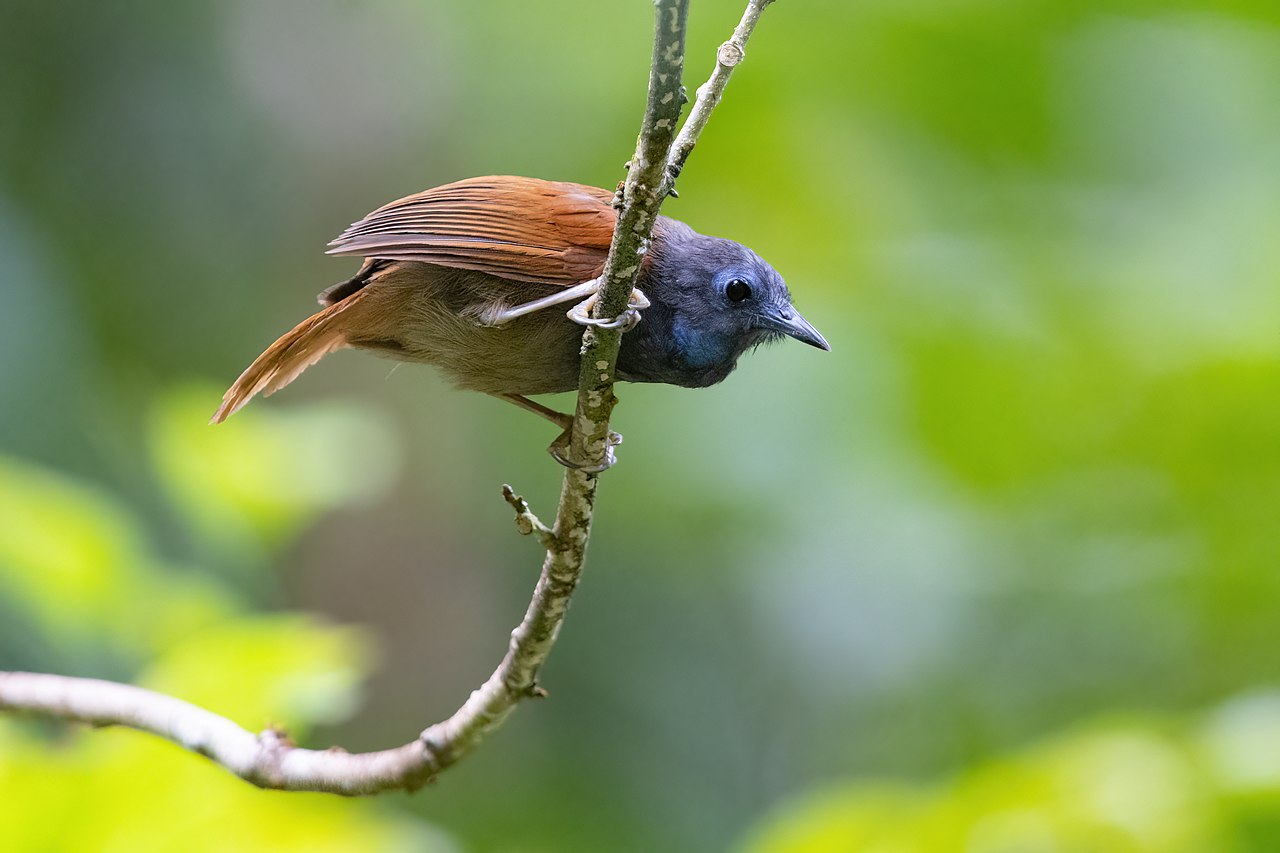
The chestnut-vented conebill is a species of bird in the family Thraupidae. It is found in Argentina, Brazil, Bolivia, Colombia, Ecuador, French Guiana, Guyana, Paraguay, Peru, Suriname, and Venezuela. Its natural habitats are subtropical or tropical moist lowland forests and heavily degraded former forest.
Region
Northern and central South America
Typical Environment
Found widely from the Amazon Basin through the Guianas and into eastern Bolivia, Paraguay, and northern Argentina. It favors tropical moist lowland forests, forest edges, and riverine woodland, and readily uses secondary growth and degraded former forest. The species frequently occurs in semi-open habitats such as clearings with scattered trees, plantations, and wooded parks near forest. It is adaptable and can persist where continuous forest has been fragmented.
Altitude Range
Sea level to 1500 m
Climate Zone
Tropical
Ease of Keeping
Beginner friendly: 2/5
A small, active tanager, the chestnut-vented conebill is named for the distinctive chestnut patch on its vent and undertail coverts. It often joins mixed-species flocks while gleaning insects and sipping nectar along forest edges and second growth. Its fine, pointed conical bill is adapted for probing flowers and picking tiny arthropods from foliage.


Temperament
social and active
Flight Pattern
short rapid wingbeats
Social Behavior
Typically forages in pairs or small family groups and often joins mixed-species flocks in the canopy and edge. Nests are cup-shaped and placed in shrubs or small trees, with both parents involved in care. Territoriality is modest, with more tolerance in rich foraging areas.
Migratory Pattern
Resident
Song Description
A series of thin, high-pitched twitters and short trills delivered rapidly from the canopy or midstory. Calls include sharp chips and sibilant notes used to keep contact within pairs or flocks.
Plumage
Small conebill with sleek, tight plumage; males show bluish-gray to gray upperparts and paler gray underparts with a contrasting chestnut vent. Females are duller, more olive-gray above and buff-gray below, retaining the chestnut-tinged vent. Wings are dusky with pale edging; tail is relatively short.
Diet
Primarily gleans small insects and other arthropods from foliage and flower clusters. It also takes nectar by probing blossoms and will consume small berries or soft fruits when available. The species is opportunistic and often exploits flowering or fruiting trees along edges and in secondary habitats.
Preferred Environment
Feeds along forest edges, river margins, clearings with scattered trees, and secondary growth where flowers and insect prey are abundant. Often works the midstory to canopy, moving quickly among leaves and inflorescences.