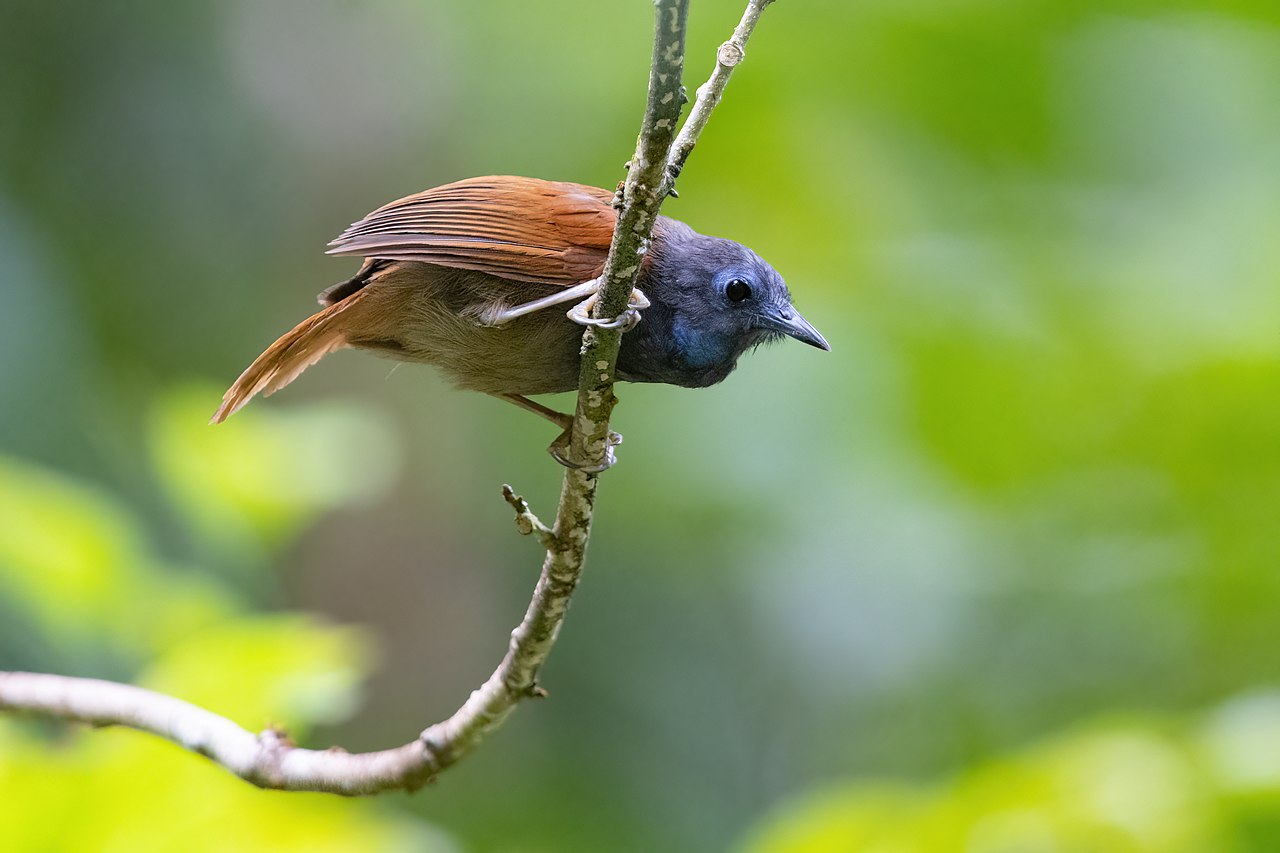
The chestnut-vented warbler, chestnut-vented tit-babbler or rufous-vented warbler is an Old World warbler of the family Sylviidae.
Region
Southern Africa
Typical Environment
Occurs widely across semi-arid and arid zones from Namibia and southern Angola through Botswana and western Zimbabwe to much of South Africa. Prefers thorny scrub, Karoo shrublands, dry riverine thickets, and edges of savanna. Often found in Acacia/Vachellia and other spiny bushveld, using dense cover for foraging and nesting. It tolerates lightly disturbed habitats and farm edges where native thorn scrub remains.
Altitude Range
0–2000 m
Climate Zone
Arid
Ease of Keeping
Beginner friendly: 1/5
Also called the chestnut-vented tit-babbler, it is a small, active warbler of arid scrub in southern Africa. It frequently cocks and flicks its tail, showing the rufous vent that gives the species its name. Pairs often keep in contact with churring calls and may join mixed-species foraging parties in thornveld.


Chestnut-vented warbler
Temperament
active and somewhat skulking
Flight Pattern
short rapid wingbeats, low darting flights between shrubs
Social Behavior
Usually seen singly or in pairs that maintain year-round territories. Nests are small cups placed low in dense shrubs; both sexes participate in nesting duties. Outside breeding, it may join small family groups or mixed-species parties while foraging.
Migratory Pattern
Resident
Song Description
Song is a rapid series of scratchy, chattering notes and trills delivered from within cover or a low perch. Calls include scolding churrs and ticking contact notes that carry through scrub.
Plumage
Upperparts are grey-brown with a slightly greyer head; underparts are pale grey to off-white with a distinctive rufous-chestnut vent and undertail coverts. Throat is whitish, often contrasting with subtler darker malar area. Tail is dark with pale outer edges and is frequently flicked.
Diet
Primarily feeds on small insects, spiders, and other arthropods gleaned from foliage, twigs, and bark. It also occasionally takes small berries or nectar when available, especially during dry periods. Foraging is methodical, moving through dense scrub while flicking the tail.
Preferred Environment
Forages in thorny bushes, Karoo shrublands, and along dry drainage lines where cover is dense. Frequently works at low to mid-levels inside shrubs and at bush edges, sometimes descending to the ground to pick prey.